Why Is My Sciatica Worse in the Morning? | Kearny Mesa, CA
A common complaint from patients with sciatica is that they feel their worst when they first get out of bed.
The lower back may feel unusually stiff, but often it is the leg symptoms that are more concerning. Pain may travel into the buttock, thigh or calf. The foot may tingle or feel numb. Bending down to put on socks and shoes can suddenly send pain farther down the leg.
Then something interesting happens. After walking around, showering and getting ready for the day, the symptoms may begin to settle.
Dr. Cassidy James Boelk, DC has treated patients with lumbar disc injuries and sciatica for more than 22 years and has performed more than 100,000 spinal decompression treatments. Morning symptoms are something he pays attention to because the way pain behaves throughout the day can provide useful information about what may be irritating the nerve.
Being worse in the morning does not prove that someone has a herniated disc. Sciatica can have different causes, and patients with the same MRI findings can have very different symptoms. But when someone has known or suspected disc involvement, there are several reasons the first part of the day can be particularly uncomfortable.
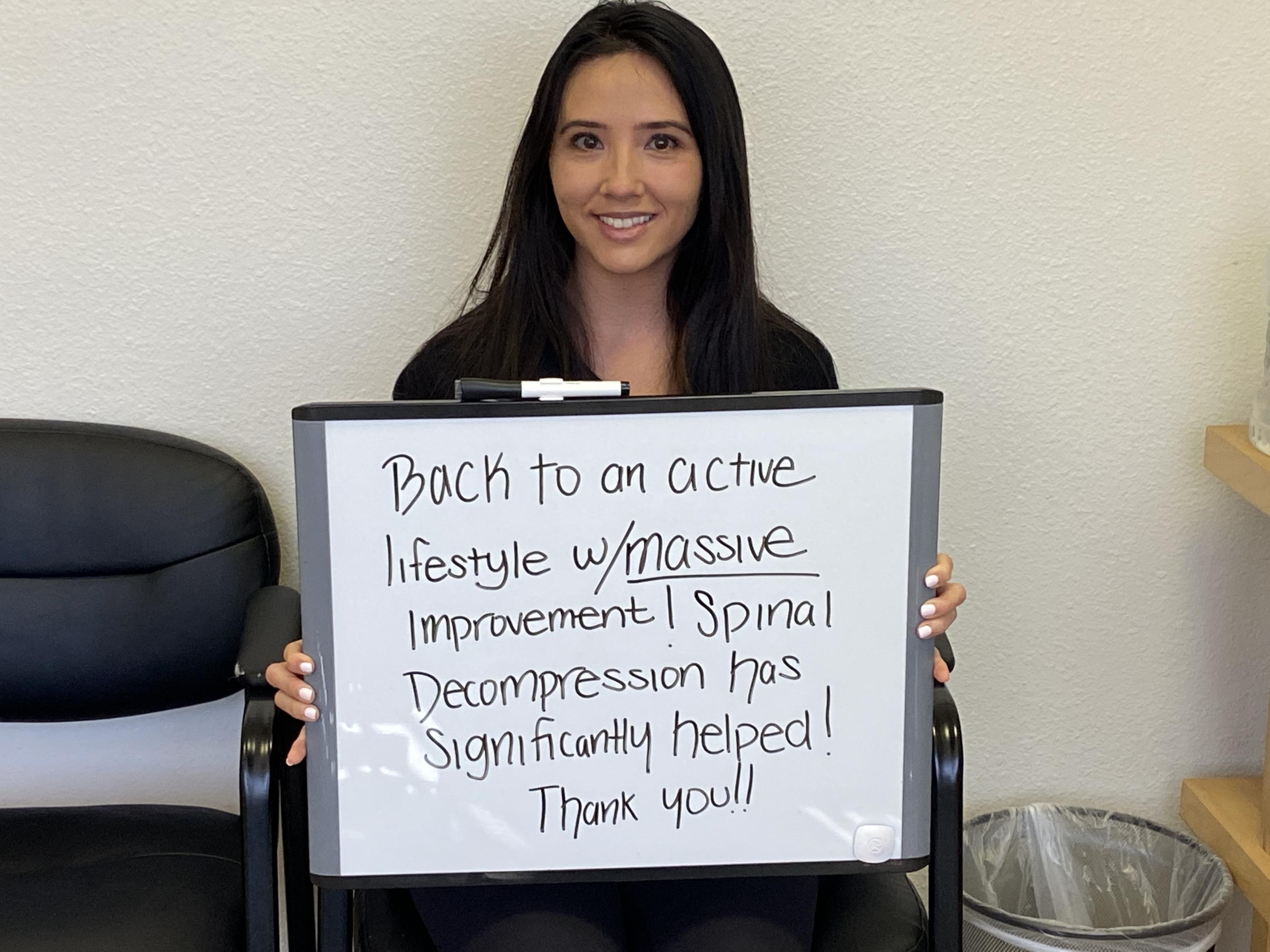
After Eight Months of Back Pain and Sciatica
Joshua T. had been dealing with constant lower back pain and sciatica for more than eight months before coming to The Spinal Decompression & Chiropractic Center of San Diego.
He described his experience this way:
“Dr. Boelk has been a lifesaver.
I suffered from constant low back pain and sciatica for more than eight months. Pain medications didn't help, and I was headed toward multiple injections in hopes of finding relief.
After beginning treatment with Dr. Boelk, everything changed.
Today, my pain is completely gone.
As a firefighter who depends on his body every day to help others, being pain-free has made a tremendous difference in both my career and quality of life.
The results I experienced were absolutely worth it, and I highly recommend looking into what Dr. Boelk and his team can do for you.”
— Joshua T., San Diego, CA
Start With a No-Charge Consultation
If sciatica is making it difficult to get out of bed, put on your shoes, drive to work, walk or get through a normal day, patients can begin with a No-Charge, No-Obligation Consultation with Dr. Cassidy James Boelk, DC.
The consultation is not a commitment to spinal decompression treatment.
It is an opportunity for Dr. Boelk to hear the history of the problem, understand how the symptoms behave and review any imaging that is already available.
During the consultation, Dr. Boelk may review:
-
How and when the symptoms started
-
Where the pain begins and how far it travels
-
Any numbness, tingling or burning in the leg or foot
-
Whether there has been a change in leg or foot strength
-
What the symptoms are like immediately after getting out of bed
-
Whether they improve after moving around
-
How sitting, driving, standing, walking and bending affect the symptoms
-
Which treatments have already been tried
-
Whether previous treatment helped and how long that improvement lasted
-
Existing MRI images, X-rays and radiology reports
-
Whether the imaging findings make sense in relation to the symptoms
-
Whether further examination or imaging may be appropriate
-
Whether Non-Surgical Spinal Decompression may be a reasonable option
-
What Dr. Boelk believes the next step should be
Patients who already have a lumbar MRI are encouraged to bring the actual images along with the radiology report. Dr. Boelk prefers to look at the images himself and compare them with what the patient is experiencing.
An MRI is not required simply to have the initial consultation.
There is no obligation to begin treatment afterward. If Dr. Boelk believes another type of care or further evaluation would be more appropriate, he will explain that as well.
Because Dr. Boelk personally performs these consultations and reviews the available imaging, the office reserves a limited number of No-Charge Consultation appointments for new patients during the weekly schedule.
Call 619-298-0800 to ask about the next available consultation.
What Happens to Your Lower Back While You Sleep?
The lumbar spine does not remain exactly the same throughout a 24-hour period.
Intervertebral discs contain a significant amount of water. During the day, normal loading from standing, sitting and moving causes the discs to gradually lose some fluid. When the body is horizontal for several hours during sleep, the discs rehydrate.
This is normal physiology.
For someone with an irritated or injured lumbar disc, however, the first part of the morning may be less forgiving. A rehydrated disc has different mechanical characteristics than it does later in the day, and this may contribute to why some people with disc-related conditions notice greater symptoms after waking.
Hours of relative immobility can also contribute to morning stiffness. Sleep position, the condition of the mattress and the underlying cause of the sciatica may influence how someone feels when getting up.
This does not mean that every person who wakes with sciatica has a disc herniation. It means that the morning pattern is worth considering along with the rest of the patient's history.
What You Do During the First 30 Minutes Can Make a Difference
Think about a typical morning.
You sit up in bed. You bend forward to put on underwear or pants. You sit again and reach toward the floor to put on socks. You bend over to tie your shoes. You lean over the sink. You may pick something off the floor, load the dishwasher or bend over to feed a pet.
Before leaving the house, the lower back may already have gone through a surprising amount of repeated bending.
For many people this is completely uneventful.
For someone with an irritated lumbar disc or nerve root, it may not be.
Dr. Boelk is particularly interested when a patient says that standing upright feels reasonably comfortable but bending forward first thing in the morning immediately causes pain to travel farther into the buttock or leg.
That response can provide useful clinical information.
Getting Out of Bed Without Immediately Aggravating Your Back
There is no single technique that works for every person with sciatica, but there is usually no reason to make the first movement of the day an aggressive sit-up.
One option is to roll onto the side, bring the legs toward the edge of the bed and use the arms to help come upright rather than abruptly flexing the lower back.
Once standing, give the body a few minutes to begin moving.
A short, comfortable walk around the house may be better tolerated than immediately performing a series of aggressive stretches.
Putting on socks and shoes can also be modified. Rather than repeatedly rounding the lower back toward the floor, bring the foot closer to you when possible and pay attention to whether one position clearly aggravates the leg symptoms.
The important point is not to become afraid of normal movement. It is to avoid repeatedly provoking an already irritated nerve first thing in the morning.
Be Careful With the “I Just Need to Stretch It” Approach
Sciatica can make the hamstring, calf or entire leg feel tight.
That sensation can be misleading.
Sometimes the muscle really is tight. In other cases, irritation of the nerve creates a pulling or tight sensation that causes the patient to keep stretching harder.
If a hamstring stretch feels like a normal muscular stretch and is comfortable afterward, that is one thing.
If bending forward and stretching the leg repeatedly causes pain, burning, tingling or numbness to travel farther toward the calf or foot, that is a different response.
Dr. Boelk generally wants to know whether a movement causes symptoms to remain localized, improve, or travel farther down the leg.
The answer can be more informative than simply knowing whether a patient can touch their toes.
Is Your Sleeping Position Part of the Problem?
Sleeping position can influence morning back pain, although there is no universal “best” position for every person with sciatica.
Some people are comfortable sleeping on their side with their knees slightly bent and a pillow between the legs. Others prefer sleeping on their back with support beneath the knees. Maintaining a reasonably supported spinal position may help some patients who wake with lower back discomfort.
What matters clinically is how the individual responds.
If you wake every time you roll onto one side, that is worth mentioning.
If lying down feels excellent but the pain begins only when you stand, mention that too.
If the leg begins aching after several hours in bed and forces you to get up and walk, that is a different pattern again.
The same applies to the mattress. A mattress that is sagging or no longer providing adequate support may contribute to morning back discomfort, but buying a new mattress should not become a substitute for determining why persistent neurological symptoms are occurring.
What If the Pain Gets Better After You Start Walking?
Improvement with movement can be reassuring from a functional standpoint, but it does not necessarily identify the cause of the sciatica.
This is where the details become important.
Does the pain disappear after five minutes?
Does the back loosen up while numbness remains in the foot?
Can you walk indefinitely once you get moving, or does the leg begin hurting again after 10 or 15 minutes?
Does sitting down make it better or worse?
Those distinctions matter because disc injuries, nerve-root irritation, spinal stenosis and other lumbar conditions do not necessarily behave in the same way.
A patient who is miserable bending forward in the morning but improves after walking presents differently from a patient who feels good sitting and progressively develops leg pain every time they stand or walk.
Both may describe their problem simply as “sciatica.”
The evaluation is intended to go further than that.
When Morning Sciatica Should Be Evaluated
Having a stiff back one morning after unusual activity is different from waking with radiating leg symptoms day after day.
An evaluation becomes more important when the symptoms persist, repeatedly interfere with normal activities, travel farther down the leg, or are accompanied by numbness or weakness.
Weakness deserves particular attention.
If one foot has become noticeably weaker, the toes are beginning to catch the ground, or the front of the foot is becoming difficult to lift, continuing the same home program for months without reassessment may not be appropriate.
Rapidly progressing weakness, new bowel or bladder dysfunction, difficulty urinating, or numbness involving the groin or saddle region requires prompt medical attention rather than waiting for a routine spinal decompression consultation.
Where Non-Surgical Spinal Decompression May Fit
When sciatica is related to an appropriate lumbar disc or degenerative condition, Non-Surgical Spinal Decompression may be considered as part of a conservative treatment approach.
The Spinal Decompression & Chiropractic Center of San Diego uses the DRX9000 exclusively, with four lumbar and three cervical systems.
Dr. Boelk does not use the same protocol simply because two patients both have sciatica.
The location of the disc problem, the nerve involved, symptoms, positioning, treatment angle, starting force, body size, tolerance and response to treatment can all influence the approach.
Before discussing a treatment program, however, Dr. Boelk determines whether the patient appears to be an appropriate candidate.
An unhealed fracture, significant osteoporosis, unstable spondylolisthesis, abdominal aortic aneurysm, pregnancy for lumbar decompression, certain malignancies and other conditions can make decompression inappropriate. Previous lumbar surgery also needs to be evaluated carefully, particularly when fusion or metal hardware is present at the level that would need to be treated.
There are patients who come to the office hoping to receive spinal decompression and are advised not to proceed.
In some cases another conservative treatment makes more sense. In others, additional imaging or medical evaluation is necessary. Occasionally, the appropriate recommendation is a surgical consultation.
That decision is part of responsible patient selection.
About Dr. Cassidy James Boelk, DC
Dr. Cassidy James Boelk, DC has more than 22 years of experience with Non-Surgical Spinal Decompression and has performed more than 100,000 spinal decompression treatments.
His professional background includes:
-
Doctor of Chiropractic (DC)
-
Certified Spinal Decompression Doctor
-
Certified Pain-Free Performance Specialist (PPSC)
-
Founder, Non-Surgical Spinal Decompression Training Academy
-
Trains other doctors in spinal decompression protocols and techniques
-
Founding Member, American Spinal Decompression Society
-
Member, International Disc Education Association
-
California X-Ray Radiation Supervisor & Operator
Dr. Boelk's understanding of spinal injuries is also personal. He suffered an L5 compression fracture at age 16 and later experienced disc injuries and sciatica himself. Those experiences, along with more than two decades of clinical practice, have shaped his approach to helping patients remain active while dealing with significant spinal problems.
Morning Sciatica Consultation for Kearny Mesa Patients
If the first part of your morning has become a routine of slowly getting out of bed, avoiding certain movements and waiting for the leg pain to settle before you can begin your day, it may be time to determine why it keeps happening.
Patients in Kearny Mesa and throughout San Diego can begin with a No-Charge, No-Obligation Consultation with Dr. Cassidy James Boelk, DC.
Bring your MRI images and report if you have them. If you do not have an MRI, you can still schedule the consultation.
Dr. Boelk will review your history, symptoms and available imaging and discuss whether Non-Surgical Spinal Decompression appears appropriate. There is no obligation to begin treatment.
Because Dr. Boelk personally conducts these consultations, only a limited number of new-patient consultation appointments are available within the weekly clinic schedule.
Call 619-298-0800 to ask about the next available No-Charge Consultation.
The Spinal Decompression & Chiropractic Center of San Diego
5095 Murphy Canyon Road, Suite 300
San Diego, CA 92123
619-298-0800
Live 24/7 Answering Service • Hablamos Español