What If Physical Therapy Hasn’t Helped My Sciatica? | Mira Mesa, CA
Maybe physical therapy did help.
Your back feels a little better. You're stronger. You've learned how to move differently and you're still doing the exercises at home.
But you walk for 10 or 15 minutes and the burning starts down your leg. Stand too long and your foot begins to tingle or go numb. Sit through a long drive and the sciatica comes right back.
Dr. Cassidy James Boelk, DC sees patients in this situation regularly. They don't necessarily feel that physical therapy was a waste of time. They're frustrated because they improved in some ways, but the problem that brought them to PT in the first place is still affecting their life.
After more than 22 years treating disc injuries and sciatica, Dr. Boelk doesn't assume these patients simply need to strengthen their core more or repeat another round of the same exercises.
He wants to know why the nerve symptoms are still there.
Dr. Boelk has performed more than 100,000 spinal decompression treatments. The Spinal Decompression & Chiropractic Center of San Diego has seven DRX9000 systems and is the largest known Non-Surgical Spinal Decompression clinic in Southern California.
⭐⭐⭐⭐⭐ “I Can Walk, Run and Exercise Without Any Pain”
“I lost mobility and had difficulty even putting shoes on.”
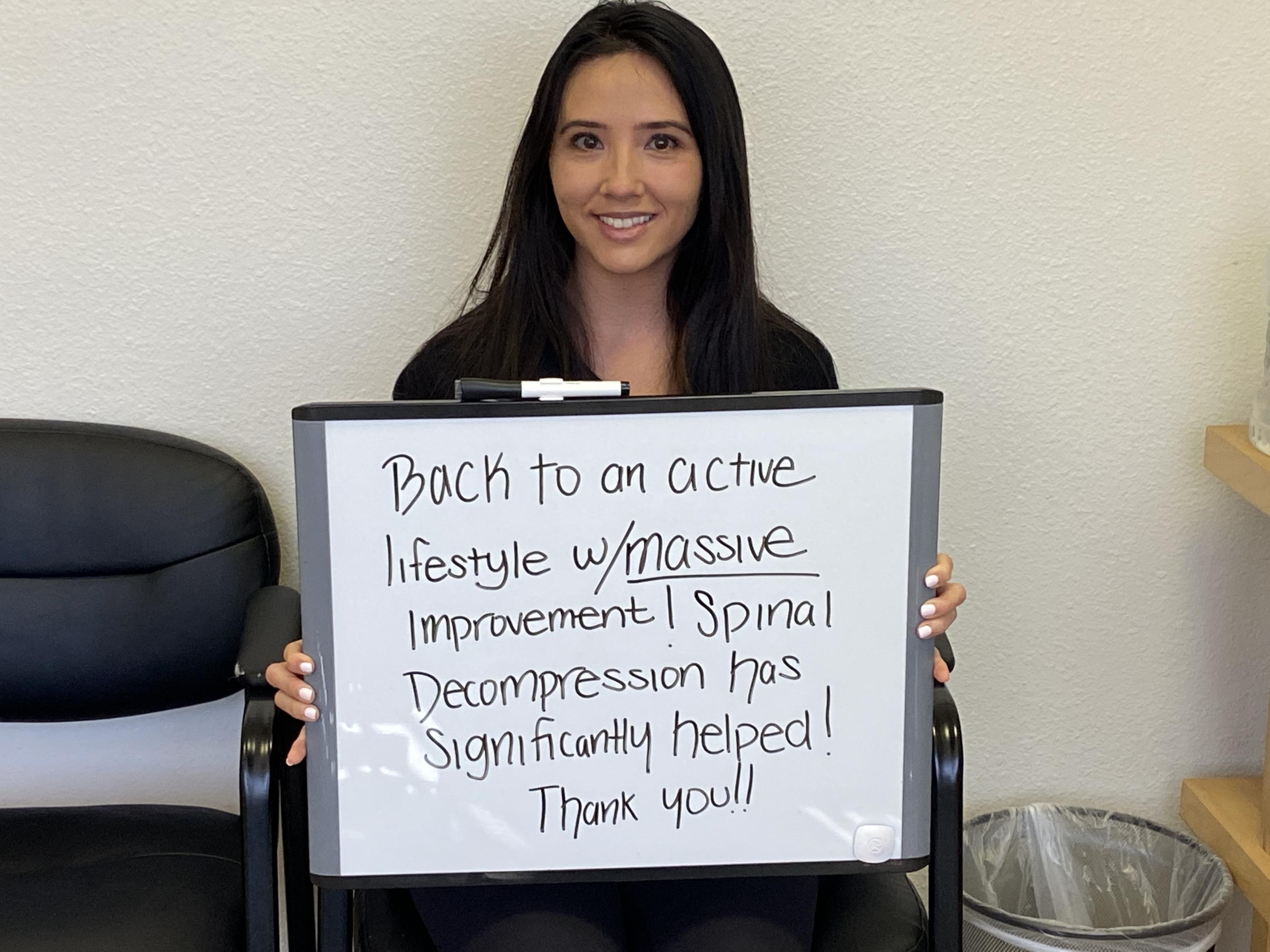
“I have been seeing Dr. Boelk since November for my back pain due to disc herniation. I lost mobility and had difficulty even putting shoes on. The pain was interfering with my everyday lifestyle. After reviewing the X-ray results, we agreed upon a treatment plan. Agreeing to this treatment plan was the best choice I've made for my back pain. The spinal decompression has relieved all the pain I felt in my lower back. I can walk, run and exercise without any pain and I'm able to get back in the gym and continue my daily routines. The office staff are very friendly and caring as well. I highly recommend Dr. Boelk's office to anyone seeking exceptional care.”
— Paul C
Paul's disc problem had reached the point where his mobility was affected and even putting on his shoes was difficult. He later described being able to walk, run, exercise and return to the gym.
That's one reason Dr. Boelk looks beyond a simple 1-to-10 pain score. What are you actually able to do again?
PT Helped Some—but You're Still Having Sciatica. What Now?
Before automatically starting another treatment, it may be worth having someone take another look at the problem.
Dr. Boelk offers a No-Charge Consultation for exactly that reason.
You aren't scheduling the consultation because you've decided you want spinal decompression.
You're coming in to find out why you may still be having symptoms and whether Dr. Boelk believes there is another reasonable non-surgical option to consider.
Dr. Boelk personally performs the consultation and will:
-
Listen to how your sciatica started and how it has changed.
-
Go over where the pain, numbness, tingling or burning travels.
-
Discuss what improved during physical therapy and what didn't.
-
Review which exercises helped and which consistently increased the leg symptoms.
-
Ask how long you can sit, stand or walk before the sciatica begins.
-
Discuss weakness or other neurological changes.
-
Review medications, injections, chiropractic care and other treatments you've tried.
-
Review your actual MRI images and report if available.
-
Compare the MRI findings with your symptoms.
-
Discuss whether further examination or imaging may be appropriate.
-
Determine whether Non-Surgical Spinal Decompression may be an option.
-
Tell you if he doesn't believe you're an appropriate candidate.
-
Answer your questions and explain what he believes makes sense next.
No MRI yet? That's okay. You can still schedule the consultation.
There is no charge and no obligation to start treatment.
The purpose is to answer a question before you invest more time or money in another approach:
Does Dr. Boelk believe he may be able to help?
Because Dr. Boelk personally performs these consultations while also treating his existing patients throughout the week, only a limited number can be set aside in the clinic schedule.
When those appointments are taken, new patients are offered the next available openings.
Call 619-298-0800 and ask about the next available No-Charge Consultation with Dr. Cassidy James Boelk, DC.
Why Would Sciatica Continue After Weeks of Exercise?
Physical therapy can do a lot.
It can improve strength, mobility, balance, movement patterns and confidence getting back to normal activities.
But sciatica involves a nerve.
If that nerve is still being irritated by a disc herniation, disc bulge, foraminal narrowing or another spinal problem, a patient may get stronger without seeing the same improvement in the leg symptoms.
That's an important distinction.
Someone may be able to perform a stronger plank or squat than when they started PT but still develop burning down the leg after standing for 20 minutes.
Dr. Boelk doesn't ignore the progress that patient made.
He wants to understand why one part of the problem improved while another didn't.
Walking Tolerance Can Tell You a Lot
One question Dr. Boelk commonly asks is how long you can walk before the symptoms begin.
That's especially useful when a patient has been through several weeks or months of treatment.
Maybe you could only walk five minutes when you started PT and now you can walk for 25 minutes.
That's significant improvement.
But if you could walk 30 minutes six months ago and you're now down to 10 despite treatment, that's a very different trend.
The same applies to standing.
If standing at the kitchen counter, waiting in line or walking through a store consistently produces numbness, burning or aching down the leg, Dr. Boelk wants to know how quickly it happens and what makes it settle down.
Those details can help make sense of what's happening.
What If Sitting Is the Bigger Problem?
Not everyone with sciatica has difficulty walking.
Some patients can walk reasonably well but can't sit for very long.
Driving becomes difficult. Air travel becomes miserable. Sitting through a movie or dinner means constantly shifting positions.
For some disc-related problems, prolonged sitting or bending can aggravate symptoms.
Again, the pattern matters.
That's why Dr. Boelk doesn't use the same checklist of exercises or recommendations for every person who walks in saying they have sciatica.
Your MRI Should Correlate With Your Symptoms
An MRI report can contain a lot of information.
Disc degeneration. Bulging discs. Herniations. Foraminal narrowing. Central stenosis.
Sometimes several findings appear at multiple spinal levels.
Dr. Boelk prefers to review the actual MRI images when available and compare those findings with the patient's history and symptoms.
If the MRI shows a problem at L4-L5 or L5-S1, does it make sense with where your symptoms travel?
Does it fit the numbness you're experiencing?
Does it make sense with the positions that make you better or worse?
The MRI is an important piece of the evaluation, but it isn't the entire evaluation.
⭐⭐⭐⭐⭐ “After Treatment I Am Back to Shoveling Snow, Teaching School, Taking Walks”
“I was having pain radiating down my legs, I couldn’t sleep, I could barely walk.”
“My name is Lynn. I am from Alaska, and I just want to say it was totally worth taking a trip to go to the Spinal Decompression & Chiropractic Center of San Diego. I was having pain radiating down my legs, I couldn’t sleep, I could barely walk.
After treatment I am back to shoveling snow, teaching school, taking walks. So, I just want to thank Dr. Boelk and the clinic, you guys are wonderful, and you have created such a wonderful, friendly, kind and truly caring atmosphere. I highly encourage anybody that might be considering spinal decompression therapy, it really makes a difference.”
— Lynn C., Alaska
Lynn traveled from Alaska after reaching the point where she could barely walk and wasn't sleeping because of the symptoms radiating down her legs. She later described returning to teaching, walking and even shoveling snow.
Again, those functional changes matter.
Could Non-Surgical Spinal Decompression Be an Option After PT?
For some patients, yes.
Dr. Boelk commonly evaluates patients with:
-
Lumbar disc bulges.
-
Lumbar disc herniations.
-
L4-L5 and L5-S1 disc injuries.
-
Degenerative disc disease.
-
Disc-related sciatica.
-
Foraminal narrowing.
-
Selected cases of spinal stenosis.
The clinic uses the DRX9000 exclusively for Non-Surgical Spinal Decompression.
But the fact that you've already tried physical therapy doesn't make you an automatic candidate.
Dr. Boelk considers your history, neurological symptoms, MRI when available, spinal stability, bone health, previous surgery and how you've responded to prior treatment.
The treatment needs to fit the patient—not the other way around.
Are You Recovering or Just Avoiding the Things That Hurt?
This is worth thinking about.
A patient may tell Dr. Boelk that the sciatica isn't quite as bad as it used to be.
Then he starts asking what they're doing.
They stopped working out.
They don't take long walks anymore.
They avoid sitting in the car for more than 30 minutes.
They stopped playing golf.
They aren't traveling.
If you've eliminated everything that aggravates the sciatica, your pain may be lower—but that doesn't necessarily mean your function has improved.
Compare your life now with three or six months ago.
Are you getting things back?
Or is the list of things you avoid getting longer?
That can tell you a lot about whether you're actually moving in the right direction.
Sometimes Another Conservative Treatment Isn't the Right Answer
Persistent sciatica doesn't mean someone should continue trying non-surgical treatments indefinitely.
Rapidly progressing weakness, significant neurological loss, new bowel or bladder dysfunction, difficulty initiating or controlling urination, or numbness involving the groin, inner thighs or saddle region requires prompt medical evaluation.
There are also structural conditions where a surgical opinion may be appropriate.
Dr. Boelk does not accept every patient for spinal decompression.
★ Sometimes the Most Useful Answer Is “Not Yet”
“He could not treat me as I have to wait until the fracture in my neck heals.”
“I decided to see Dr. Boelk after a pretty gnarly motocoss neck injury. At the Hospital I was at, I felt I was getting pressured into a surgery which I refused. A friend of a friend referred him after Dr. Boelk successfully treated his broken back.
Dr. Boelk is a compassionate individual who truly cares about his patients. He looked at my MRI images, explained what he saw and potential routes for recovery. He could not treat me as I have to wait until the fracture in my neck heals, but the level of professionalism, compassion, caring and knowledge displayed by him was exceptional.
He also recommended to seek an additional opinion form another neurosurgeon. My experience was that he really cares and he's not someone who would take advantage of the situation someone's in (unlike some other doctors). I will definitely be back and already recommended him to others as well! Thank you Dr. Boelk!”
— Jan H., San Marcos, CA
Jan wasn't accepted for treatment because his fracture first needed time to heal. Dr. Boelk also recommended another neurosurgical opinion.
That's what an evaluation should do.
Sometimes the answer is yes.
Sometimes it's no.
And sometimes it's not yet.
More Than 22 Years Focused on Non-Surgical Spinal Decompression
Dr. Cassidy James Boelk, DC has more than 22 years of experience with Non-Surgical Spinal Decompression and has performed more than 100,000 spinal decompression treatments.
His professional background includes:
-
Doctor of Chiropractic
-
Certified Spinal Decompression Doctor
-
Certified Pain-Free Performance Specialist (PPSC)
-
Founder, Non-Surgical Spinal Decompression Training Academy
-
Trains other doctors in spinal decompression protocols and techniques
-
Founding Member, American Spinal Decompression Society
-
Member, International Disc Education Association
-
California X-Ray Radiation Supervisor & Operator
Dr. Boelk also understands spinal injury personally. He suffered an L5 compression fracture at age 16 and later dealt with disc injuries and sciatica himself.
If PT Helped Some but the Sciatica Is Still Limiting You
You don't have to assume you need another round of the same treatment.
You also shouldn't assume you need spinal decompression.
The next step is figuring out why the nerve symptoms remain and whether there is another reasonable option for your particular condition.
Bring your MRI images and report if you have them. Tell Dr. Boelk what improved during physical therapy, what didn't and what you're still unable to do.
Then let him determine whether he believes he can help.
The consultation is personally performed by Dr. Boelk. There is no charge and no obligation to begin treatment.
Because he sets aside time for these consultations while continuing to treat his existing patients, only a limited number can be accommodated in the clinic schedule.
Call 619-298-0800 and ask about the next available No-Charge Consultation with Dr. Cassidy James Boelk, DC.
The Spinal Decompression & Chiropractic Center of San Diego
5095 Murphy Canyon Road, Suite 300
San Diego, CA 92123
619-298-0800
SanDiegoBackCare.com
Live 24/7 Answering Service • Hablamos Español
Related Articles
Can Spinal Decompression Help Sciatica Nerve Pain? | Mira Mesa, CA