Why Does My Leg Go Numb When I Walk? | Chula Vista, CA
A patient may be able to sit comfortably through an entire appointment and still have a significant problem when they get up and start walking.
Dr. Cassidy James Boelk, DC often hears some version of this: “My back really isn't that bad. It's my leg. After I walk for a while, my calf starts tingling and then my foot goes numb. If I sit down, it gets better.”
The amount of time before the numbness begins can be important. Maybe it's 30 minutes. Maybe it's 10. For some patients, it's the walk across a large parking lot. Others notice they can walk considerably farther if they're leaning forward over a shopping cart.
Dr. Boelk has spent more than 22 years working with disc injuries, sciatica and Non-Surgical Spinal Decompression and has performed more than 100,000 spinal decompression treatments. The Spinal Decompression & Chiropractic Center of San Diego has seven DRX9000 systems and is the largest known Non-Surgical Spinal Decompression clinic in Southern California.
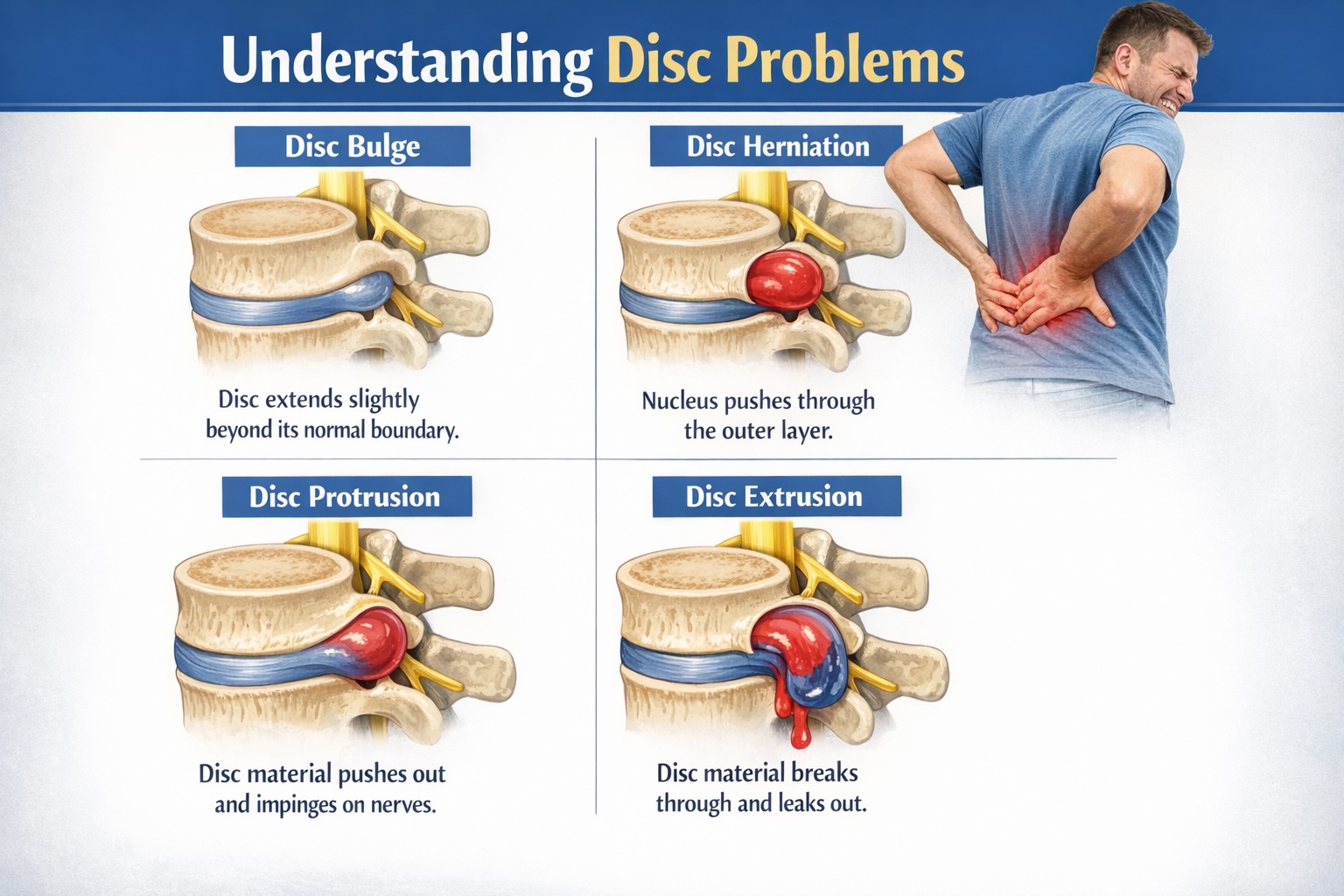
Over that amount of time, one thing becomes very clear: the details of how a patient's symptoms behave matter. Leg numbness that appears with walking can sometimes be associated with spinal stenosis, foraminal narrowing, a disc problem or irritation of a nerve in the lower back. It can also have causes that aren't coming from the spine.
That's why the first step is figuring out what you're dealing with.
⭐⭐⭐⭐⭐ “I Lost Mobility and Had Difficulty Even Putting Shoes On”
“I can walk, run and exercise without any pain.”
“I have been seeing Dr. Boelk since November for my back pain due to disc herniation. I lost mobility and had difficulty even putting shoes on. The pain was interfering with my everyday lifestyle. After reviewing the X-ray results, we agreed upon a treatment plan. Agreeing to this treatment plan was the best choice I've made for my back pain. The spinal decompression has relieved all the pain I felt in my lower back. I can walk, run and exercise without any pain and I'm able to get back in the gym and continue my daily routines. The office staff are very friendly and caring as well. I highly recommend Dr. Boelk's office to anyone seeking exceptional care.”
— Paul C
Paul's review is a good example of why Dr. Boelk looks at function in addition to pain. His problem was interfering with ordinary things like putting on his shoes, and today he describes being able to walk, run, exercise and return to the gym.
For someone whose primary complaint is numbness, the change in function can be easy to overlook. If you're walking half as far as you were six months ago, that's important even if your actual pain level isn't particularly high.
Start With a No-Charge Consultation With Dr. Boelk
If you're coming from Chula Vista because your leg or foot goes numb when you walk, you don't need to decide beforehand that you want spinal decompression. The purpose of the consultation is to determine whether your symptoms appear to be coming from something Dr. Boelk treats and whether he believes you're an appropriate candidate.
During the No-Charge Consultation, Dr. Boelk will personally:
-
Listen to how the problem started and how it has changed.
-
Go over where the numbness, tingling or pain travels.
-
Discuss how long you can walk or stand before symptoms begin.
-
Look at what makes the symptoms better or worse.
-
Discuss any weakness or changes in the way you're walking.
-
Review previous treatment and how you responded.
-
Review your actual MRI images and report if you have them.
-
Compare the imaging findings with your symptoms.
-
Discuss whether additional examination or imaging may be appropriate.
-
Determine whether Non-Surgical Spinal Decompression may be an option.
-
Answer your questions and explain what he thinks makes sense as the next step.
You don't need an MRI to schedule the consultation.
There is no charge and no obligation to begin treatment. If Dr. Boelk doesn't believe you're an appropriate candidate for his care, he'll tell you.
Dr. Boelk personally performs these consultations while continuing to treat the patients already under his care. Because of the time involved, the office can only set aside a limited number of No-Charge Consultation appointments during the clinic schedule. Once those appointments are taken, new patients are offered the next available openings.
Call 619-298-0800 and ask about the next available No-Charge Consultation with Dr. Cassidy James Boelk, DC.
What Should You Pay Attention to When the Numbness Starts?
You don't need to turn every walk into a medical experiment, but there are a few things worth noticing.
How long can you walk comfortably before anything starts? Once the numbness begins, where do you feel it first? Does it stay in one place, or does it move farther down the leg as you continue walking?
Also notice what makes it stop.
-
Does standing still help?
-
Do you actually need to sit down?
-
Does leaning forward make a difference?
-
Can you walk farther while leaning over a shopping cart?
-
How quickly does the sensation return to normal?
-
When you start walking again, does the numbness return at about the same distance?
-
Is one leg affected or both?
Those answers can give Dr. Boelk useful information about how the nerves are behaving.
Could Spinal Stenosis Be Causing It?
It can be one possible cause.
Spinal stenosis involves narrowing of the space available around the spinal canal or nerves. Foraminal stenosis refers to narrowing around the opening where a spinal nerve exits. Some patients with these conditions develop pain, tingling, heaviness or numbness in the legs when they're standing or walking.
A lumbar disc problem can also irritate a nerve and produce symptoms farther down the leg. Depending on the nerve involved, symptoms may show up in the thigh, calf, foot or toes.
But Dr. Boelk doesn't diagnose stenosis or a disc problem simply because someone feels better when they sit down. Circulation problems, peripheral nerve problems and other medical conditions can also cause leg symptoms.
The history needs to make sense. The examination needs to make sense. And when imaging is available, that should make sense too.
⭐⭐⭐⭐⭐ “Walking or Standing Felt Like Torture”
“Now, I’m walking regularly, standing up straight—something I couldn’t do before.”
“Last year, I spent three months constantly going back and forth between doctor’s appointments and urgent care. The pain was unbearable—I was taking medication regularly just to get through the day. Getting out of bed was excruciating, and walking or standing felt like torture. Every step filled me with dread.
In December, my doctor finally ordered an MRI. That’s when I learned I had an extruded disc pressing on my L5 nerve, which affects the leg and foot. My doctor scheduled two follow-up appointments: one for pain management (spinal injections), and another to evaluate me for surgery.
Then I discovered spinal decompression therapy. I was thrilled to find a non-invasive alternative. I never ended up needing either of those appointments.
Now, I’m walking regularly, standing up straight—something I couldn’t do before. When I first sought help, I was so hunched over that I had to use a cane just to move forward. Because of the pain, I hadn’t exercised in months. But now, I’m doing a program called 75 hard which requires not one but 2 45-minute workouts per day, and I've even gotten back to lifting weights!
I’m so thankful I found this place. It’s conveniently located near my work, which makes it easy to fit sessions into my lunch break. Dr. Boelk and the staff are incredibly friendly and polite—it’s always a pleasure to come in.
The environment is so relaxing that I look forward to each visit. I truly thank God for leading me to this alternative. It’s made such a difference in my life.”
— Amanda, San Diego, CA
Amanda's MRI showed an extruded disc affecting her L5 nerve, and her ability to stand and walk had been severely affected before treatment.
Her story doesn't mean that everyone with numbness when walking has an L5 disc problem. It shows why Dr. Boelk wants to identify what is actually producing the symptoms before deciding what to do about them.
Numbness Is One Thing. Losing Strength Is Another.
Patients will sometimes tell Dr. Boelk that their leg feels “dead” or “weak” when what they really mean is numb. He'll usually dig into that a little further because a change in sensation and a true loss of strength aren't the same thing.
If strength is changing, some things you might notice include:
-
Difficulty lifting the front of the foot.
-
Your foot beginning to slap when you walk.
-
Trouble walking on your heels.
-
Difficulty pushing yourself up onto your toes.
-
One leg becoming noticeably weaker on stairs.
-
Catching your foot or tripping more frequently.
Progressive weakness is not something Dr. Boelk recommends repeatedly pushing through to see what happens.
Rapidly increasing weakness, new bowel or bladder dysfunction, difficulty urinating, or numbness around the groin or saddle area requires prompt medical evaluation.
Why Dr. Boelk Likes to See the Actual MRI
Patients frequently arrive with a radiology report containing several abnormal findings. They may have a bulging disc at L4-L5, degeneration at L5-S1, foraminal narrowing and facet changes all listed on the same page.
Which one is causing the leg numbness?
Sometimes the answer isn't obvious from the report.
Dr. Boelk prefers to review the actual MRI images when they're available and compare what he sees with the patient's symptoms. If the outside of your right leg and foot become numb when you walk, does the imaging show something that could reasonably affect the nerve supplying that area? Does the level make sense? Does the way your symptoms behave make sense?
An MRI is extremely useful, but Dr. Boelk doesn't believe it should be evaluated in isolation from the patient.
Is Non-Surgical Spinal Decompression an Option?
For some patients, yes.
Dr. Boelk evaluates people with disc bulges, disc herniations, degenerative disc disease, disc-related sciatica, foraminal narrowing and selected cases of spinal stenosis. The clinic uses the DRX9000 exclusively for Non-Surgical Spinal Decompression.
But having one of those diagnoses does not automatically make someone a candidate.
Dr. Boelk considers the patient's history, neurological symptoms, examination findings, imaging, spinal stability, bone health, previous surgery and other medical factors before recommending treatment.
There are also conditions that can make decompression inappropriate, including significant osteoporosis, an unhealed fracture, unstable spondylolisthesis, abdominal aortic aneurysm, pregnancy for lumbar decompression, certain malignancies and other medical or structural conditions. Previous fusion or metal hardware at the level that would need treatment also requires careful consideration.
★ Sometimes the Right Answer Is Not Spinal Decompression
“He could not treat me as I have to wait until the fracture in my neck heals.”
“I decided to see Dr. Boelk after a pretty gnarly motocoss neck injury. At the Hospital I was at, I felt I was getting pressured into a surgery which I refused. A friend of a friend referred him after Dr. Boelk successfully treated his broken back.
Dr. Boelk is a compassionate individual who truly cares about his patients. He looked at my MRI images, explained what he saw and potential routes for recovery. He could not treat me as I have to wait until the fracture in my neck heals, but the level of professionalism, compassion, caring and knowledge displayed by him was exceptional.
He also recommended to seek an additional opinion form another neurosurgeon. My experience was that he really cares and he's not someone who would take advantage of the situation someone's in (unlike some other doctors). I will definitely be back and already recommended him to others as well! Thank you Dr. Boelk!”
— Jan H., San Marcos, CA
Jan wasn't treated because his fracture needed to heal first. Dr. Boelk also recommended that he obtain another neurosurgical opinion.
That's exactly why the consultation comes before treatment. The purpose is to decide whether Dr. Boelk believes he can safely and appropriately help you.
Experience Matters When You're Deciding What to Do Next
Dr. Cassidy James Boelk, DC has more than 22 years of experience with Non-Surgical Spinal Decompression and has performed more than 100,000 spinal decompression treatments. His clinic has seven DRX9000 systems and is the largest known Non-Surgical Spinal Decompression clinic in Southern California.
His professional background includes:
-
Doctor of Chiropractic
-
Certified Spinal Decompression Doctor
-
Certified Pain-Free Performance Specialist (PPSC)
-
Founder, Non-Surgical Spinal Decompression Training Academy
-
Trains other doctors in spinal decompression protocols and techniques
-
Founding Member, American Spinal Decompression Society
-
Member, International Disc Education Association
-
California X-Ray Radiation Supervisor & Operator
Dr. Boelk's experience with spinal injuries is personal as well. He suffered an L5 compression fracture at age 16 and later dealt with disc injuries and sciatica himself.
Are You Slowly Changing Your Life Around the Numbness?
This is something patients don't always recognize right away.
You may still be working. You may still be going out. You may still be getting through the grocery store. But maybe you're parking closer now, skipping your evening walk, looking for somewhere to sit when you arrive or leaning on the shopping cart because you know it helps.
Think about what you could comfortably do six months ago compared with today.
If your walking tolerance has gone from 45 minutes to 30 minutes to 10 minutes, the trend is worth paying attention to. You don't need to wait until walking becomes extremely difficult before having someone look at why it's happening.
And getting an opinion doesn't commit you to treatment.
The No-Charge Consultation gives you an opportunity to explain what's happening, show Dr. Boelk your MRI if you have one and find out whether he believes you're someone he may be able to help. If he doesn't, he'll tell you. If he believes you may be a candidate, he'll explain what he sees and what he recommends, and you decide what you want to do from there.
Because Dr. Boelk personally performs these consultations while treating his existing patients, only a limited number are available in the clinic schedule.
Call 619-298-0800 to ask about the next available No-Charge Consultation.
The Spinal Decompression & Chiropractic Center of San Diego
5095 Murphy Canyon Road, Suite 300
San Diego, CA 92123
619-298-0800
SanDiegoBackCare.com
Live 24/7 Answering Service • Hablamos Español
Related Articles
Can You Have Sciatica Without Back Pain? | Chula Vista, CA
Can Spinal Decompression Help Sciatica Nerve Pain? | Chula Vista, CA