Why Does My Back Sciatica Nerve Pain Keep Coming Back? – San Diego, CA
Your leg finally feels better. You get through a week of work, take a longer walk, and start thinking the sciatica is behind you. Then halfway through a drive, the same burning pain shows up in your calf.
Sciatica can come back when a nerve is still sensitive and you spend more time sitting, walking, or lifting than you currently tolerate. Sometimes the pattern has changed enough that it makes sense to reassess where the pain is coming from. Where you feel it, what brings it on, and how long it takes to settle can help you and your clinician decide what to do next.
Dr. Cassidy James Boelk, DC, evaluates recurring sciatica and disc-related back and leg symptoms at The Spinal Decompression & Chiropractic Center of San Diego in Kearny Mesa. He is a Certified Spinal Decompression Doctor and Certified Pain-Free Performance Specialist with more than 22 years of clinical experience.
Start With a No-Charge, No-Obligation Consultation
If your sciatica keeps returning, start with a conversation. Tell Dr. Boelk what improved, when the pain came back, and what it’s keeping you from doing now. If you have an MRI report or images, bring them along. If you’ve already tried exercises, physical therapy, or injections, describe what helped and how long the improvement lasted.
You can ask how DRX9000 non-surgical spinal decompression works and whether a formal evaluation would make sense for you.
Call 619-298-0800 to schedule a complimentary, no-charge, no-obligation consultation.
Patient Experience — When Relief Was Only Temporary
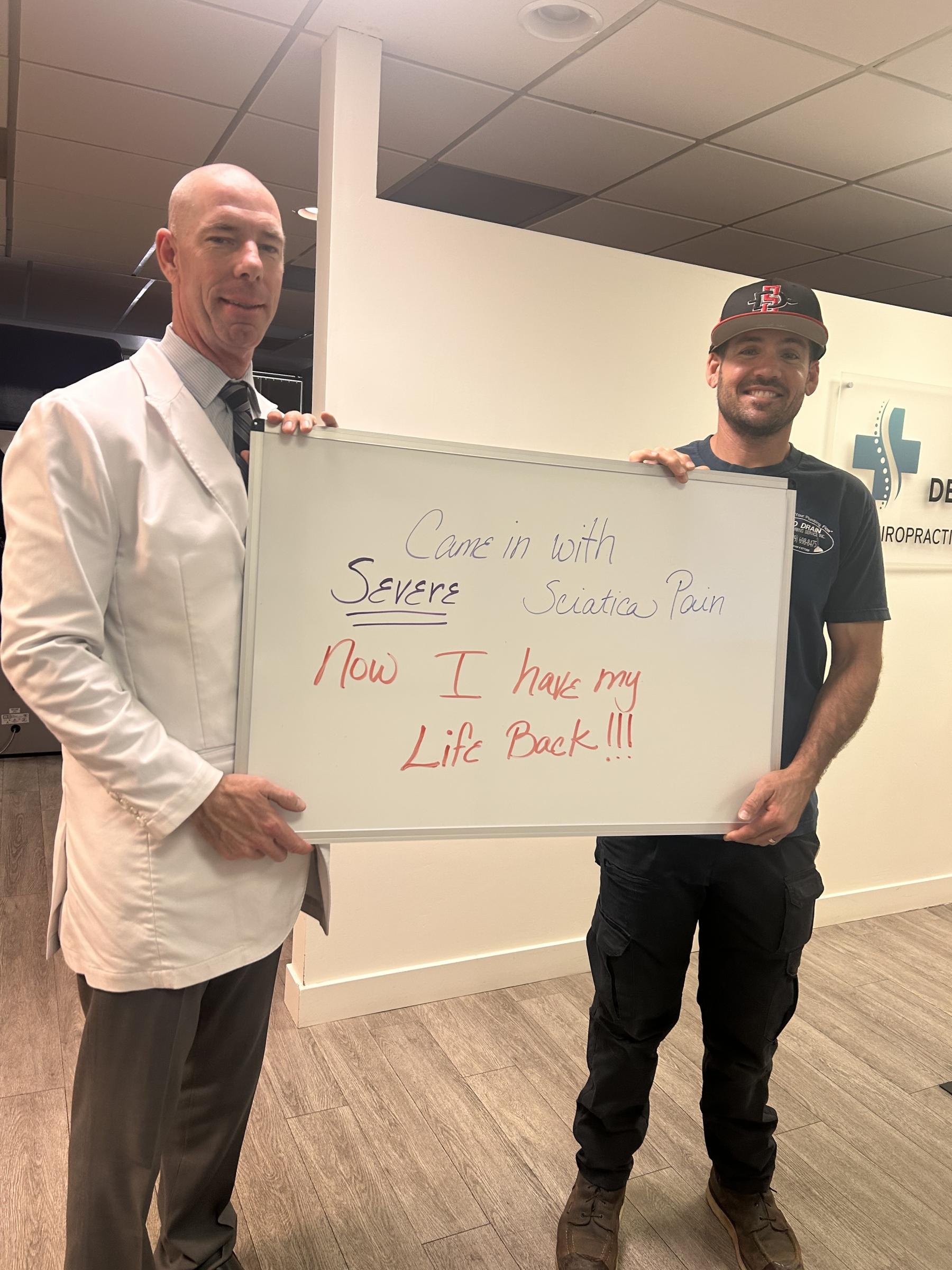
Yuri Fresia had dealt with sciatica for several months. In his review, he describes getting temporary relief before coming to the clinic and what it meant to get back to work, surfing, and training.
“When I first came here I was suffering from sciatica pain for several months non stop. I tried many different non invasive treatments, pain killers but relief was just temporary. I heard about Dr. Boelk on social media and after reading other people testimonials about him I decided to try. It felt better since my first session. After 12 I felt I was improving a lot but still had room to get better so we decided trying 12 more. After 36 sessions I felt I was back to normal. I could get back to surf, jiu jitsu and work after 6 months away. Doctor helped me through the whole process, leaving me free to decide the next step and being honest about expectations. I totally recommend for all my friends that suffer from sciatica pain. It’s worth 100%.”
— Yuri Fresia, Patient Review
Why Does Sciatica Come Back After You Start Feeling Better?
It’s easy to judge recovery by how you feel when you wake up. But getting out of bed comfortably and sitting through an hour in the car are different demands. You may be comfortable on a short drive and still notice leg pain on a longer one. That gives you a clue about what you can tolerate right now.
1. You went back to your usual routine faster than you could tolerate it
Say you’ve been taking short walks without much trouble, so you go back to your usual hour-long route. Your calf starts burning halfway through, and the pain hangs around that evening. The next time, a shorter route may be a more manageable starting point. Pay attention to how you feel during the walk and later that day before increasing the distance.
2. The same position keeps bringing the symptoms back
Maybe you feel fine at breakfast, but the pain starts twenty minutes into every drive. Or you can move around comfortably, then your foot starts tingling after a long stretch at your desk. For some people, breaking up prolonged sitting and changing positions can help them get through the day more comfortably. The repeatable pattern is also useful information for your clinician.
3. What you’re feeling this time is different
Last time, the pain stopped at your thigh. This time, it reaches your foot, your toes feel numb, or the front of your foot is harder to lift. Tell your clinician what changed and when it started. Pain location, sensation, and strength each provide different information about what may be happening. New or worsening leg or foot weakness needs prompt medical evaluation.
Does a Flare Mean You Herniated the Disc Again?
A return of leg pain by itself can’t tell you whether the disc has changed. Your clinician can compare the new episode with the previous one and look at where the symptoms travel, what brings them on, and whether strength, sensation, or reflexes have changed. If you already have an MRI, the exam helps determine whether those findings still fit what you’re experiencing.
One useful detail to bring to an appointment is a before-and-after example. “Last month I could drive forty minutes before my leg bothered me. Now my foot starts tingling after ten.” That gives your clinician something specific to assess and a way to measure progress later.
How Can Active Rehab Help You Get Back to Your Routine?
If the pain has eased and you’re ready to do more, the next step is to build toward the activities you want back. If that’s golf, your starting point might be a short practice session you can tolerate comfortably. If it’s work, it might be building up how long you can sit, stand, or carry things without setting off your leg symptoms.
Dr. Boelk considers which movements are limited, how much activity you can comfortably tolerate, and where exercises for strength and stability may help. The exercises and pace depend on your exam and how you respond. Someone working back toward walking the dog may need a different plan from someone returning to a job that involves lifting.
Where Does DRX9000 Non-Surgical Spinal Decompression Fit?
DRX9000 spinal decompression is a form of mechanical traction. The computerized system applies controlled cycles of traction while you lie supported on a specialized table. Dr. Boelk may consider it for selected patients with disc-related sciatica after reviewing their history, examination, and relevant imaging.
A formal evaluation may include orthopedic and neurological testing. When appropriate, Dr. Boelk may recommend standing, weight-bearing spinal X-rays, including flexion and extension views, to assess alignment and possible instability. MRI is considered case by case. Depending on the findings, the recommendation may be active rehabilitation, further testing, or referral to another specialist.
Learn more about DRX9000 spinal decompression.
Why Choose Dr. Boelk, DC, for Recurring Sciatica?
Dr. Boelk has spent much of his career evaluating herniated discs, sciatica, and other disc-related neck and back conditions. He fractured his lower back at 16 and later experienced lumbar disc herniations and sciatica himself. He has spent thousands of hours rehabilitating his own injuries and helping patients with theirs.
His credentials and experience include:
-
Board-Certified Doctor of Chiropractic
-
Certified Spinal Decompression Doctor
-
Certified Pain-Free Performance Specialist
-
More than 22 years of clinical experience
-
More than 100,000 spinal decompression sessions performed or overseen
-
Founder of the Spinal Decompression Training Academy, where he trains other doctors in treatment protocols and patient selection
-
Founding Member of the American Spinal Decompression Society
-
Member of the International Disc Education Association
-
California X-ray Radiology Licensed Doctor
-
Seven dedicated DRX9000 systems, including four lumbar and three cervical units
The Kearny Mesa practice welcomes patients from throughout San Diego County. Patients have also traveled from other states and countries, including Mexico, Canada, Spain, and the United Kingdom.
Patient Experience — Getting a Straight Answer After Back Surgery
Previous back surgery can affect which options are appropriate. Toni W. shared what she took away from a consultation after having surgery involving spinal hardware.
“Very nice Dr. and Honest ! I would definitely recommend anyone who hasn't had metal put in there back in a surgery to go to him and give his program a shot. I believe it would definitely help. Just not in my personal case. As I have a lot of hardware in my back. But I'm glad I took the time to meet with him. It was very informative all around.”
— Toni W., Lake Elsinore, CA
Frequently Asked Questions
Can sciatica come back even if my back feels fine?
Yes. When a nerve root in the lower back is irritated, the symptoms you notice most may be burning in your calf or tingling in your foot. An examination can help determine whether those symptoms are coming from the lower back or another source.
Should I keep doing the exercises that helped last time?
If you were given a home program, follow the guidance you received and check in if your symptoms have changed or the exercises now aggravate them. The location of the pain, your tolerance for activity, and any change in strength or sensation can affect what makes sense now.
When should I get recurring sciatica checked?
Arrange an evaluation if the pain keeps returning, is getting worse, or is interfering with walking, work, or sleep. New or worsening leg or foot weakness needs prompt assessment. New trouble urinating, loss of bladder or bowel control, or numbness around the groin or saddle area requires emergency evaluation.
Schedule Your No-Charge, No-Obligation Consultation
If your sciatica keeps coming back, call 619-298-0800 to schedule a complimentary, no-charge, no-obligation consultation with Dr. Cassidy James Boelk, DC. Bring your imaging if you have it and tell him what’s changed since your last flare. You can talk through your options before deciding on a next step.
The Spinal Decompression & Chiropractic Center of San Diego
5095 Murphy Canyon Road, Suite 300
San Diego, CA 92123
Office phone 619-298-0800
Website www.SanDiegoBackCare.com
Email frontdesk@sandiegobackcare.com
24/7 telephone answering available • Hablamos Español