Why Can I Barely Walk Because of Sciatica? | Scripps Ranch, CA
When Sciatica Makes Even Simple Activities Difficult
If your sciatica has become so severe that walking across the room feels like a challenge, you're not alone.
Many people assume this level of pain means they have permanently damaged a nerve or that surgery is inevitable. While those situations do occur, severe pain does not automatically mean surgery is the only answer.
Patients frequently arrive at The Spinal Decompression & Chiropractic Center of San Diego after weeks or even months of struggling to walk comfortably. Some have difficulty standing long enough to cook dinner. Others have stopped exercising, playing golf, traveling, or even walking through the grocery store because the pain shooting down their leg has become unbearable.
The good news is that sciatica is a symptom—not a diagnosis.
Before deciding on treatment, it's important to understand why the sciatic nerve has become irritated.
Patient Success Story
⭐⭐⭐⭐⭐ Anthony K. — San Diego, CA
"I have been dealing with back pain for several years. It got so bad that I had surgery five years ago for a bulging disc. About five months ago the disc bulged again, hitting my sciatic nerve and creating pain in my legs that made me want to cry because it hurt so badly.
After trying so many other options, I was fortunate enough to find The Spinal Decompression & Chiropractic Center of San Diego.
After just a few sessions I noticed a difference. Now after being there for the past few months, I'm able to go about my normal life again.
What a blessing it was to find a doctor who genuinely cares and knows how to help people in my situation.
Thank you, Dr. Boelk."
What Causes Sciatica?
Although the pain often travels into the buttock, thigh, calf, or foot, the problem usually begins in the lower back.
Several different conditions may place pressure on one of the spinal nerves that eventually forms the sciatic nerve, including:
-
Lumbar disc herniations
-
Bulging discs
-
Degenerative disc disease
-
Foraminal stenosis
-
Spinal stenosis
-
Spondylolisthesis
-
Arthritic narrowing around the spinal joints
Because several conditions can produce nearly identical symptoms, treatment should never be based solely on where the pain is felt.
The real question is:
What is irritating the nerve?
Why Walking Sometimes Makes It Worse
Walking changes the position and loading of the lumbar spine.
For some patients, that increased loading places additional pressure on an already irritated spinal nerve, causing pain to travel farther down the leg.
Others actually feel better while walking and worse when sitting.
That difference provides valuable information during an evaluation.
For example, patients with spinal stenosis often report they can walk farther while leaning forward over a shopping cart. Patients with a disc injury may experience the exact opposite.
Understanding these movement patterns helps guide both diagnosis and treatment recommendations.
When Is Sciatica Considered Serious?
Most cases of sciatica improve without surgery, but there are situations that require prompt medical attention.
Patients should seek immediate evaluation if they experience:
-
Progressive leg weakness
-
Foot drop
-
Loss of bowel or bladder control
-
Numbness around the groin or saddle area
-
Rapidly worsening neurological symptoms
These findings are uncommon but should never be ignored.
For everyone else, the next step is determining whether the symptoms are coming from a condition that may respond to conservative care.
Why an Accurate Diagnosis Matters
Dr. Cassidy James Boelk believes one of the biggest mistakes patients can make is assuming every case of sciatica should be treated the same way.
Two people may both complain of pain running down the right leg, yet one has a herniated disc while the other has severe spinal stenosis.
Although the symptoms sound similar, the treatment recommendations may be completely different.
That is why every recommendation begins with understanding the patient's history, physical examination, imaging findings, and overall goals before discussing treatment options.
Why Experience Can Make a Difference
Not every doctor who offers spinal decompression specializes in treating complex disc injuries and sciatica.
For patients dealing with severe leg pain, numbness, or difficulty walking, experience matters.
Dr. Cassidy James Boelk, DC has specialized in non-surgical spinal decompression for more than 22 years and has performed over 100,000 spinal decompression treatments. During that time, he has evaluated patients with everything from simple disc bulges to complicated cases involving spinal stenosis, recurrent disc herniations, degenerative disc disease, failed back surgery, and spondylolisthesis.
Rather than recommending the same treatment for every patient, Dr. Boelk believes each person deserves an individualized evaluation to determine the true source of their symptoms and whether they are an appropriate candidate for conservative care.
Not Every Patient Is a Candidate
One of the things that separates Dr. Boelk's office from many clinics is a philosophy that surprises some patients:
Not everyone should receive spinal decompression.
Some patients are excellent candidates.
Others may benefit more from another conservative treatment.
And in some situations, surgery or consultation with a spine specialist may be the safest recommendation.
The goal has never been to place every patient on a decompression table.
The goal is helping patients find the treatment that gives them the greatest opportunity for improvement.
More Than Just the DRX9000
The DRX9000 is an important part of treatment for many patients with disc-related sciatica, but successful care involves much more than the equipment itself.
Every treatment plan is customized based on:
-
The patient's diagnosis
-
MRI and X-ray findings
-
Orthopedic and neurological examination
-
Symptom severity
-
Previous treatment history
-
Overall health
-
Progress throughout care
As symptoms improve, treatment recommendations also evolve.
Many patients eventually progress into rehabilitation exercises designed to improve spinal stability, strengthen the core, and reduce the likelihood of future flare-ups.
The goal isn't simply reducing pain.
The goal is helping patients return to the activities they enjoy with greater confidence.
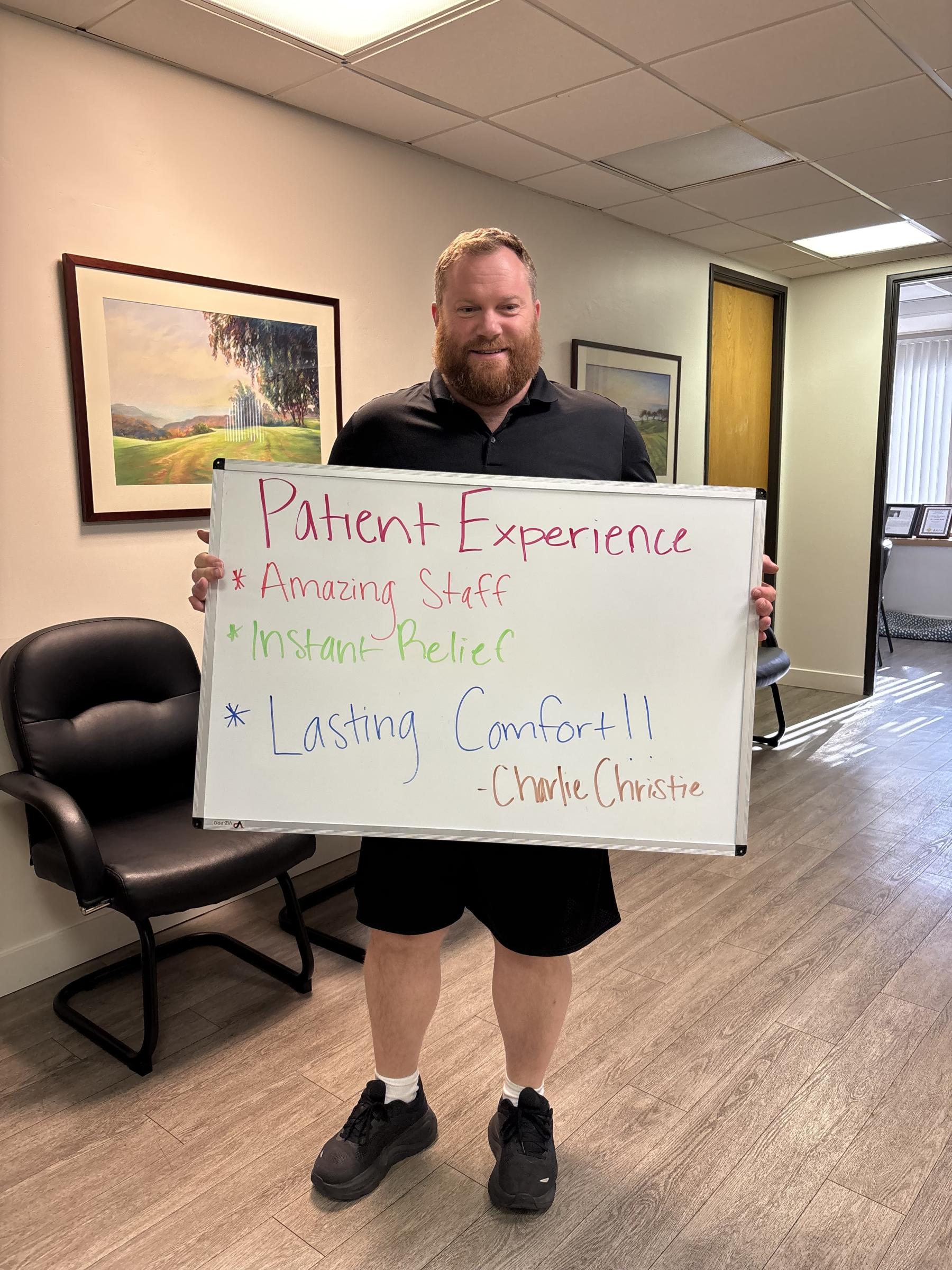
Real Patient Experience
⭐⭐⭐⭐⭐ Jayson Yavorsky — San Diego
"Since my recovery, I have referred my wife, daughter, mother, father, numerous friends, and many clients to Dr. Boelk. Every one of them has thanked me for recommending his office.
What impresses me most is his honesty. If he believes someone is not a candidate, he'll tell them. If another treatment is more appropriate, he'll explain why.
I trust him completely and would recommend anyone suffering with back pain or sciatica schedule an evaluation."
What Happens During the Initial Consultation?
Every patient begins with a conversation.
Before discussing treatment, Dr. Boelk wants to understand:
-
Where the pain travels
-
How long the symptoms have been present
-
Whether numbness or weakness is developing
-
What treatments have already been attempted
-
Whether previous imaging is available
-
How the symptoms affect everyday activities
If additional testing or a comprehensive examination is recommended, everything is explained before moving forward.
The purpose is not to pressure patients into treatment.
The purpose is to determine whether spinal decompression—or another treatment option—is appropriate.
About Dr. Cassidy James Boelk, DC
Dr. Cassidy James Boelk is:
-
Board-Certified Doctor of Chiropractic
-
Certified Spinal Decompression Doctor
-
Certified Pain-Free Performance Specialist (PPSC)
-
California Licensed X-Ray Supervisor & Operator
-
Founder of the Non-Surgical Spinal Decompression Training Academy
-
Founding Member of the American Spinal Decompression Society
For more than 22 years, he has dedicated his practice to treating disc-related spinal conditions and has performed over 100,000 spinal decompression treatments.
His office utilizes seven DRX9000 spinal decompression systems, making it one of the largest non-surgical spinal decompression centers in California.
Find Out If You're a Candidate
If sciatica is making it difficult to walk, work, sleep, or enjoy everyday life, the first step is finding out why.
The team at The Spinal Decompression & Chiropractic Center of San Diego offers a Complimentary No-Charge Consultation for individuals who want to learn whether they may be a candidate for further evaluation and non-surgical spinal decompression.
Your Complimentary Consultation Includes:
-
A private consultation with Dr. Cassidy James Boelk, DC
-
Discussion of your symptoms and medical history
-
Review of any MRI or X-rays you already have
-
Honest recommendations regarding your condition
-
Time to ask questions
-
No pressure and no obligation
If Dr. Boelk believes spinal decompression is appropriate, he'll explain why.
If another treatment or referral would be more appropriate, he'll explain that as well.
The Spinal Decompression & Chiropractic Center of San Diego
5095 Murphy Canyon Road, Suite 300
San Diego, CA 92123
Call (619) 298-0800
Patients from Scripps Ranch, Mira Mesa, Poway, Rancho Peñasquitos, Kearny Mesa, and throughout San Diego County visit the practice to learn whether they may be candidates for non-surgical spinal decompression.
Call (619) 298-0800 today to schedule your Complimentary No-Charge Consultation and find out whether conservative treatment may be the right next step.