Why Can I Barely Walk Because of Sciatica? | Rancho Peñasquitos, CA
When Walking Becomes the Most Painful Part of Your Day
Sciatica can dramatically change everyday life. What starts as occasional lower back pain can progress into sharp, burning pain that radiates into the buttock, thigh, calf, or foot. For many people, the most frustrating symptom is not sitting or sleeping—it's walking.
Patients often describe needing to stop after only a few minutes because the pain becomes unbearable. Others begin limping, leaning to one side, or avoiding activities they once enjoyed because walking has become so difficult.
If this sounds familiar, you're probably asking the same questions many patients ask during their first visit:
-
Why does walking make the pain worse?
-
Am I damaging the nerve every time I walk?
-
Do I have a herniated disc?
-
Is surgery my only option?
The answer depends entirely on what is causing the sciatic nerve to become irritated.
Patient Success Story
⭐⭐⭐⭐⭐ Jayson Yavorsky — San Diego
"I have recommended Dr. Boelk to my family, friends, and clients because I trust him completely. Most recently, a firefighter friend suffering from severe sciatica began treatment and is making tremendous progress.
What I appreciate most is his honesty. If he believes someone isn't a candidate, he'll tell them. If another treatment is more appropriate, he'll explain why.
That's rare, and it's one of the reasons I continue referring people to his office."
Why Does Walking Aggravate Sciatica?
Although the pain is usually felt in the leg, the problem often begins in the lumbar spine.
Conditions that commonly irritate the sciatic nerve include:
-
Herniated discs
-
Bulging discs
-
Degenerative disc disease
-
Foraminal stenosis
-
Lumbar spinal stenosis
-
Spondylolisthesis
-
Arthritic narrowing around the spinal joints
When walking, the spine continually loads and unloads with every step.
Depending on the underlying condition, that movement may temporarily increase pressure on an already irritated spinal nerve. As the pressure increases, symptoms may travel farther down the leg or become significantly more intense.
Interestingly, not everyone experiences the same pattern.
Some patients hurt more while standing.
Others hurt more while sitting.
Some feel relief when leaning forward.
Others become dramatically worse with forward bending.
These differences provide important clues about what may actually be causing the problem.
Sciatica Is Not the Diagnosis
Many people think sciatica is the diagnosis.
It isn't.
Sciatica simply describes pain that follows the path of the sciatic nerve.
The real diagnosis may be a herniated disc, spinal stenosis, degenerative disc disease, or another spinal condition.
That distinction is important because successful treatment depends on identifying the actual source of the nerve irritation—not simply treating the symptom.
This is why Dr. Cassidy James Boelk, DC performs a detailed evaluation before recommending treatment.
When Should You Be Concerned?
While many cases of sciatica improve with conservative care, certain symptoms deserve immediate medical evaluation.
These include:
-
Progressive leg weakness
-
Difficulty lifting the foot (foot drop)
-
Loss of bowel or bladder control
-
Numbness in the saddle area
-
Rapidly worsening neurological symptoms
Fortunately, these situations are relatively uncommon.
For most patients, the next step is determining exactly what is causing the pain and whether conservative treatment may be appropriate.
Can Walking Actually Be Beneficial?
This is another question patients frequently ask.
The answer is:
Sometimes.
Walking is generally considered a healthy activity, but it should not be forced through severe nerve pain.
Some patients benefit from shorter, more frequent walks.
Others need to temporarily reduce walking until the irritated nerve begins to calm down.
The correct recommendation depends on the diagnosis.
Rather than telling every patient to "walk more" or "rest more," Dr. Boelk tailors recommendations to each individual's condition, examination findings, and symptom pattern.
Understanding why walking causes pain is often the first step toward determining the most appropriate treatment plan.
Why Choosing the Right Provider Matters
Not all sciatica is the same, and not every patient should receive the same treatment.
A bulging disc, a large disc herniation, spinal stenosis, degenerative disc disease, and spondylolisthesis can all produce similar symptoms, yet each condition may require a very different treatment approach.
That is why Dr. Cassidy James Boelk believes the most important part of treatment is making an accurate diagnosis before recommending care.
For more than 22 years, Dr. Boelk has focused on the evaluation and treatment of disc-related spinal conditions. During that time, he has performed more than 100,000 non-surgical spinal decompression treatments, helping patients with neck pain, lower back pain, sciatica, and pinched nerves determine whether conservative care may be an appropriate option.
Every Treatment Plan Is Customized
No two patients receive exactly the same treatment plan.
Before making recommendations, Dr. Boelk considers:
-
The patient's symptoms
-
Orthopedic and neurological examination findings
-
MRI and X-ray results
-
Previous treatments
-
Overall health history
-
Daily activities that aggravate the condition
-
Short- and long-term treatment goals
This individualized approach helps ensure that treatment is based on the patient's specific condition—not simply the name "sciatica."
Not Everyone Is a Candidate for Spinal Decompression
One of the reasons patients seek out Dr. Boelk's office is because they know they will receive an honest recommendation.
If non-surgical spinal decompression appears appropriate, it will be discussed in detail.
If another treatment—or even a referral to a spine surgeon—is believed to be the better option, that recommendation will be made instead.
Dr. Boelk has never believed that every patient belongs on a spinal decompression table.
The priority has always been helping patients choose the treatment that gives them the best opportunity for a successful outcome.
More Than Just Pain Relief
The goal of treatment isn't simply to make the pain more tolerable.
The objective is to identify the underlying cause of the sciatica and, when appropriate, help reduce pressure on the irritated spinal nerve while improving overall spinal function.
As patients improve, treatment often progresses beyond symptom relief and begins focusing on restoring movement, improving core stability, and helping reduce the risk of future flare-ups.
Helping patients return to work, enjoy family activities, travel, exercise, and walk comfortably again is always the ultimate goal.
Real Patient Success Story
⭐⭐⭐⭐⭐ Abel T. — San Diego
"After my accident, the sciatica running down my leg became almost unbearable. Walking, sleeping, and even getting through the day was difficult.
Dr. Boelk performed a thorough evaluation and explained exactly what was causing my symptoms. After beginning treatment, my sciatic pain improved quickly, and by the end of my care I was sleeping better, walking comfortably again, and getting back to my normal life.
I couldn't be happier with the care I received."
Why Patients Throughout San Diego Choose Dr. Boelk
Patients frequently travel from Rancho Peñasquitos, Poway, Carmel Mountain Ranch, Sabre Springs, Scripps Ranch, Rancho Bernardo, and throughout San Diego County because they are looking for a practice that focuses specifically on non-surgical treatment of disc-related spinal conditions.
Dr. Cassidy James Boelk is:
-
Board-Certified Doctor of Chiropractic
-
Certified Spinal Decompression Doctor
-
Certified Pain-Free Performance Specialist (PPSC)
-
California Licensed X-Ray Supervisor & Operator
-
Founder of the Non-Surgical Spinal Decompression Training Academy
-
Founding Member of the American Spinal Decompression Society
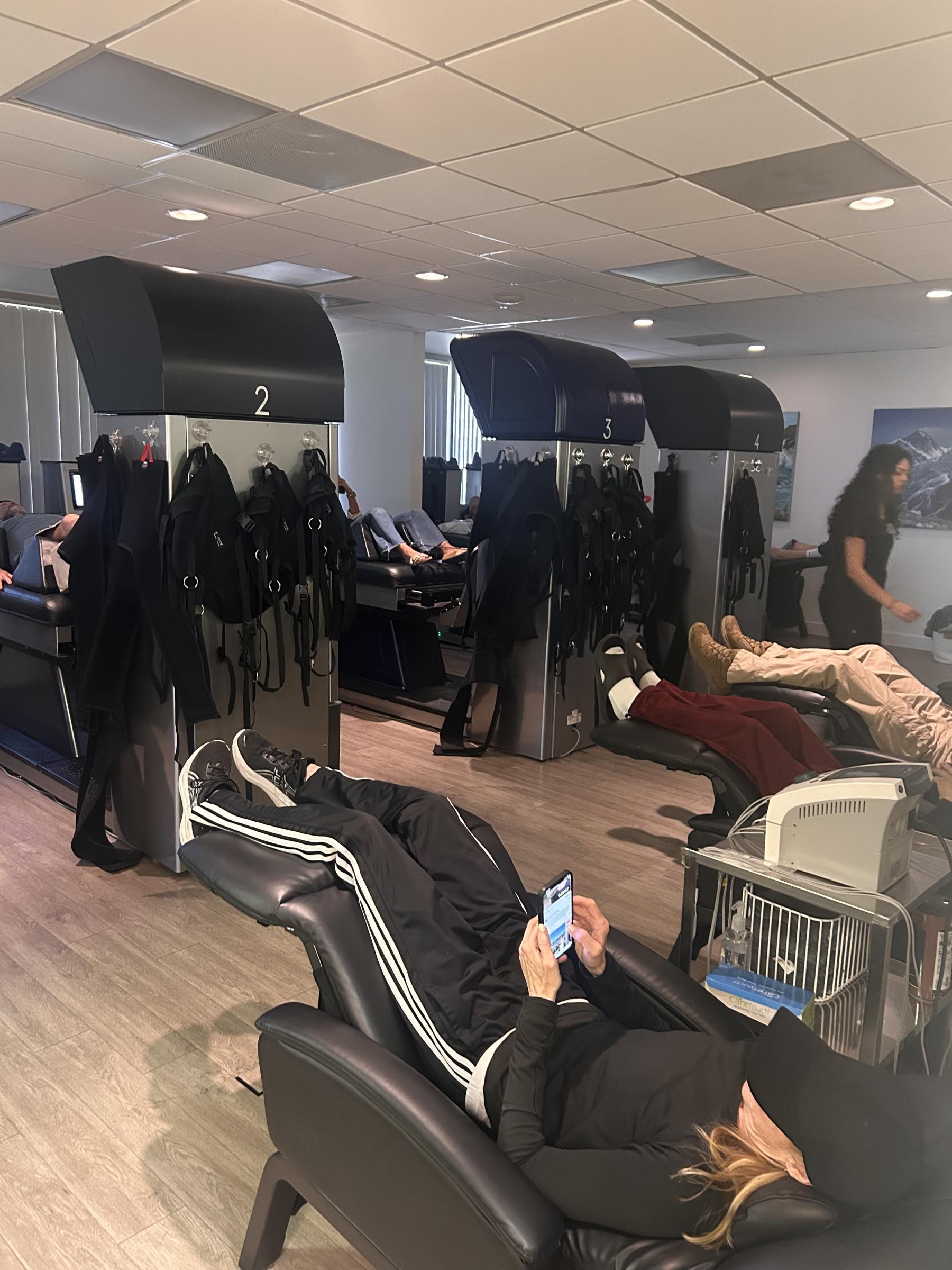
His office features seven DRX9000 spinal decompression systems and has become one of California's largest centers dedicated exclusively to non-surgical spinal decompression.
Find Out If You're a Candidate
If sciatica is making it difficult to walk, stand, sleep, or enjoy your normal daily activities, the next step is finding out what is causing the problem.
The Complimentary No-Charge Consultation allows prospective patients to meet with Dr. Boelk, discuss their symptoms, review previous imaging if available, and determine whether a comprehensive examination is the appropriate next step.
Your Complimentary Consultation Includes:
-
One-on-one consultation with Dr. Cassidy James Boelk, DC
-
Discussion of your symptoms and medical history
-
Review of MRI or X-rays, if available
-
Honest determination of whether you may be a candidate
-
Time to ask questions
-
No pressure and no obligation
The Spinal Decompression & Chiropractic Center of San Diego
5095 Murphy Canyon Road, Suite 300
San Diego, CA 92123
Call (619) 298-0800
If you live in Rancho Peñasquitos or anywhere in the greater San Diego area and would like to learn whether non-surgical spinal decompression may be right for your condition, call (619) 298-0800 to schedule your Complimentary No-Charge Consultation today.