Why Can I Barely Walk Because of Sciatica? | Mira Mesa, CA
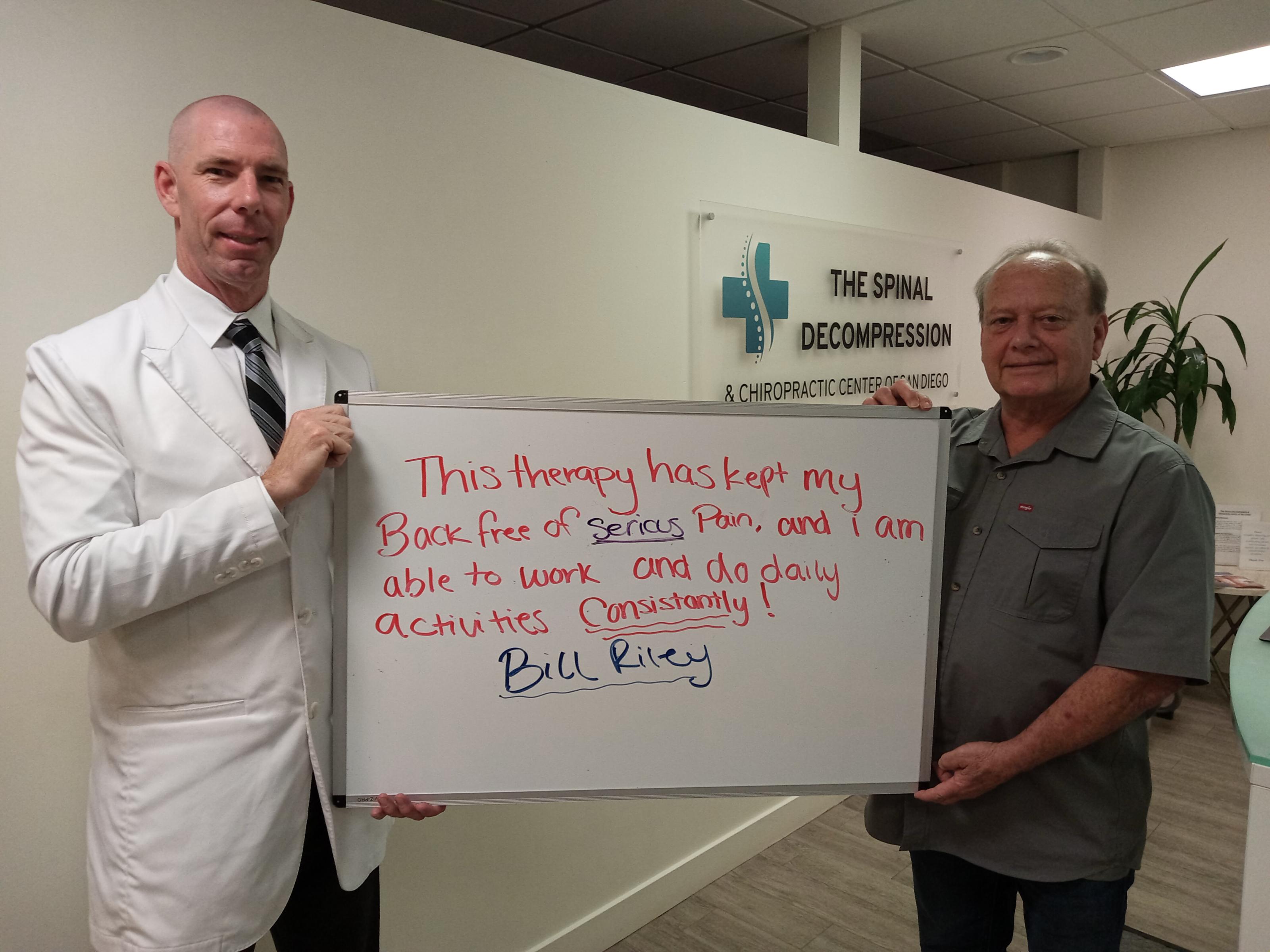
Real Patient. Real Results.
⭐⭐⭐⭐⭐ Jan H.
"After seeing several surgeons, I was told surgery was my only option. Before making that decision, I decided to see Dr. Boelk. He spent more time explaining my MRI and my condition than anyone else had. What impressed me most was that he didn't automatically recommend treatment. He told me exactly what he thought would help and what wouldn't. That honesty gave me confidence that I was in the right place. I would absolutely recommend anyone with back or neck pain get evaluated before making a decision about surgery."
Why Is It So Hard to Walk When You Have Sciatica?
If you've reached the point where walking across your house hurts, you're not alone.
One of the most common things I hear from new patients is:
"I'm okay sitting for a little while, but once I stand up, I can barely walk."
Or...
"After about five minutes my leg starts burning and I have to sit back down."
After specializing in spinal decompression for more than 22 years, I've learned that people often assume the pain in their leg is the actual problem.
Most of the time, it isn't.
The pain shooting down your buttock, thigh, calf, or into your foot is usually your body's way of telling you that something is irritating the sciatic nerve higher up in your lower back.
The challenge is figuring out what is causing that irritation.
That's why simply treating the leg rarely fixes the problem.
There Isn't Just One Cause of Sciatica
One of the biggest misconceptions I see is people saying,
"I have sciatica."
Sciatica isn't really a diagnosis.
It's a symptom.
Your sciatic nerve can become irritated for many different reasons, including:
-
A herniated or bulging lumbar disc
-
Degenerative disc disease
-
Foraminal stenosis
-
Central spinal stenosis
-
Degenerative spondylolisthesis
-
Arthritis narrowing the nerve openings
-
Less commonly, conditions outside the spine
Each one requires a different approach.
That's one reason I spend so much time reviewing imaging and performing a detailed examination before recommending any treatment.
Why Walking Makes It Worse
Patients often ask me,
"If walking is supposed to be good for your back, why does it make me feel worse?"
The answer depends on what's causing your sciatica.
For some people, every step slightly increases pressure around an inflamed nerve root.
For others, standing narrows the openings where the nerve exits the spine.
Sometimes it's a disc that's pressing against the nerve.
Sometimes it's inflammation.
Sometimes it's a combination of several problems occurring together.
Without identifying the source, you're really just guessing.
The Good News
Just because walking hurts doesn't automatically mean surgery is your next step.
I've evaluated patients who could barely walk from the waiting room to the examination room and who eventually returned to hiking, traveling, golfing, surfing, or simply walking around the neighborhood comfortably again.
I've also had patients where, after reviewing their examination and MRI, I recommended they consult with a spine surgeon because I didn't believe conservative treatment was the best option.
That surprises people.
But I'd rather lose a patient than recommend care that I don't believe gives them the best chance of improving.
That's one of the principles our office has followed for more than two decades.
Why Trust Our Office?
Choosing the right provider matters, especially if you've been told surgery may be your only option.
At The Spinal Decompression & Chiropractic Center of San Diego, you'll be evaluated by Dr. Cassidy James Boelk, DC, who has dedicated more than 22 years to treating disc-related neck and lower back conditions.
Here's what sets our office apart:
-
More than 22 years specializing in non-surgical spinal decompression.
-
More than 100,000 spinal decompression treatments performed.
-
Board-Certified Doctor of Chiropractic.
-
Certified Spinal Decompression Doctor.
-
California X-Ray Radiology Licensed Doctor.
-
Founder of the Spinal Decompression Training Academy.
-
Founding Member of the American Spinal Decompression Society.
-
Every patient receives an individualized examination before treatment is recommended.
-
We do not believe every patient is a candidate for spinal decompression.
I also understand these conditions from a personal perspective.
I have my own Grade 2 spondylolisthesis and have successfully managed my spine conservatively for many years while continuing to surf, play hockey, and stay active.
That's one reason I appreciate how frustrating chronic sciatica can be.
Serving Mira Mesa and Nearby Communities
Many of our patients come from Mira Mesa, Sorrento Valley, Miramar, Rancho Peñasquitos, and surrounding communities because they're looking for a conservative option before considering surgery.
Whether your symptoms started suddenly after lifting something heavy or have gradually worsened over months, the most important first step is determining why your sciatic nerve is being irritated—not simply trying another treatment without knowing the cause.
The First Question I Ask Every New Patient
One of the first questions I ask isn't,
"Where does it hurt?"
It's,
"What happens when you walk?"
Does the pain travel farther?
Does your foot become numb?
Do you have weakness?
Do you have to lean over a shopping cart just to get through the grocery store?
Those answers often provide valuable clues about what's actually causing your symptoms and help determine whether you're likely to respond well to conservative care.
When Should You Be Concerned?
While many cases of sciatica improve with conservative care, there are times when you shouldn't wait.
You should seek immediate medical attention if you experience:
-
Loss of bowel or bladder control.
-
Numbness in the groin or saddle area.
-
Rapidly worsening leg weakness.
-
Severe trauma followed by back pain and leg symptoms.
-
Fever, unexplained weight loss, or a history of cancer along with severe back pain.
Fortunately, these situations are uncommon, but they're important to recognize because they require immediate evaluation.
For everyone else, the key is determining why the sciatic nerve is irritated before deciding on the best treatment.
Not Every Herniated Disc Needs Surgery
One of the biggest fears patients have is hearing the words "herniated disc."
I've had countless people come into my office convinced their MRI automatically meant they needed surgery.
That's simply not true.
I've seen large disc herniations improve without surgery, and I've also seen relatively small disc bulges create severe pain because of where they were located.
The MRI is just one piece of the puzzle.
Your examination, your symptoms, your medical history, and your imaging all have to fit together before anyone should recommend a treatment plan.
Why I Don't Believe in Guessing
One thing that has become very clear after treating patients for more than two decades is this:
Too many people start treatments before anyone has actually figured out what's causing their pain.
Maybe they've already tried medications.
Maybe they've had injections.
Maybe they've been adjusted.
Maybe they've completed physical therapy.
Sometimes those treatments help.
Sometimes they don't.
But before moving on to the next treatment, I think it's important to answer one simple question:
"What is actually irritating the sciatic nerve?"
Without that answer, it's easy to spend months—or even years—trying one treatment after another without ever addressing the real problem.
We Don't Believe Everyone Is a Candidate
This surprises a lot of new patients.
Many offices recommend the same treatment for almost everyone who walks through the door.
We don't.
If I don't believe spinal decompression is likely to help your condition, I'll tell you.
In some situations, I recommend a different type of conservative care.
In others, I recommend seeing a spine surgeon or another specialist.
My goal has never been to convince someone they need treatment.
My goal is to help people make the best decision for their specific condition.
I believe that's one of the reasons so many of our patients are referred by former patients, physicians, family members, and friends.
Frequently Asked Questions
Can sciatica become permanent?
It can if significant nerve compression is left untreated for too long. That's one reason it's important to be evaluated if your symptoms aren't improving or if they're getting worse.
Should I keep walking if walking hurts?
It depends on the cause of your sciatica. For some people, short walks are beneficial. For others, walking significantly increases nerve irritation. An examination can help determine what's appropriate for your condition.
Will an MRI tell me everything?
No.
An MRI provides valuable information, but it doesn't replace a physical examination. Many people have MRI findings without pain, while others have severe symptoms with relatively modest imaging findings.
Does spinal decompression work for everyone?
No.
That's why every patient at our office receives an individualized evaluation before treatment is recommended. Some patients are excellent candidates, while others are better served with different treatments or surgical consultation.
Find Out If You’re a Candidate
If your sciatica has become so painful that you can barely walk, the next step should not be another treatment chosen without first understanding what is causing the problem.
At The Spinal Decompression & Chiropractic Center of San Diego, we offer a Complimentary No-Charge Consultation to help you determine whether our office may be the right place to start.
Your No-Charge Consultation Includes:
-
A one-on-one conversation about your symptoms and how they are affecting your life.
-
A review of your previous treatment history.
-
A review of any MRI or X-ray images you already have available.
-
An explanation of whether your symptoms may be related to a disc or nerve problem.
-
An opportunity to ask Dr. Cassidy Boelk, DC your questions.
-
An honest discussion about whether a comprehensive examination should be your next step.
-
No pressure and no obligation to begin treatment.
We do not believe every patient is a candidate for non-surgical spinal decompression.
If I believe you need a different type of care or should speak with a spine specialist, I will tell you. My goal is to help you understand your condition and make the right decision—not to pressure you into treatment.
Schedule Your No-Charge Consultation
The Spinal Decompression & Chiropractic Center of San Diego
5095 Murphy Canyon Road, Suite 300
San Diego, CA 92123
Call: 619-298-0800
SanDiegoBackCare.com
If you live in Mira Mesa, Sorrento Valley, Miramar, Rancho Peñasquitos, or anywhere in San Diego County, call 619-298-0800 today to schedule your Complimentary No-Charge Consultation and find out whether you may be a candidate for non-surgical spinal decompression.