Why Can I Barely Walk Because of Sciatica? | Kearny Mesa, CA
Real Patient. Real Results.
⭐⭐⭐⭐⭐ Jayson Yavorsky – San Diego, CA
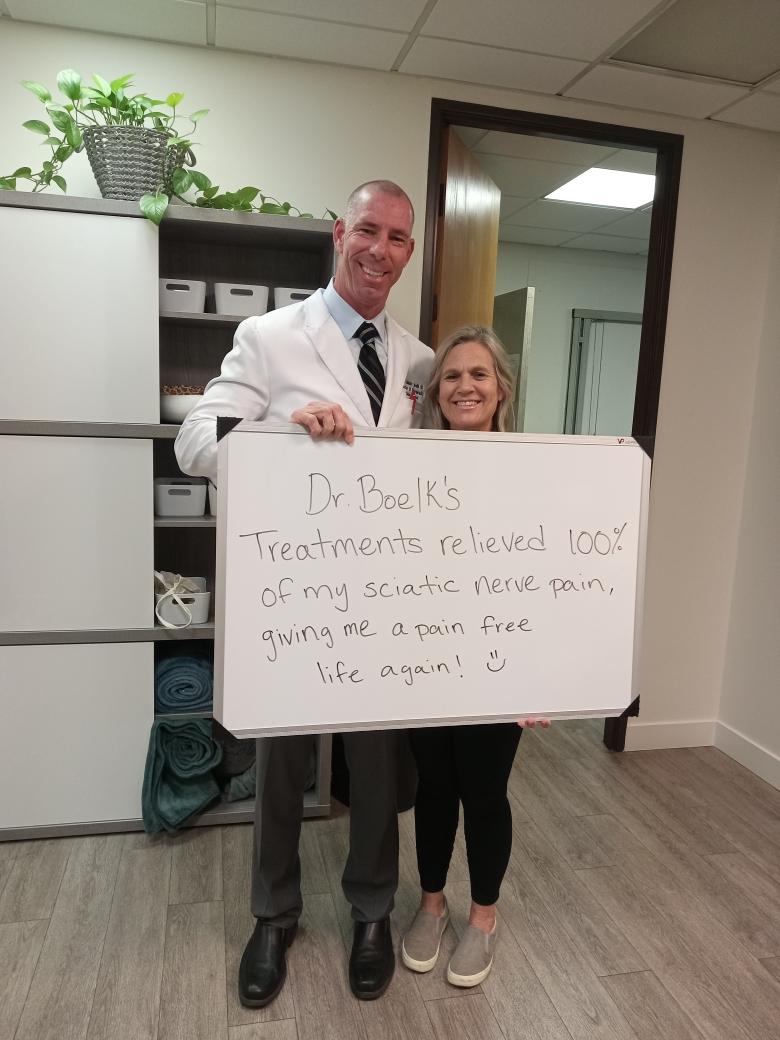
"There isn't enough room to fully explain the relief Dr. Boelk has brought to me and my family.
I found him after suffering from severe sciatica for more than a year. The pain shot from my hip all the way down to my left foot and became almost unbearable. I could no longer enjoy the activities I loved, including hockey, golf, and surfing.
Over the years, I had seen numerous chiropractors and experienced only temporary relief. Acupuncture helped somewhat, physical therapy was difficult to tolerate, and nothing seemed to provide lasting results. I couldn't sleep well, and my quality of life was steadily declining.
Then I met Dr. Boelk.
Through a structured treatment plan, adjustments, rehabilitation exercises, and lifestyle modifications, my life completely changed.
To this day, I tell people that Dr. Boelk saved my life.
Since my own recovery, I have referred my wife, daughter, mother, father, numerous friends, and many clients to his office. Every one of them has thanked me for the recommendation.
If you are considering surgery, I strongly encourage you to have Dr. Boelk evaluate your condition first.
What I respect most is his honesty. If he believes you are not a candidate or that another option would be better, he will tell you.
I trust him with my life and with my back."
Can You Barely Walk Because of Sciatica?
If you're reading this because every step hurts, you're not alone.
One of the most common reasons patients come to our office is because their sciatica has become so severe that walking across a parking lot, standing in line at the grocery store, or simply getting out of bed has become incredibly painful.
Many tell us they can tolerate the low back pain.
It's the burning, shooting pain down the leg that has completely changed their lives.
If you live or work in Kearny Mesa, even a short walk from the parking lot to your office, a trip through Costco, or your daily commute can become miserable when the sciatic nerve is inflamed.
The good news is that severe sciatica does not automatically mean you need surgery.
However, it does mean it's time to determine why your sciatic nerve is being irritated. Once the underlying cause is identified, you can begin discussing the treatment options that are most appropriate for your condition.
Find Out If You're a Candidate
At The Spinal Decompression & Chiropractic Center of San Diego, every new patient is personally evaluated by Dr. Cassidy James Boelk, DC before treatment recommendations are made.
During your visit, Dr. Boelk may:
-
Review your MRI if you've already had one.
-
Perform a detailed orthopedic and neurological examination.
-
Take digital X-rays if additional imaging is needed.
-
Explain exactly what's causing your symptoms.
-
Determine whether you're a candidate for non-surgical spinal decompression.
-
Discuss all appropriate treatment options—not just spinal decompression.
We Don't Believe Everyone Is a Candidate.
One thing that separates our office from many others is that we don't recommend the same treatment for every patient.
If we believe another form of treatment—or even surgery—is the better option, we'll tell you.
Our goal isn't simply to get you started with treatment.
Our goal is to help you make the right decision for your spine.
What Is Sciatica?
One of the biggest misconceptions is that sciatica is a diagnosis.
It isn't.
Sciatica is actually a symptom that occurs when the sciatic nerve becomes irritated or compressed somewhere in the lower back.
The sciatic nerve is the largest nerve in your body. It begins in your lower back, travels through your buttock, down the back of your leg, and continues into your foot.
When that nerve becomes irritated, you may experience:
-
Sharp pain shooting down one leg
-
Burning pain
-
Tingling
-
Numbness
-
Muscle weakness
-
Difficulty standing
-
Difficulty walking
Some patients describe it as an electric shock every time they take a step.
Others say it feels like someone is driving a knife into their buttock.
Every patient's symptoms are different because the condition causing the sciatica is different.
Why Does Walking Make Sciatica Worse?
Walking is normally one of the healthiest things you can do for your back.
So why does it become almost impossible when you have sciatica?
The answer depends on what's causing the nerve irritation.
Every step you take creates small movements throughout your spine, pelvis, hips, discs, joints, and muscles.
If a spinal nerve is already inflamed or compressed, those normal movements can increase pressure on the irritated nerve, making every step painful.
Many patients notice they can only walk a few minutes before they need to stop.
Others find themselves leaning over a shopping cart because bending forward temporarily relieves pressure on the nerve.
Some begin limping.
Others avoid walking altogether because they know how much it's going to hurt.
These symptom patterns often provide important clues about what's actually happening inside the spine.
What Causes Sciatica?
Sciatica isn't the problem.
It's the result of another problem affecting the sciatic nerve.
Some of the most common causes include:
-
Herniated discs
-
Bulging discs
-
Degenerative disc disease
-
Lumbar spinal stenosis
-
Foraminal stenosis
-
Degenerative spondylolisthesis
Although these conditions can produce nearly identical symptoms, they don't all require the same treatment.
That's why receiving the correct diagnosis is far more important than simply trying stretches you found online or hoping the pain eventually goes away.
We've evaluated patients whose MRI showed only a small disc herniation but who could barely walk because of severe nerve irritation.
We've also seen patients with much larger herniations who experienced surprisingly little pain.
The MRI is only one piece of the puzzle.
Your symptoms, physical examination, neurological findings, and imaging all have to be considered together before treatment recommendations are made.
Is It Normal to Barely Be Able to Walk?
No.
While sciatica is common, reaching the point where you're limping, avoiding activities, or struggling to walk normally should never simply be ignored.
That doesn't automatically mean surgery.
It doesn't necessarily mean permanent nerve damage.
But it does mean your body is telling you that something isn't right.
The sooner the underlying cause is identified, the sooner you can begin discussing the most appropriate treatment options instead of continuing to guess.
When Is Sciatica a Medical Emergency?
Most cases of sciatica are not medical emergencies.
However, there are situations where you should seek immediate medical attention rather than waiting for an office appointment.
Contact your physician or go to the nearest emergency room immediately if you experience:
-
Loss of bowel or bladder control.
-
Numbness in the groin or saddle area.
-
Rapidly worsening weakness in your leg or foot.
-
A foot that suddenly begins dragging when you walk.
-
Severe pain following a major fall or accident.
-
Fever, unexplained weight loss, or other signs of infection along with severe back pain.
These symptoms may indicate a more serious condition that requires immediate evaluation.
Fortunately, most people suffering from sciatica do not have these warning signs and can begin with a thorough examination to determine what's causing their pain.
Does Severe Sciatica Mean I Need Surgery?
No.
This is probably the biggest misconception we hear.
Many patients assume that because they can barely walk, surgery is their only option.
That's simply not true.
The decision to have surgery shouldn't be based solely on how much pain you're experiencing.
Instead, it should be based on:
-
What's actually causing the nerve irritation.
-
How long you've had symptoms.
-
Whether you're developing progressive neurological weakness.
-
Whether conservative treatment has been appropriate and unsuccessful.
-
Whether there are emergency findings that require immediate surgery.
Many patients improve without surgery.
Others are better served by surgical intervention.
The important thing is receiving an accurate diagnosis before making that decision.
Could Non-Surgical Spinal Decompression Help?
That depends.
At our office, we don't believe spinal decompression is the answer for everyone.
In fact, one of the most common things patients hear during their consultation is:
"You're not a candidate."
Why?
Because every spinal condition is different.
Patients with certain types of disc injuries often respond very differently than patients whose symptoms are primarily caused by advanced spinal instability, fractures, infections, tumors, or other conditions.
That's why every new patient receives an individualized evaluation before treatment recommendations are made.
If Dr. Cassidy James Boelk believes spinal decompression is appropriate, he'll explain why.
If he believes another treatment—or even surgery—is the better option, he'll explain that too.
Our responsibility is to recommend what's best for your spine, not simply recommend treatment.
Why Patients Throughout Kearny Mesa Choose Our Center
Patients from Kearny Mesa, Serra Mesa, Clairemont, Mission Valley, Tierrasanta, and throughout San Diego have trusted The Spinal Decompression & Chiropractic Center of San Diego for more than 22 years because our practice focuses almost exclusively on evaluating and treating spinal disc conditions.
Patients often tell us they appreciate that:
-
Every patient is personally evaluated by Dr. Cassidy James Boelk, DC.
-
We've specialized in non-surgical spinal decompression for more than 22 years.
-
Our office has performed more than 100,000 spinal decompression treatments.
-
Every treatment plan is individualized.
-
We never pressure patients into treatment.
-
We don't believe everyone is a candidate.
We believe earning your trust starts with giving you honest answers—not telling every patient the same thing.
Real Patient. Real Results.
⭐⭐⭐⭐⭐ Jan H. – San Marcos, CA
"Dr. Boelk is a compassionate individual who truly cares about his patients. He reviewed my MRI, explained exactly what he saw, answered every one of my questions, and discussed all of my treatment options.
Ultimately, he explained that I was not a candidate for treatment at that time because my neck fracture first needed to heal. Even though I wasn't able to begin care, he still took the time to recommend another neurosurgical opinion and made sure I understood my condition.
His honesty, professionalism, and compassion were exceptional. I would highly recommend Dr. Boelk to anyone looking for an honest opinion."
We include reviews like this because they represent what our practice is built on.
Sometimes the right recommendation is spinal decompression.
Sometimes it isn't.
Our goal is to help every patient make the right decision—not simply start treatment.
Frequently Asked Questions
Can sciatica become so severe that you can barely walk?
Yes.
Severe irritation of the sciatic nerve can make standing and walking extremely painful. The severity of your symptoms, however, doesn't always indicate the severity of the underlying spinal condition.
Will sciatica go away on its own?
Some cases improve with time and conservative care.
Others continue to worsen because the underlying problem remains untreated.
If your symptoms are becoming more severe, lasting longer, or interfering with your ability to walk or work, it's important to determine what's causing them.
Is walking good for sciatica?
Sometimes.
For some patients, gentle walking is beneficial.
For others, walking significantly increases nerve irritation.
The answer depends on the underlying diagnosis, which is why an evaluation is important before beginning or continuing an exercise program.
Do I need an MRI?
Not always.
Many patients already have an MRI when they arrive at our office, while others do not.
Depending on your history and examination findings, Dr. Boelk will determine whether additional imaging is appropriate before making treatment recommendations.
How do I know if I'm a candidate for spinal decompression?
The only way to know is through a thorough evaluation.
Not every patient with sciatica is an appropriate candidate, which is why we perform a detailed consultation, orthopedic examination, neurological evaluation, and imaging review before making recommendations.
Find Out If You're a Candidate
If you've reached the point where your sciatica is making it difficult to walk, don't assume surgery is your only option.
The first step is finding out why you're having these symptoms.
At The Spinal Decompression & Chiropractic Center of San Diego, every patient receives an individualized evaluation designed to identify the underlying cause of their pain and determine whether conservative treatment is appropriate.
During Your Evaluation You May Receive:
-
A one-on-one consultation with Dr. Cassidy James Boelk, DC.
-
A review of your MRI, if you've already had one.
-
A detailed orthopedic and neurological examination.
-
Digital X-rays if additional imaging is necessary.
-
Honest recommendations based on your specific condition.
-
An opportunity to determine whether you're a candidate for non-surgical spinal decompression.
The Spinal Decompression & Chiropractic Center of San Diego
5095 Murphy Canyon Road, Suite 300
San Diego, CA 92123
(619) 298-0800
Due to patient demand, only a limited number of new patient evaluations are available each week. Contact our office today to schedule your consultation and find out if you're a candidate for non-surgical spinal decompression.