Who Is a Good Candidate for Non-Surgical Spinal Decompression? Mira Mesa, CA
Many patients looking into Non-Surgical Spinal Decompression already know something is wrong with their back or neck.
They may even have an MRI showing a herniated disc, bulging disc, degenerative disc disease or spinal stenosis.
But that still leaves an important question:
Is spinal decompression appropriate for their particular condition?
Dr. Cassidy James Boelk, DC has worked with Non-Surgical Spinal Decompression for more than 22 years and has performed more than 100,000 decompression treatments. One of the most important lessons from that experience is that not every patient with back pain, neck pain or an abnormal MRI belongs on a decompression table.
Patients from Mira Mesa and throughout San Diego are evaluated individually. Dr. Boelk looks at the symptoms, examination findings, health history, previous treatment and imaging when available before recommending care.
Who May Be a Good Candidate?
Non-Surgical Spinal Decompression is commonly considered when a disc or degenerative spinal problem may be contributing to pain or nerve irritation.
Dr. Boelk frequently evaluates patients with:
-
Herniated discs
-
Bulging or protruding discs
-
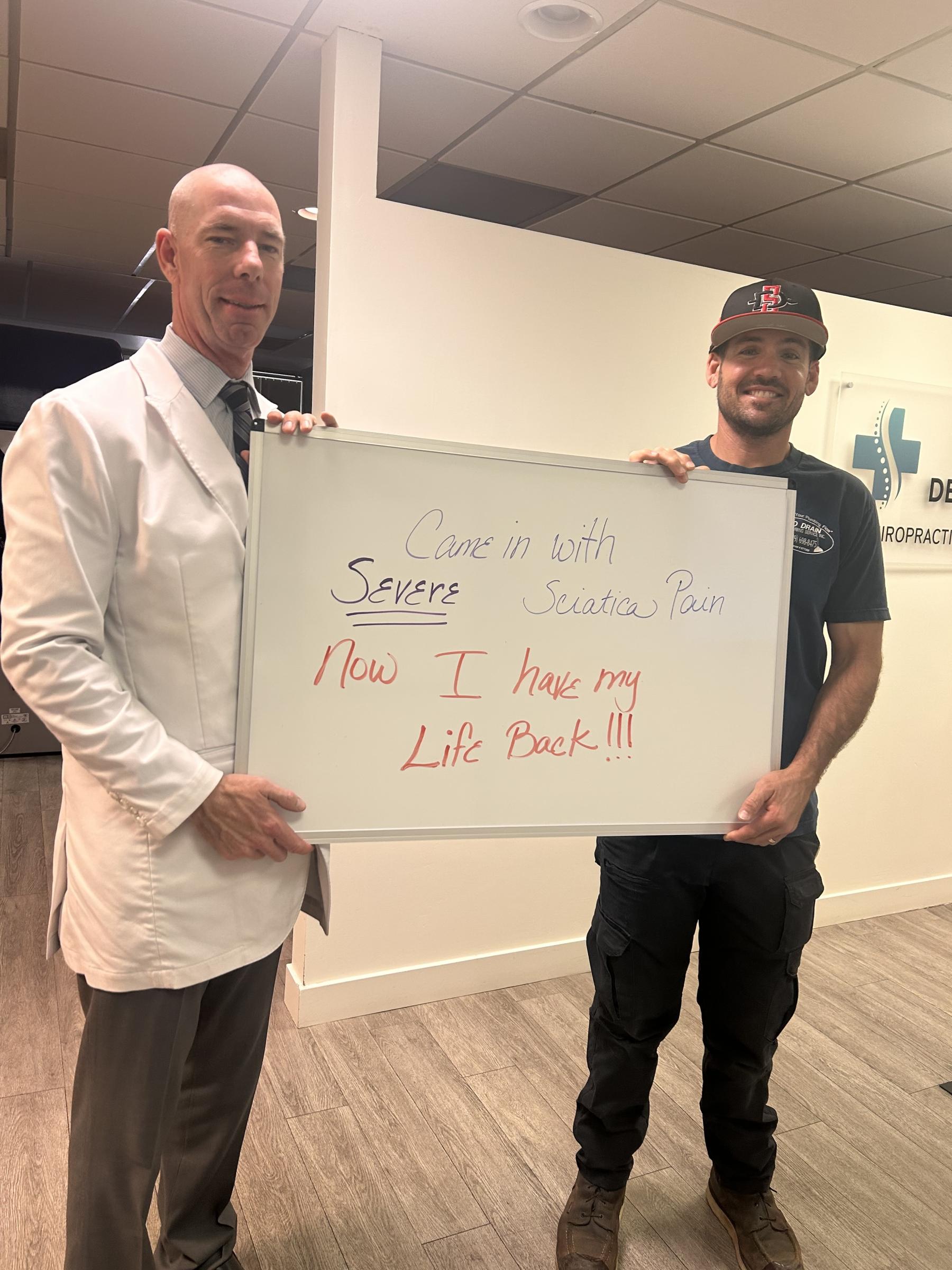
Sciatica
-
Lumbar radiculopathy
-
Cervical radiculopathy
-
Degenerative disc disease
-
Discogenic lower-back pain
-
Disc-related neck pain
-
Foraminal stenosis
-
Selected cases of spinal stenosis
-
Stable spondylolisthesis in selected cases
-
Chronic back or neck pain associated with disc problems
-
Certain patients who have continued symptoms after previous spinal surgery
Having one of these conditions is a starting point—not an automatic recommendation for treatment.
Symptoms Can Tell Dr. Boelk as Much as the MRI
One of the first things Dr. Boelk wants to know is exactly what the patient is feeling.
Is the problem limited to the lower back?
Does it extend into the glute?
Does pain travel down the leg?
Is there numbness in the foot?
Does the patient have neck pain with tingling into the fingers?
Has there been a noticeable change in strength?
These details can help Dr. Boelk determine whether an abnormality seen on imaging makes sense with the patient's symptoms.
Edgar R. had previously tried traditional chiropractic care for significant lower-back pain before coming to Dr. Boelk's office.
⭐⭐⭐⭐⭐ Edgar R. — San Diego, CA
“Had terrible low back pain last year, had gone with a traditional chiropractor but didn’t feel it was doing much.
Went to this place and after talking to Dr Boelk decided to try spinal decompression therapy. After 3 session my pain was almost completely gone.
The staff is very professional and friendly. A big plus is how you get to go at your appointment time instead of waiting.
I would say the only negative is that is not covered by insurance so you have to pay out of pocket but it you can afford it is 100% worth it.”
— Edgar R., San Diego, CA
Find Out Whether You May Be a Candidate
Dr. Boelk offers a No-Charge, No-Obligation Consultation for Mira Mesa patients considering Non-Surgical Spinal Decompression.
If you already have an MRI, bring the images and report if possible. Previous X-rays and relevant surgical records can also be helpful.
Be prepared to discuss:
-
Where your pain starts and where it travels
-
Numbness, tingling or burning
-
Any weakness you have noticed
-
Whether sitting aggravates the problem
-
How you feel while driving
-
How long you can comfortably stand or walk
-
Whether symptoms interfere with sleep
-
How and when the problem began
-
Previous spinal injuries
-
Previous surgery
-
Treatments you have already tried
-
What has helped and what has made you worse
You can still schedule a consultation if you don't have imaging. Dr. Boelk can determine whether additional evaluation or imaging may be appropriate.
The Spinal Decompression & Chiropractic Center of San Diego
5095 Murphy Canyon Road, Suite 300
San Diego, CA 92123
Phone: 619-298-0800
www.SanDiegoBackCare.com
Live 24/7 Answering Service • Hablamos Español
What Makes a Herniated Disc a Better Fit for Decompression?
The location of the disc problem is important.
For example, an L4-L5 or L5-S1 disc herniation may irritate a nearby nerve and produce symptoms extending from the lower back or glute into the leg.
A cervical disc herniation can produce neck pain along with symptoms extending into the shoulder, arm or hand.
Dr. Boelk compares those symptoms with the MRI.
If the imaging shows a disc problem in a location that makes sense with the patient's pain, numbness or tingling, that can help identify the likely source.
If the symptoms and imaging don't fit together, Dr. Boelk may need to look further before recommending treatment.
Don't Get Too Focused on the Size of a Disc Herniation
Patients frequently ask Dr. Boelk whether a 3 mm, 4 mm or 5 mm herniation is “bad enough” for decompression.
The measurement is only one piece of information.
Where the disc protrudes can be just as important as how far it protrudes.
A relatively small disc problem can cause significant symptoms when it affects a nerve in an area where there isn't much room. Another patient may have a larger disc abnormality without the same level of nerve irritation.
This is why the actual MRI images can be more useful than simply reading the impression at the bottom of the radiology report.
Sciatica Is a Symptom, Not the Final Diagnosis
Sciatica is one of the most common reasons people seek out Dr. Boelk.
Patients may experience:
-
Pain traveling from the lower back or glute into the leg
-
Burning
-
Tingling
-
Numbness
-
Calf pain
-
Foot symptoms
-
Difficulty sitting
-
Difficulty driving
-
Trouble sleeping
-
Weakness
But “sciatica” doesn't explain exactly why the nerve is irritated.
A disc herniation may be responsible. Foraminal narrowing may contribute. Degenerative changes may be involved.
Before recommending decompression, Dr. Boelk wants to understand the source of those symptoms.
What About Degenerative Disc Disease?
Degenerative disc disease can involve loss of disc hydration and disc height.
For some patients, those changes contribute to chronic back pain or narrowing around a spinal nerve.
Those patients may be considered for decompression.
Other people have degenerative changes on an MRI without those changes being the main reason they hurt.
The patient's symptoms and examination still need to make sense with the imaging.
Spinal Stenosis Requires a Closer Look
The same is true with spinal stenosis.
Some patients have narrowing that is partly related to disc bulging, disc degeneration and loss of disc height. Others have more extensive arthritic or structural changes.
Dr. Boelk looks at:
-
Where the narrowing occurs
-
Whether it affects the central canal or nerve opening
-
What is contributing to the stenosis
-
Whether a nerve appears affected
-
How stable the spine is
-
What symptoms the patient is experiencing
Some cases may be appropriate for conservative treatment with spinal decompression. Others may not.
What if You've Already Tried Everything?
Patients sometimes tell Dr. Boelk, “I've tried everything.”
Usually that means they have tried several different approaches, such as:
-
Physical therapy
-
Chiropractic care
-
Massage
-
Acupuncture
-
Home exercises
-
Stretching
-
Anti-inflammatory medications
-
Pain medications
-
Epidural injections
-
Rest
-
Activity modification
Bring that history with you.
Dr. Boelk wants to know what helped, how long it helped and what made the symptoms worse.
Even temporary improvement can provide useful information.
Pay Attention to What Your Symptoms Are Doing
While waiting for an evaluation, there are some simple observations that can be useful.
If sitting is painful, notice how long you can sit before symptoms increase.
If you have leg symptoms, notice how far down the leg they travel.
If walking makes you feel better, make note of it.
If walking makes symptoms progressively worse, that is useful too.
If stretching sends burning, numbness or tingling farther down the leg, don't assume you need to stretch harder.
And if you begin noticing weakness—such as difficulty lifting the foot or toes—that deserves attention.
Some Patients Travel Far Beyond Mira Mesa for Care
Lisa S. travels from the United Kingdom for care with Dr. Boelk.
⭐⭐⭐⭐⭐ Lisa S. — United Kingdom
“I travel from the UK to see Dr Boelk and his wonderful team . I have 3 bulging disc and one is touching the nerve. I have the spinal decompression treatment and it really helps keep me in my active life . I will not go to anyone else for back treatment, this place is number one and they genuinely care about their patients.”
— Lisa S., United Kingdom
Previous Spinal Surgery Doesn't Have a Simple Yes-or-No Answer
Some patients who have undergone spinal surgery may still be evaluated for decompression.
Others are not candidates.
Dr. Boelk needs to know:
-
What procedure was performed
-
Which spinal level was involved
-
Whether there was a fusion
-
Whether hardware is present
-
Where that hardware is located
-
Whether the current problem is at the same level
-
What current imaging shows
Certain hardware at the level that would need to be treated may make decompression inappropriate.
Who Should Not Receive Spinal Decompression?
There are several conditions that may make a patient inappropriate for spinal decompression or require additional evaluation first.
These can include:
-
Unstable spondylolisthesis
-
An unhealed spinal fracture
-
Significant osteoporosis
-
Abdominal aortic aneurysm
-
Pregnancy for lumbar decompression
-
Certain malignancies
-
Certain surgical hardware at the treatment level
-
Progressive neurological weakness
-
Cauda equina syndrome
-
Other medical or structural conditions that could make treatment unsafe
This is why Dr. Boelk screens patients rather than assuming that everyone with back pain is a candidate.
Sometimes the Best Recommendation Is Another Type of Care
Toni W. traveled from Lake Elsinore to meet with Dr. Boelk. Because of the amount of surgical hardware in her back, decompression was not recommended.
⭐⭐⭐⭐⭐ Toni W. — Lake Elsinore, CA
“Very nice Dr. and Honest ! I would definitely recommend anyone who hasn't had metal put in there back in a surgery to go to him and give his program a shot. I believe it would definitely help. Just not in my personal case. As I have a lot of hardware in my back. But I'm glad I took the time to meet with him. It was very informative all around.”
— Toni W., Lake Elsinore, CA
That is part of determining candidacy.
Sometimes the answer is yes. Sometimes additional information is needed. And sometimes the answer is no.
Know When Back or Leg Symptoms Need Urgent Attention
Certain neurological changes should not wait for a routine spinal decompression consultation.
Seek prompt medical attention for:
-
New bowel or bladder dysfunction
-
Difficulty urinating
-
Numbness around the groin or saddle region
-
Rapidly progressing weakness
-
Sudden loss of control of a leg or foot
These symptoms can indicate a more serious neurological problem.
Experience Matters With Patient Selection
Dr. Boelk's background includes:
-
Doctor of Chiropractic
-
Certified Spinal Decompression Doctor
-
Certified Pain-Free Performance Specialist
-
More than 22 years of clinical experience
-
More than 100,000 spinal decompression treatments performed
-
Founder, Non-Surgical Spinal Decompression Training Academy
-
Trains other doctors in spinal decompression protocols and techniques
-
Founding Member, American Spinal Decompression Society
-
Member, International Disc Education Association
-
California X-ray radiography credentials
The Spinal Decompression & Chiropractic Center of San Diego exclusively uses the DRX9000 and has seven systems—four lumbar and three cervical.
Dr. Boelk's experience with spinal injury is also personal. He suffered an L5 compression fracture at age 16 and later dealt with disc injuries and sciatica.
Are You a Candidate for Spinal Decompression?
If you live in Mira Mesa and are dealing with a herniated disc, bulging disc, sciatica, degenerative disc disease, stenosis or persistent back or neck pain, the first step is determining what is actually causing the problem.
Bring any MRI images, X-rays and reports you already have.
If you don't have imaging, you can still schedule a consultation.
Dr. Boelk offers a No-Charge, No-Obligation Consultation to review your symptoms, discuss your history and determine whether Non-Surgical Spinal Decompression may be an appropriate option.
Not every patient is a candidate. If Dr. Boelk doesn't believe decompression is appropriate, he will tell you.
The Spinal Decompression & Chiropractic Center of San Diego
5095 Murphy Canyon Road, Suite 300
San Diego, CA 92123
Phone: 619-298-0800
www.SanDiegoBackCare.com
Live 24/7 Answering Service • Hablamos Español
Call 619-298-0800 to schedule a No-Charge, No-Obligation Consultation.