What Is the Best Non-Surgical Treatment for Sciatica in Carmel Valley, CA?
If you're experiencing sciatica in Carmel Valley, CA, you probably have one question on your mind: Is there a way to get rid of this pain without having back surgery?
Perhaps your symptoms started after a workout, a long drive, or a weekend of physical activity. What initially seemed like a minor back problem has developed into persistent pain traveling through your buttock and down your leg. You may have numbness in your foot, burning in your calf, or sharp pain whenever you sit for too long.
For many patients, the most frustrating part isn't just the pain. It's losing the ability to do things they enjoy. Golf becomes uncomfortable, working out feels risky, and even sitting through dinner or sleeping through the night can become difficult.
If you've already tried physical therapy, medications, chiropractic care, or injections without lasting improvement, you may be wondering what other options are available.
The encouraging news is that many people with sciatica improve without surgery. However, the most effective approach depends on understanding why the nerve is irritated, whether a disc herniation is involved, and which treatments are appropriate for your particular condition.
At The Spinal Decompression & Chiropractic Center of San Diego, Dr. Cassidy James Boelk, DC, has spent more than 22 years helping patients with sciatica, herniated discs, bulging discs, and other spinal conditions explore non-surgical treatment options.
Dr. Boelk is a Certified Spinal Decompression Doctor and Certified Pain-Free Performance Specialist. His practice, located in Kearny Mesa, welcomes patients from Carmel Valley, Del Mar, Torrey Hills, Pacific Highlands Ranch, and surrounding San Diego communities.
When Sciatica Keeps You From Living an Active Life
One of the things Dr. Boelk understands from both personal and clinical experience is how quickly a back injury can change someone's life.
For many active adults in Carmel Valley, exercise isn't simply a hobby. It's part of their daily routine and an important way to manage stress, maintain their health, and enjoy time with family and friends.
When sciatica develops, those activities often become difficult or impossible. Patients begin avoiding the gym, golf course, hiking trails, or weekend activities because they're concerned about making their symptoms worse.
Some have already spent months trying different treatments without finding meaningful relief.
One San Diego patient described how severe sciatica affected his ability to enjoy hockey, golf, and surfing before he sought treatment with Dr. Boelk.
⭐⭐⭐⭐⭐
"There isn't enough room to fully explain the relief Dr. Boelk has brought to me and my family.
I found him after suffering from severe sciatica for more than a year. The pain shot from my hip all the way down to my left foot and became almost unbearable. I could no longer enjoy the activities I loved, including hockey, golf, and surfing.
Over the years, I had seen numerous chiropractors and experienced only temporary relief. Acupuncture helped somewhat, physical therapy was difficult to tolerate, and nothing seemed to provide lasting results. I couldn't sleep well, and my quality of life was steadily declining.
Then I met Dr. Boelk.
Through a structured treatment plan, adjustments, rehabilitation exercises, and lifestyle modifications, my life completely changed.
To this day, I tell people that Dr. Boelk saved my life.
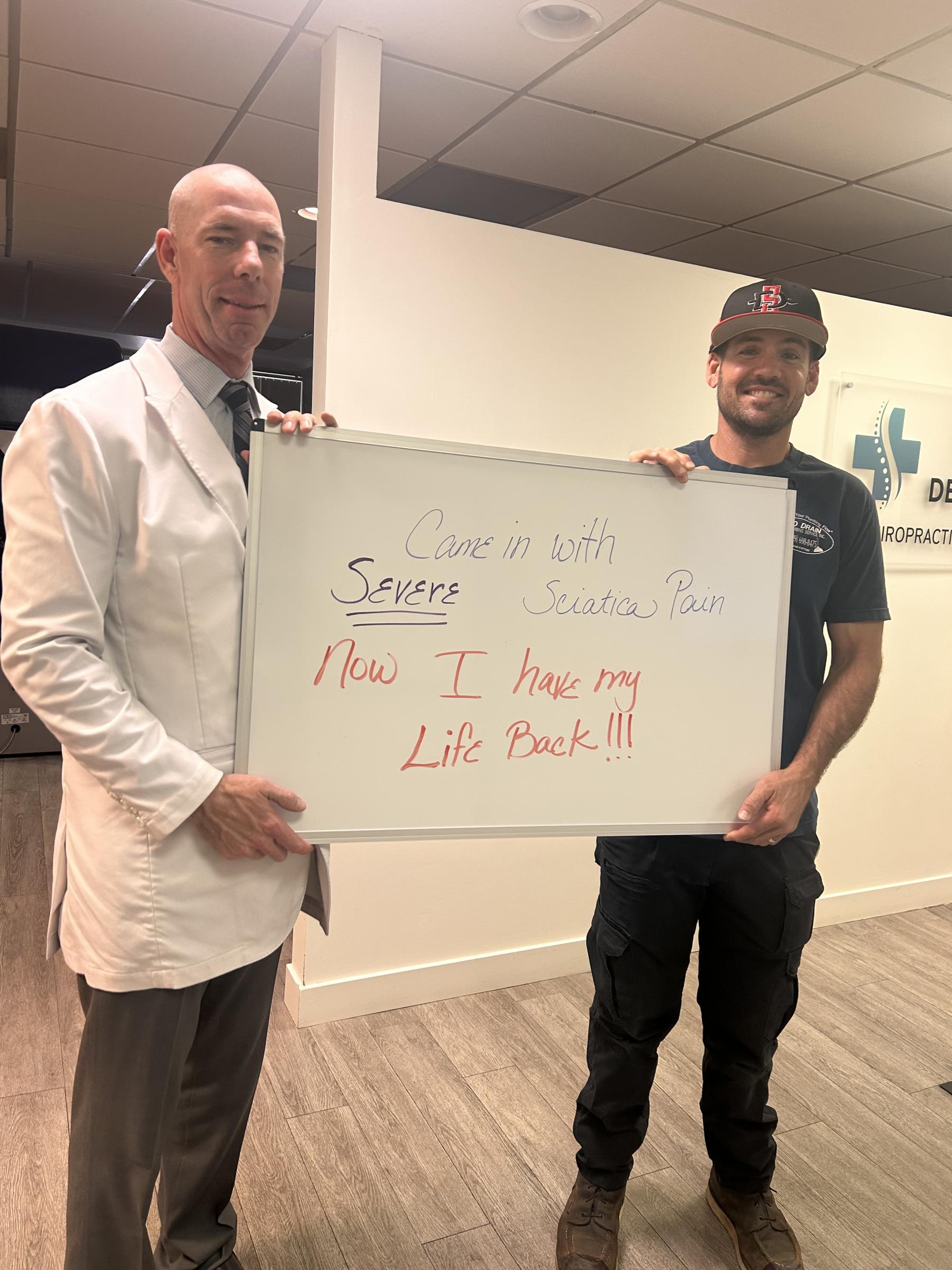
Since my own recovery, I have referred my wife, daughter, mother, father, numerous friends, and many clients to his office. Every one of them has thanked me for the recommendation. Most recently, a firefighter friend of mine who was suffering from severe sciatica began treatment and is now making tremendous progress.
If you are considering surgery, I strongly encourage you to have Dr. Boelk evaluate your condition first.
What I respect most is his honesty. If he believes you are not a candidate or that another option would be better, he will tell you.
I trust him with my life and with my back."
— Jayson Yavorsky, San Diego, CA
Jayson's experience highlights something that matters to many patients: getting back to the activities that make life enjoyable.
It also demonstrates why evaluating the entire patient is so important. Pain relief is valuable, but long-term progress often requires attention to movement habits, physical conditioning, rehabilitation, and the activities that may have contributed to repeated flare-ups.
Your First Step: A Complimentary, No-Charge, No-Obligation Consultation
If you've been dealing with sciatica for months or years, it's understandable to have questions before considering another treatment program. You may have already invested time and money in approaches that provided only temporary improvement, and you want to know whether there's a reasonable explanation for why your symptoms continue.
Dr. Boelk offers a Complimentary, No-Charge, No-Obligation Consultation so you can meet with him personally and learn about your options before deciding whether to proceed with a comprehensive examination.
During your consultation, you'll have an opportunity to discuss your symptoms, medical history, previous treatments, and how sciatica is affecting your daily life.
If you already have an MRI or spinal X-rays, you can bring them to discuss the findings and ask questions about what they may mean. Dr. Boelk can also explain how the DRX9000 computerized spinal decompression system works, what treatment involves, and its potential benefits and limitations.
You'll have time to discuss whether a comprehensive new patient examination may be appropriate to investigate the source of your symptoms and determine whether you're a potential candidate for treatment.
Most importantly, you can ask questions without feeling pressured to make an immediate decision.
There is no charge for the consultation and no obligation to begin treatment. The consultation is an informational discussion rather than a comprehensive diagnostic physical examination. It does not include new X-rays or treatment, which are separately charged when appropriate.
If you're ready for a complete evaluation, you can schedule a new patient examination instead.
Call 619-298-0800 to schedule your examination or request your complimentary consultation.
¡Hablamos Español! | 24/7 Answering Service
Why Does Sciatica Sometimes Hurt More in Your Leg Than Your Back?
One of the most confusing aspects of sciatica is that the most painful area may be far away from where the underlying problem originates.
A patient might experience burning pain in the calf, tingling in the toes, or numbness along the outside of the foot, even though the irritated nerve root is located in the lower spine.
The sciatic nerve is formed from several nerve roots originating in the lumbar and sacral regions. These nerves contribute to a large peripheral nerve that travels through the buttock and down the leg.
When a nerve root becomes irritated or compressed, symptoms may travel along the pathway supplied by that nerve. This explains why someone can experience severe leg pain even when their lower back itself doesn't hurt very much.
A lumbar disc herniation is one common cause of this irritation. The discs between your vertebrae act as cushions and help distribute forces throughout the spine. When disc material extends beyond its normal boundaries, it can sometimes irritate or compress a nearby spinal nerve root.
However, not every disc herniation causes sciatica, and not every patient with sciatica has a herniated disc.
Other conditions, including degenerative spinal changes, narrowing around the nerves, and certain peripheral nerve disorders, can produce similar symptoms.
This distinction matters because successful treatment begins with identifying the likely source of the pain rather than simply treating the area where symptoms are felt.
Why Your MRI Doesn't Always Tell the Whole Story
Many patients arrive at Dr. Boelk's office with an MRI report describing a disc bulge, herniation, degenerative disc disease, or narrowing around the spinal nerves.
These findings can be important, but they need to be interpreted alongside the patient's symptoms and examination findings.
For example, a typical posterolateral disc herniation at L4-L5 may irritate the L5 nerve root, producing pain along the outside of the leg, altered sensation across the top of the foot, or difficulty lifting the foot or big toe.
A herniation at L5-S1 may affect the S1 nerve root, sometimes causing pain down the back of the calf, numbness along the outside of the foot, or weakness when pushing off while walking.
These patterns are helpful, but they aren't absolute.
Some people have disc bulges or herniations visible on MRI without experiencing significant symptoms. Others experience substantial nerve-related pain even when the imaging findings appear relatively modest.
This is why Dr. Boelk considers the patient's medical history, neurological findings, movement patterns, and available imaging together when evaluating whether a particular spinal condition may be responsible.
What Are the Best Non-Surgical Treatments for Sciatica?
There isn't one treatment that works best for every patient. The appropriate approach depends on the underlying cause of the nerve irritation, symptom severity, neurological findings, previous treatments, and how the patient responds to conservative care.
For many people, treatment begins with education, activity modification, and exercise-based rehabilitation. Medications or injections may also be considered when clinically appropriate.
For selected patients with disc-related symptoms, computerized spinal decompression may be discussed as an additional conservative treatment option.
Exercise-Based Rehabilitation
One of the most important goals of sciatica rehabilitation is helping patients remain active without repeatedly aggravating their symptoms.
A patient whose leg pain becomes worse during prolonged sitting may benefit from changing positions more frequently. Someone whose symptoms increase after repeated bending or heavy lifting may need to temporarily modify those activities while rebuilding strength and movement tolerance.
Exercise selection also matters.
Some patients respond favorably to specific directional movements, while others require a more gradual program focused on core endurance, hip strength, and walking tolerance.
Depending on the patient's condition, rehabilitation may include modified McGill curl-ups, bird dogs, side planks, and progressive strengthening.
Dr. Boelk regularly discusses these strategies in his educational videos, emphasizing that patients should pay attention to how their symptoms respond rather than assuming every exercise is appropriate for everyone.
Medications and Epidural Steroid Injections
Medications may help manage symptoms while the underlying condition improves. The choice of medication depends on the patient's medical history, potential side effects, and expected benefits.
For selected patients with severe or persistent nerve-related leg pain, epidural steroid injections may be considered. These injections can provide short-term symptom relief for some individuals, although the response varies and they don't physically remove a herniated disc.
When symptoms persist despite appropriate conservative treatment, further evaluation may be needed to determine whether the diagnosis or treatment plan should be reconsidered.
DRX9000 Computerized Non-Surgical Spinal Decompression
At The Spinal Decompression & Chiropractic Center of San Diego, Dr. Boelk uses the DRX9000 computerized spinal decompression system for appropriately selected patients.
The DRX9000 applies controlled distraction forces to the spine through programmed pulling and relaxation cycles. During treatment, the patient lies on a specialized table while the system delivers forces according to individualized settings.
A typical lumbar decompression session lasts approximately twenty to twenty-five minutes and doesn't require surgery, anesthesia, or injections.
The treatment is intended to provide controlled mechanical unloading of spinal structures and may help manage symptoms in patients who respond favorably to traction-based care.
Dr. Boelk's Kearny Mesa facility has seven DRX9000 spinal decompression tables, including four lumbar and three cervical units.
Computerized spinal decompression isn't appropriate for everyone. Research on this treatment remains limited and mixed, and major sciatica guidelines do not routinely recommend traction. It cannot be guaranteed to repair a herniated disc, eliminate nerve compression, or prevent surgery.
A careful examination and ongoing assessment are important when determining whether treatment may be reasonable for an individual patient.
Three Things Active Adults Should Understand About Sciatica Recovery
One of the most common mistakes people make when recovering from sciatica is assuming that feeling better means they're immediately ready to return to everything they were doing before the injury.
Pain relief is encouraging, but rebuilding the ability to tolerate exercise, lifting, prolonged sitting, and recreational activities often requires a gradual approach.
First, improving symptoms doesn't necessarily mean the underlying tissues have fully recovered.
A patient may notice that their leg pain has decreased significantly, but returning immediately to heavy lifting or strenuous exercise can sometimes trigger another flare-up.
This doesn't mean exercise should be avoided indefinitely. It means that activity should be increased progressively according to the patient's symptoms and functional tolerance.
Second, the location of your symptoms can be just as important as their intensity.
One concept used in spinal rehabilitation is centralization, which occurs when symptoms that previously traveled into the foot or calf begin retreating toward the lower back during certain movements or activities.
This can be a favorable clinical response, although it doesn't prove that a disc has physically moved or that nerve compression has resolved.
The opposite response, called peripheralization, occurs when symptoms travel farther down the leg during particular movements.
If an exercise repeatedly increases radiating leg pain, numbness, or weakness, that response should be discussed with your healthcare provider rather than ignored.
Third, rebuilding strength and endurance matters.
For patients who have reduced their activity because of pain, rehabilitation may involve gradually improving core endurance, hip strength, walking tolerance, and confidence in everyday movements.
The goal isn't simply to perform exercises in a treatment setting. It's to help patients return to their normal activities with a better understanding of how to manage their spinal health.
Why Some Common Sciatica Stretches Can Make Symptoms Worse
When someone experiences pain or tightness in the buttock or hamstring, their first instinct is often to stretch the area.
However, what feels like muscle tightness may sometimes be related to irritation of a spinal nerve root or increased sensitivity along the sciatic nerve.
Aggressive hamstring stretching, particularly when combined with forward bending through the lower back, can aggravate symptoms in certain patients with disc-related sciatica.
For example, repeatedly bending forward to touch your toes may increase radiating leg pain in some individuals, even though the movement feels like an ordinary stretch.
This doesn't mean stretching is always harmful or that everyone with sciatica should avoid bending forward. It means exercises should be selected according to the patient's condition and symptom response.
For patients with persistent sciatica, a more useful approach may involve identifying which movements are well tolerated, improving spinal control, and gradually rebuilding strength and mobility without repeatedly aggravating the nerve.
Why Dr. Boelk Doesn't Recommend Spinal Decompression to Everyone
One of the most important responsibilities of a doctor is recognizing when a particular treatment isn't appropriate.
Not every patient who visits The Spinal Decompression & Chiropractic Center of San Diego is a candidate for spinal decompression.
Some patients have significant spinal instability, fractures, surgical hardware, or neurological findings that require another approach. Others may need additional imaging, medical evaluation, rehabilitation, or a surgical consultation before considering further conservative care.
One patient traveled from Tucson, Arizona, to meet with Dr. Boelk and appreciated receiving a straightforward recommendation, even though spinal decompression wasn't the appropriate option for his condition.
⭐⭐⭐⭐⭐
“I found this terrific practice on social media. I followed up and did my own research so I decided to pay them a visit. The place is clean, well organized and run by a very efficient receptionist. I met with the doctor and after a honest and forthright conversation, we both determined that surgery was my only option to correct my back issues. I will return as a customer when the time is right.”
— Jeff J., Tucson, AZ
Jeff's experience illustrates why an individualized evaluation matters. The purpose of an examination isn't simply to recommend a treatment program. It's to determine which options are appropriate for the patient's condition.
Sometimes that means considering conservative care. Other times, it means recognizing that another medical opinion or surgical evaluation may be the more appropriate next step.
When Should You Consider Surgery for Sciatica?
Although many patients improve without surgery, certain situations require prompt medical attention or surgical evaluation.
Persistent, disabling leg pain despite appropriate conservative treatment may warrant consultation with a spine surgeon, particularly when imaging confirms nerve compression that corresponds to the patient's symptoms.
Significant or progressive neurological weakness also requires prompt medical assessment.
Certain symptoms are medical emergencies. New loss of bladder or bowel control, numbness involving the groin or saddle region, or rapidly progressing weakness in one or both legs may indicate serious neurological compression and require immediate emergency evaluation.
For patients without these warning signs, the decision about surgery depends on symptom severity, neurological findings, imaging, previous treatments, and individual preferences.
Surgery may provide faster relief for appropriately selected patients, while continued conservative care may remain reasonable for others.
Why Patients From Carmel Valley Choose Dr. Cassidy James Boelk, DC
When you're dealing with persistent sciatica, choosing a doctor with extensive experience evaluating spinal conditions is an important decision.
Dr. Cassidy James Boelk, DC, has devoted more than 22 years to helping patients explore non-surgical treatment options for herniated discs, bulging discs, sciatica, and other spinal conditions.
Dr. Boelk's Credentials, Experience & Professional Affiliations
-
Doctor of Chiropractic (DC)
-
Certified Spinal Decompression Doctor
-
Certified Pain-Free Performance Specialist
-
Member, International Disc Education Association
-
Founding Member, American Spinal Decompression Society
-
Founder, Spinal Decompression Training Academy
-
California X-Ray Supervisor and Operator License
-
22+ Years as a Spinal Decompression Specialist
-
100,000+ Spinal Decompression Treatments Performed
-
Seven DRX9000 Spinal Decompression Tables (4 Lumbar, 3 Cervical)
Personal Experience With Serious Back Injuries
Dr. Boelk's interest in spinal rehabilitation is also rooted in his own experiences with significant back injuries.
As a teenager, he sustained fractures involving his lower lumbar spine and developed spondylolisthesis. Later in life, he experienced lumbar disc herniations and sciatica, giving him firsthand insight into how debilitating spinal nerve pain can become.
Over the years, he has devoted thousands of hours to studying spinal rehabilitation, improving his own spinal health, and helping patients work toward returning to the activities they enjoy.
He also trains other doctors through the Spinal Decompression Training Academy, sharing his clinical experience with non-surgical spinal decompression protocols, patient selection, and treatment techniques.
What Happens During Your New Patient Examination?
For patients considering treatment, a comprehensive examination helps determine whether their symptoms correspond to the findings on imaging and whether spinal decompression or another approach may be appropriate.
At The Spinal Decompression & Chiropractic Center of San Diego, the evaluation may include a detailed medical history, assessment of spinal movement, neurological testing, and review of existing MRI images or reports.
Weight-bearing spinal X-rays, including flexion and extension views, may be recommended when clinically indicated to assess spinal alignment or stability.
Dr. Boelk also considers previous treatments, functional limitations, and the patient's personal goals when discussing possible next steps.
If additional medical evaluation or referral is necessary, that can be addressed during the process.
The comprehensive examination is separate from the complimentary consultation and has its own fees.
To schedule your new patient examination, call 619-298-0800.
Frequently Asked Questions About Sciatica Treatment in Carmel Valley
What is the best treatment for sciatica without surgery?
There isn't one treatment that works best for everyone. The most appropriate approach depends on the underlying cause of the nerve irritation, symptom severity, neurological findings, and previous treatments. Exercise-based rehabilitation, activity modification, and other conservative options are commonly considered.
Can sciatica go away without surgery?
Yes. Many cases of sciatica improve over time, particularly when caused by lumbar disc herniations. However, persistent symptoms, significant weakness, or worsening neurological findings require appropriate medical evaluation.
Can I continue working out if I have sciatica?
It depends on the cause and severity of your symptoms. Some activities may be well tolerated, while others may aggravate nerve-related pain. Exercise should be modified according to your condition and response to movement.
Is walking good for sciatica?
Walking is often beneficial when tolerated. However, some patients, particularly those with certain forms of spinal stenosis, experience increased symptoms during prolonged standing or walking.
Can spinal decompression help with sciatica?
Some selected patients may experience symptom relief with traction-based treatment, but research remains limited and mixed. Spinal decompression isn't appropriate for everyone and cannot be guaranteed to resolve sciatica or prevent surgery.
Where Can Carmel Valley Residents Schedule a Sciatica Examination?
The Spinal Decompression & Chiropractic Center of San Diego is located in Kearny Mesa at 5095 Murphy Canyon Road, Suite 300, San Diego, CA 92123.
The office welcomes patients from Carmel Valley, Del Mar, Torrey Hills, Pacific Highlands Ranch, and surrounding San Diego communities.
Call 619-298-0800 to schedule a new patient examination or request a complimentary consultation.
Looking for Non-Surgical Sciatica Treatment in Carmel Valley, CA?
If sciatica has been interfering with your ability to work, exercise, sleep, or enjoy time with your family, you don't necessarily have to assume surgery is your only remaining option.
Many patients improve with appropriate conservative care, although the most effective approach depends on the underlying cause of their symptoms.
At The Spinal Decompression & Chiropractic Center of San Diego, Dr. Cassidy James Boelk, DC, has spent more than 22 years helping patients with sciatica and disc-related spinal conditions explore non-surgical treatment options.
Located in Kearny Mesa, the practice offers comprehensive spinal evaluations and individualized treatment recommendations, including DRX9000 computerized spinal decompression for appropriately selected patients.
If you're ready to move forward, schedule a comprehensive new patient examination. If you'd prefer to meet Dr. Boelk and ask questions before proceeding, you can begin with a Complimentary, No-Charge, No-Obligation Consultation.
Contact The Spinal Decompression & Chiropractic Center of San Diego
Dr. Cassidy James Boelk, DC
Certified Spinal Decompression Doctor
Certified Pain-Free Performance Specialist
Founder, Spinal Decompression Training Academy
The Spinal Decompression & Chiropractic Center of San Diego
5095 Murphy Canyon Road, Suite 300
San Diego, CA 92123
Phone: 619-298-0800
Email: frontdesk@sandiegobackcare.com
Website: www.SanDiegoBackCare.com
24/7 Answering Service | ¡Hablamos Español!
Call 619-298-0800 today to schedule your new patient examination or request your Complimentary, No-Charge, No-Obligation Consultation.
Understanding what's causing your sciatica is the first step toward making an informed decision about your treatment options.