WHY DOES MY FOOT FEEL NUMB? – SAN DIEGO, CA
Numbness in Your Foot Isn't Normal—and It's Your Body's Way of Telling You Something
Have you ever stood up and realized part of your foot felt numb?
Maybe it's your big toe.
Perhaps it's the outside of your foot.
Or maybe it feels like you're walking on a thick sock even though your shoe is empty.
For some people, the numbness comes and goes.
For others, it's constant.
It may be accompanied by burning, tingling, pins and needles, or pain shooting down the leg.
One of the first thoughts many people have is:
"Did I pinch a nerve?"
Others worry about circulation, diabetes, or whether permanent nerve damage has already occurred.
The truth is that foot numbness has many possible causes, and while some are relatively minor, others deserve prompt medical evaluation.
The good news is that numbness doesn't automatically mean you've suffered permanent nerve damage.
However, it should never be ignored—especially if it's becoming more frequent, spreading, or accompanied by weakness.
Understanding why your foot feels numb is the first step toward determining the most appropriate treatment.
Looking for Answers?
If you're experiencing foot numbness, tingling, burning, or leg pain, Dr. Cassidy James Boelk, DC offers a Complimentary No-Charge Consultation to help determine the underlying cause.
Every new patient receives:
✔ One-on-one consultation with Dr. Boelk
✔ Comprehensive examination
✔ MRI review (if you've already had one)
✔ Honest discussion of your treatment options
✔ Answers to all of your questions
Not everyone is a candidate for treatment. If Dr. Boelk believes another approach would better serve you, he'll tell you.
📞 619-298-0800
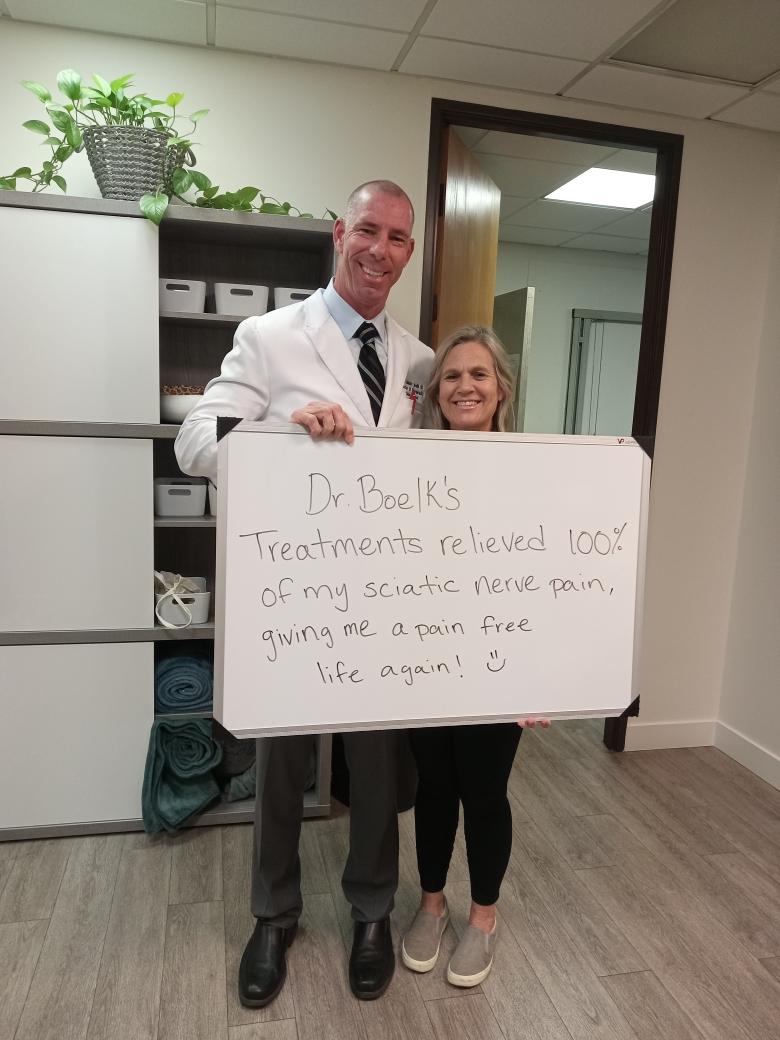
Patient Story
"I was dealing with severe back pain that made it difficult to sleep, along with intense sciatica that radiated from my lower back down my leg following an accident.
When I met with Dr. Cassidy Boelk, he performed a thorough evaluation and determined that I was a good candidate for treatment.
The results were remarkable.
After just two spinal decompression sessions, my sciatic pain was gone, allowing us to focus on correcting the underlying cause of the problem. I completed 24 treatments and then progressed into rehabilitation exercises designed to strengthen my core and help prevent future flare-ups.
Living with back and neck pain affected every part of my life. I gained weight, relied on pain medications, struggled with depression, and dealt with significant anxiety because of my condition.
Today, I feel like a different person. I'm sleeping better, walking comfortably, becoming active again, and enjoying life much more than before.
Dr. Cassidy Boelk is truly outstanding, and I am extremely grateful I found his office."
★★★★★ — Abel T., San Diego, CA
Foot Numbness Is a Symptom—Not a Diagnosis
One of the biggest misconceptions about foot numbness is believing there's only one possible cause.
There isn't.
Numbness simply means that the normal signals traveling through a nerve are being disrupted somewhere along their path.
The challenge is determining where that disruption is occurring.
In some people, the problem begins in the lower back.
In others, it may involve the ankle, the foot itself, circulation, or even an underlying medical condition.
That's why treating numbness without first identifying its cause often leads to frustration.
Can a Herniated Disc Cause Foot Numbness?
Absolutely.
One of the most common causes of foot numbness is irritation of one of the spinal nerves in the lower back.
When a lumbar disc bulges, herniates, or extrudes, it can place pressure on a nearby nerve root.
That nerve eventually becomes part of the sciatic nerve, which travels through the buttock, down the back of the leg, and into the foot.
Depending on which nerve is affected, you may notice numbness in different parts of your foot.
For example, irritation of the L5 nerve root often affects sensation over the top of the foot and the big toe, while irritation involving S1 more commonly affects the outside of the foot or little toe.
This is one reason the location of your numbness can provide important clues during a physical examination.
Not All Foot Numbness Comes From Your Back
Although disc injuries are common, they're far from the only possible explanation.
Other causes may include:
- Peripheral neuropathy, often associated with diabetes.
- Tarsal tunnel syndrome, where a nerve becomes compressed near the ankle.
- Poor circulation.
- Vitamin deficiencies.
- Previous injuries.
- Certain neurological conditions.
Because the list of possibilities is broad, it's important not to assume that every numb foot is caused by sciatica—or that every case of sciatica causes numbness.
A thorough examination helps narrow the possibilities and determine whether additional testing or imaging is appropriate.
One Thing Most People Don't Realize
Many people think pain is always the first symptom of a pinched nerve.
In reality, numbness can sometimes appear before significant pain develops.
That's why some patients notice that part of their foot feels "asleep" long before they experience severe leg pain.
Others develop numbness after the pain begins to improve.
Neither situation is unusual.
Nerves heal differently than muscles or skin, and recovery doesn't always happen in a predictable order.
Pain may improve first.
Numbness may improve first.
Sometimes strength returns before sensation.
Every nerve injury is different.
A Common Misconception
One of the biggest myths is:
"If my foot is numb, the problem must be in my foot."
Not necessarily.
Think of an electrical cord.
If the cord is damaged near the outlet, the lamp at the other end won't work properly—even though nothing is wrong with the lamp itself.
Your nervous system works much the same way.
A nerve that's irritated in the lower back may create symptoms all the way down in the foot because that's where the nerve ultimately travels.
That's why it's so important to identify where the problem originates rather than simply treating where you feel it.
When Is Foot Numbness a Medical Emergency?
Most cases of foot numbness are not medical emergencies.
However, there are situations where you should seek immediate medical attention.
Contact your doctor or go to the nearest emergency department immediately if you develop:
- Sudden or rapidly worsening weakness in your foot or leg.
- Difficulty lifting your foot while walking (commonly called foot drop).
- Loss of bowel or bladder control.
- Numbness in the groin or saddle area.
- Numbness following a significant fall, accident, or other major trauma.
Fortunately, these situations are relatively uncommon.
More often, foot numbness develops gradually and should prompt a thorough evaluation rather than a trip to the emergency room.
The important point is this:
Persistent numbness should never simply be ignored.
Even if the symptoms aren't severe today, identifying the cause early may help prevent the condition from worsening.
Do You Need an MRI?
Not always.
One of the biggest misconceptions is that everyone with foot numbness immediately needs an MRI.
In reality, the decision depends on your history, examination findings, and symptoms.
Sometimes a thorough examination provides enough information to begin conservative treatment.
In other situations—especially when numbness is accompanied by weakness, severe leg pain, or symptoms that aren't improving—an MRI may be appropriate to better understand what's happening around the spinal nerves.
If you've already had an MRI, it's equally important that someone explains what it actually means.
Many patients become frightened after reading words such as:
- Disc bulge
- Disc protrusion
- Disc extrusion
- Degenerative disc disease
- Foraminal stenosis
While those findings may be important, they don't automatically explain your symptoms.
MRI findings must always be correlated with your examination.
In other words...
We treat patients—not MRI reports.
What Can Be Done About Foot Numbness?
The treatment depends entirely on what's causing the numbness.
For some patients, the problem improves with time, activity modification, walking, or carefully guided exercise.
Others may benefit from:
- Physical therapy
- Chiropractic care
- Anti-inflammatory medication
- Epidural steroid injections
- Surgery
For appropriately selected patients whose symptoms are caused by certain disc injuries, Non-Surgical Spinal Decompression may also be considered as part of a comprehensive treatment plan.
One thing is extremely important to understand:
There is no single treatment that's right for everyone.
The best treatment is the one that matches your diagnosis—not simply your symptoms.
That's why a careful evaluation should always come before treatment recommendations.
Why Patients Choose Dr. Cassidy James Boelk, DC
When patients visit The Spinal Decompression & Chiropractic Center of San Diego, they're often frustrated.
Many have already tried multiple forms of treatment.
Some have been told surgery is their only option.
Others simply want someone to take the time to explain what's actually causing their symptoms.
For more than 22 years, Dr. Cassidy James Boelk, DC has specialized in evaluating and treating patients with herniated discs, bulging discs, sciatica, cervical radiculopathy, spinal stenosis, degenerative disc disease, and other complex spinal conditions.
During that time, he has personally performed more than 100,000 Non-Surgical Spinal Decompression treatments, making him one of the most experienced doctors in this highly specialized field.
Unlike many offices that offer spinal decompression as just one of many services, The Spinal Decompression & Chiropractic Center of San Diego focuses almost exclusively on disc-related spinal conditions and exclusively utilizes seven DRX9000® spinal decompression systems, one of the largest DRX9000® practices in California.
Patients choose Dr. Boelk because of his commitment to education, honesty, and individualized care.
He is a:
- Board-Certified Doctor of Chiropractic
- Certified Spinal Decompression Doctor
- Certified Pain-Free Performance Specialist (PPSC)
- Founder of the Non-Surgical Spinal Decompression Training Academy
- Founding Member of the American Spinal Decompression Society
- California Licensed X-Ray Supervisor & Operator
He also personally reviews MRI studies whenever they're available, helping patients understand what their imaging actually shows and whether those findings truly explain their symptoms.
Today, patients travel from throughout San Diego County, across the United States, and internationally to seek his opinion because of his extensive experience treating complex spinal conditions.
Perhaps the reason patients refer so many friends and family members, however, is much simpler.
They know they'll receive an honest opinion.
If Dr. Boelk believes you're a good candidate for treatment, he'll explain why.
If another treatment—or even surgery—is more appropriate, he'll tell you that too.
Honesty Builds Trust
One of my favorite reviews isn't from someone we treated.
It's from someone we didn't.
"Very nice Dr. and Honest! I would definitely recommend anyone who hasn't had metal put in their back from surgery to go to him and give his program a shot. I believe it would definitely help. Just not in my personal case. As I have a lot of hardware in my back. But I'm glad I took the time to meet with him. It was very informative all around."
★★★★★ — Toni W., Lake Elsinore, CA
I believe reviews like this speak volumes.
Healthcare should never be about convincing every patient to undergo treatment.
It should be about helping each person make the best decision for their condition.
Frequently Asked Questions
Can foot numbness go away on its own?
Sometimes.
If the underlying cause is temporary, numbness may improve as the irritated nerve recovers. Persistent or worsening numbness, however, should be evaluated.
Is foot numbness always caused by a pinched nerve?
No.
While pinched nerves are a common cause, circulation problems, diabetes, peripheral neuropathy, vitamin deficiencies, ankle nerve compression, and other conditions can also cause numbness.
Is numbness more concerning than pain?
Not necessarily.
Both pain and numbness provide important information. However, numbness accompanied by progressive weakness deserves prompt evaluation.
Can a herniated disc cause numbness without severe back pain?
Yes.
Many patients experience significant numbness or leg symptoms even though their lower back pain is relatively mild.
Should I keep exercising if my foot feels numb?
That depends on the cause. Some activities may be beneficial, while others may aggravate the problem. A proper diagnosis helps determine what's appropriate for your specific condition.
A Personal Message From Dr. Cassidy James Boelk, DC
If you've made it this far, you're probably looking for more than a quick answer—you want to understand why your foot feels numb and what you should do next.
I know how unsettling nerve symptoms can be. I've experienced serious neck and back injuries myself, and I understand how much uncertainty they create. One of the reasons I'm so passionate about helping patients with disc-related conditions is because I know firsthand how important it is to have someone take the time to explain what's happening.
Whether you choose our office or another provider, my advice is simple: don't ignore persistent numbness, ask questions until you understand your diagnosis, and never feel pressured into treatment before you're comfortable with your options.
If I believe I can help you, I'll explain why.
If I don't, I'll tell you that too.
My responsibility is to help you make the best decision for your health—not simply recommend treatment.
I wish you the very best on your road to recovery.
— Dr. Cassidy James Boelk, DC
You Don't Have to Figure This Out Alone
If you're experiencing persistent foot numbness, tingling, burning, sciatica, or leg pain, we'd be honored to help you understand what's causing your symptoms.
Your Complimentary No-Charge Consultation includes:
✔ One-on-one consultation with Dr. Boelk
✔ Comprehensive examination
✔ MRI review (if available)
✔ Honest recommendations
✔ Answers to all of your questions
The Spinal Decompression & Chiropractic Center of San Diego
5095 Murphy Canyon Road, Suite 300
San Diego, CA 92123
📞 619-298-0800
✔ Complimentary No-Charge Consultation
✔ Live 24/7 Answering Service
✔ Hablamos Español