WHAT IS THE BEST SLEEPING POSITION FOR SCIATICA? – LA JOLLA, CA
How to Sleep Better with Sciatica, a Herniated Disc, Bulging Disc, or Lower Back Pain
Living in La Jolla is meant to be active.
Whether you enjoy walking along the Cove, hiking the trails at Torrey Pines, surfing, golfing, playing tennis, or simply taking in one of San Diego's most beautiful coastal communities, sciatica can quickly interfere with the activities you enjoy most.
For many people, however, the most frustrating part isn't during the day.
It's what happens at night.
One of the most common questions I hear from patients is:
"Dr. Boelk, what's the best sleeping position for sciatica? Every position seems to hurt."
Maybe you've tried sleeping on your back.
Then your side.
You've placed a pillow between your knees.
You've purchased a new mattress.
You've even resorted to sleeping in a recliner.
Yet every morning you wake up feeling exhausted because your back or leg pain kept you awake.
If this sounds familiar, you're certainly not alone.
The good news is that changing your sleeping position may improve your comfort.
The more important question, however, is:
"What's actually causing your sciatica?"
Because the best sleeping position for one person may actually make another person's symptoms worse.
Understanding the underlying cause of your symptoms is often far more important than simply trying another pillow or mattress.
Quick Answer
The best sleeping position for sciatica depends on the underlying cause of your symptoms. Many people sleep more comfortably on their side with a pillow between their knees or on their back with a pillow beneath their knees. However, if your symptoms are being caused by a herniated disc, bulging disc, spinal stenosis, degenerative disc disease, or another spinal condition, the most comfortable sleeping position may be different. While changing your sleeping position may help reduce discomfort, identifying the underlying cause of your sciatica is often the most important step.
Could This Be What's Causing Your Symptoms?
If you've been struggling with:
✔ Sciatica
✔ Burning leg pain
✔ Numbness
✔ Tingling
✔ Lower back pain
✔ Difficulty sleeping because of your symptoms
...the first step is determining what's causing the problem.
Your No-Charge Consultation May Include:
✔ One-on-one consultation with Dr. Cassidy James Boelk, DC
✔ Comprehensive orthopedic examination
✔ Neurological examination
✔ MRI review (if available)
✔ Digital X-rays (when appropriate)
✔ Review of previous treatments
✔ Discussion of all appropriate treatment options
✔ Determination of whether you may be a candidate for treatment
Please Note:
⚠️ Not every patient is a candidate.
⚠️ If another treatment—or even surgery—is more appropriate for your condition, Dr. Boelk will tell you.
📞 (619) 298-0800
"After About 12 Treatments, My Sciatica Was Gone."
"I have had an outstanding experience with Dr. Boelk and his staff at The Spinal Decompression & Chiropractic Center of San Diego.
They follow a very structured treatment protocol and utilize the best spinal decompression equipment available. I've been treated elsewhere using lower-quality decompression systems and never experienced meaningful improvement.
Dr. Boelk is attentive, professional, and genuinely cares about every patient. After about 12 treatments, my sciatca was gone and I was nearly back to normal. Honestly, I wasn't sure I would ever heal. What surprised me most was that after my very first treatment, I experienced significant relief and was able to sleep mostly pain-free for the first time in months.
The improvement has allowed me to get back to hiking, traveling, and enjoying life again.
This treatment was one of the best investments I've ever made.
Thank you, Dr. Boelk and your entire team."
⭐⭐⭐⭐⭐
— Michael Langsdale, San Diego, CA
Why Does Sciatica Often Feel Worse at Night?
Many people assume lying down is what causes their sciatica to worsen.
In reality, it's often the opposite.
Throughout the day, your body is constantly moving.
You're walking.
Standing.
Changing positions.
Sitting.
Getting in and out of the car.
At night, however, your spine remains in one position for several hours.
If that position places additional stress on an already irritated nerve, symptoms often become more noticeable.
Another important consideration involves your spinal discs.
Unlike muscles, spinal discs receive very little direct blood supply.
Instead, they depend on fluid exchange to receive oxygen and nutrients.
As your spine unloads while lying down, your discs naturally begin absorbing fluid again.
For someone with a herniated disc or bulging disc, this temporary increase in hydration may occasionally increase pressure around an already irritated nerve, particularly first thing in the morning.
That doesn't necessarily mean your condition is getting worse.
It's simply one reason symptoms often fluctuate.
Does Your Sleeping Position Really Matter?
Yes.
But not because there's one perfect position.
The best sleeping position depends on what's causing your sciatica.
Someone with:
- A lumbar disc herniation
may prefer one position.
Someone with:
- Lumbar spinal stenosis
may find another far more comfortable.
Someone with:
- Degenerative disc disease
may notice something entirely different.
This is why one-size-fits-all advice often doesn't work.
Sleeping on Your Side
For many patients, sleeping on the side is often the most comfortable position.
Placing a pillow between your knees may help:
✔ Improve spinal alignment
✔ Reduce pelvic rotation
✔ Decrease stress on the lower back
✔ Improve comfort throughout the night
Many patients notice significant improvement from this simple change.
Others require further evaluation because the underlying problem continues to irritate the nerve regardless of sleeping position.
Sleeping on Your Back
Sleeping on your back is another excellent option for many patients.
Placing a pillow beneath your knees may reduce stress across the lower back by allowing the hips and knees to remain slightly bent.
Again...
Whether this position helps depends largely on the underlying diagnosis.
Should You Sleep on Your Stomach?
For most patients experiencing sciatica, stomach sleeping generally isn't my first recommendation.
This position often increases the arch in the lower back while requiring the neck to remain turned for extended periods.
That combination may increase stress on both the lumbar and cervical spine.
If you consistently wake up with increased pain after sleeping on your stomach, trying another sleeping position for several nights may help determine whether it's contributing to your symptoms.
One Common Misconception
One of the biggest misconceptions I hear is:
"If I buy an expensive mattress, my sciatica will go away."
A supportive mattress can absolutely improve your comfort.
The right pillow may also help.
However...
If your symptoms are coming from a herniated disc, spinal stenosis, degenerative disc disease, or another spinal condition, changing mattresses alone usually won't solve the underlying problem.
The goal isn't simply sleeping more comfortably.
The goal is understanding why your sciatica is occurring in the first place.
WHAT IS THE BEST SLEEPING POSITION FOR SCIATICA? – LA JOLLA, CA
How to Sleep Better with Sciatica, a Herniated Disc, Bulging Disc, or Lower Back Pain
Living in La Jolla is meant to be active.
Whether you enjoy walking along the Cove, hiking the trails at Torrey Pines, surfing, golfing, playing tennis, or simply taking in one of San Diego's most beautiful coastal communities, sciatica can quickly interfere with the activities you enjoy most.
For many people, however, the most frustrating part isn't during the day.
It's what happens at night.
One of the most common questions I hear from patients is:
"Dr. Boelk, what's the best sleeping position for sciatica? Every position seems to hurt."
Maybe you've tried sleeping on your back.
Then your side.
You've placed a pillow between your knees.
You've purchased a new mattress.
You've even resorted to sleeping in a recliner.
Yet every morning you wake up feeling exhausted because your back or leg pain kept you awake.
If this sounds familiar, you're certainly not alone.
The good news is that changing your sleeping position may improve your comfort.
The more important question, however, is:
"What's actually causing your sciatica?"
Because the best sleeping position for one person may actually make another person's symptoms worse.
Understanding the underlying cause of your symptoms is often far more important than simply trying another pillow or mattress.
Quick Answer
The best sleeping position for sciatica depends on the underlying cause of your symptoms. Many people sleep more comfortably on their side with a pillow between their knees or on their back with a pillow beneath their knees. However, if your symptoms are being caused by a herniated disc, bulging disc, spinal stenosis, degenerative disc disease, or another spinal condition, the most comfortable sleeping position may be different. While changing your sleeping position may help reduce discomfort, identifying the underlying cause of your sciatica is often the most important step.
Could This Be What's Causing Your Symptoms?
If you've been struggling with:
✔ Sciatica
✔ Burning leg pain
✔ Numbness
✔ Tingling
✔ Lower back pain
✔ Difficulty sleeping because of your symptoms
...the first step is determining what's causing the problem.
Your No-Charge Consultation May Include:
✔ One-on-one consultation with Dr. Cassidy James Boelk, DC
✔ Comprehensive orthopedic examination
✔ Neurological examination
✔ MRI review (if available)
✔ Digital X-rays (when appropriate)
✔ Review of previous treatments
✔ Discussion of all appropriate treatment options
✔ Determination of whether you may be a candidate for treatment
Please Note:
⚠️ Not every patient is a candidate.
⚠️ If another treatment—or even surgery—is more appropriate for your condition, Dr. Boelk will tell you.
📞 (619) 298-0800
"After About 12 Treatments, My Sciatica Was Gone."
"I have had an outstanding experience with Dr. Boelk and his staff at The Spinal Decompression & Chiropractic Center of San Diego.
They follow a very structured treatment protocol and utilize the best spinal decompression equipment available. I've been treated elsewhere using lower-quality decompression systems and never experienced meaningful improvement.
Dr. Boelk is attentive, professional, and genuinely cares about every patient. After about 12 treatments, my sciatca was gone and I was nearly back to normal. Honestly, I wasn't sure I would ever heal. What surprised me most was that after my very first treatment, I experienced significant relief and was able to sleep mostly pain-free for the first time in months.
The improvement has allowed me to get back to hiking, traveling, and enjoying life again.
This treatment was one of the best investments I've ever made.
Thank you, Dr. Boelk and your entire team."
⭐⭐⭐⭐⭐
— Michael Langsdale, San Diego, CA
Why Does Sciatica Often Feel Worse at Night?
Many people assume lying down is what causes their sciatica to worsen.
In reality, it's often the opposite.
Throughout the day, your body is constantly moving.
You're walking.
Standing.
Changing positions.
Sitting.
Getting in and out of the car.
At night, however, your spine remains in one position for several hours.
If that position places additional stress on an already irritated nerve, symptoms often become more noticeable.
Another important consideration involves your spinal discs.
Unlike muscles, spinal discs receive very little direct blood supply.
Instead, they depend on fluid exchange to receive oxygen and nutrients.
As your spine unloads while lying down, your discs naturally begin absorbing fluid again.
For someone with a herniated disc or bulging disc, this temporary increase in hydration may occasionally increase pressure around an already irritated nerve, particularly first thing in the morning.
That doesn't necessarily mean your condition is getting worse.
It's simply one reason symptoms often fluctuate.
Does Your Sleeping Position Really Matter?
Yes.
But not because there's one perfect position.
The best sleeping position depends on what's causing your sciatica.
Someone with:
- A lumbar disc herniation
may prefer one position.
Someone with:
- Lumbar spinal stenosis
may find another far more comfortable.
Someone with:
- Degenerative disc disease
may notice something entirely different.
This is why one-size-fits-all advice often doesn't work.
Sleeping on Your Side
For many patients, sleeping on the side is often the most comfortable position.
Placing a pillow between your knees may help:
✔ Improve spinal alignment
✔ Reduce pelvic rotation
✔ Decrease stress on the lower back
✔ Improve comfort throughout the night
Many patients notice significant improvement from this simple change.
Others require further evaluation because the underlying problem continues to irritate the nerve regardless of sleeping position.
Sleeping on Your Back
Sleeping on your back is another excellent option for many patients.
Placing a pillow beneath your knees may reduce stress across the lower back by allowing the hips and knees to remain slightly bent.
Again...
Whether this position helps depends largely on the underlying diagnosis.
Should You Sleep on Your Stomach?
For most patients experiencing sciatica, stomach sleeping generally isn't my first recommendation.
This position often increases the arch in the lower back while requiring the neck to remain turned for extended periods.
That combination may increase stress on both the lumbar and cervical spine.
If you consistently wake up with increased pain after sleeping on your stomach, trying another sleeping position for several nights may help determine whether it's contributing to your symptoms.
One Common Misconception
One of the biggest misconceptions I hear is:
"If I buy an expensive mattress, my sciatica will go away."
A supportive mattress can absolutely improve your comfort.
The right pillow may also help.
However...
If your symptoms are coming from a herniated disc, spinal stenosis, degenerative disc disease, or another spinal condition, changing mattresses alone usually won't solve the underlying problem.
The goal isn't simply sleeping more comfortably.
The goal is understanding why your sciatica is occurring in the first place.
Which Sleeping Positions Should You Avoid?
There isn't one sleeping position that's "wrong" for everyone.
However, if you consistently wake up with increased lower back pain, burning leg pain, numbness, tingling, or stiffness, your sleeping position may be aggravating an already irritated spinal condition.
For many patients, sleeping on the stomach isn't ideal because it often increases the arch in the lower back while forcing the neck to remain rotated for several hours.
Sleeping with one leg twisted across the body or allowing the pelvis to rotate excessively may also place additional stress on the lumbar spine.
Rather than trying to force yourself into one "perfect" sleeping position, focus on finding the position that places the least amount of stress on your specific diagnosis.
Does Your Mattress Really Matter?
This is probably one of the most common questions I hear.
The answer is...
Yes—but probably not as much as the mattress industry would have you believe.
A supportive mattress may absolutely improve your comfort and help you sleep better.
However...
If your symptoms are being caused by:
✔ A Herniated Disc
✔ A Bulging Disc
✔ Degenerative Disc Disease
✔ Foraminal Stenosis
✔ Lumbar Spinal Stenosis
✔ Another Spinal Condition
...your mattress isn't treating the underlying problem.
Think of your mattress as something that may improve comfort while you sleep—not something that corrects the condition causing your symptoms.
How To Get Out Of Bed With Less Pain
Many patients tell me the worst part of the morning isn't waking up...
It's getting out of bed.
Instead of immediately sitting straight up, try this technique.
✔ Roll onto your side first.
✔ Slide both legs toward the edge of the bed.
✔ Push yourself up with your arms while allowing your legs to come off the bed together.
This "log roll" technique helps reduce twisting through the lower back and is often much more comfortable for patients dealing with sciatica and spinal disc injuries.
When Nighttime Pain Shouldn't Be Ignored
Occasional soreness after a busy day isn't unusual.
However, if you're experiencing:
✔ Progressive weakness
✔ Increasing numbness
✔ Difficulty walking
✔ Loss of bowel or bladder control
✔ Severe pain that's becoming progressively worse
...you should seek prompt medical evaluation.
Likewise, if you've tried changing sleeping positions, using different pillows, purchasing a new mattress, stretching, and modifying your activities—but your symptoms continue returning—it may be time to determine what's actually causing your pain.
Why Patients Choose Dr. Cassidy James Boelk, DC
Choosing the right healthcare provider isn't simply about finding someone who treats back pain.
It's about finding someone who understands spinal disc injuries, knows when conservative care is appropriate, and is honest enough to tell you when it isn't.
Dr. Cassidy James Boelk, DC
✔ Board-Certified Doctor of Chiropractic
✔ Certified Spinal Decompression Doctor
✔ Certified Pain-Free Performance Specialist (PPSC)
✔ Founder, Non-Surgical Spinal Decompression Training Academy
✔ Founding Member, American Spinal Decompression Society
✔ California Licensed X-Ray Supervisor & Operator
✔ More Than 22 Years Helping Patients With Herniated Discs, Bulging Discs, Sciatica, Neck Pain, and Chronic Low Back Pain
✔ More Than 100,000 Non-Surgical Spinal Decompression Treatments Performed
✔ Personally Reviews MRI Studies and Diagnostic Imaging
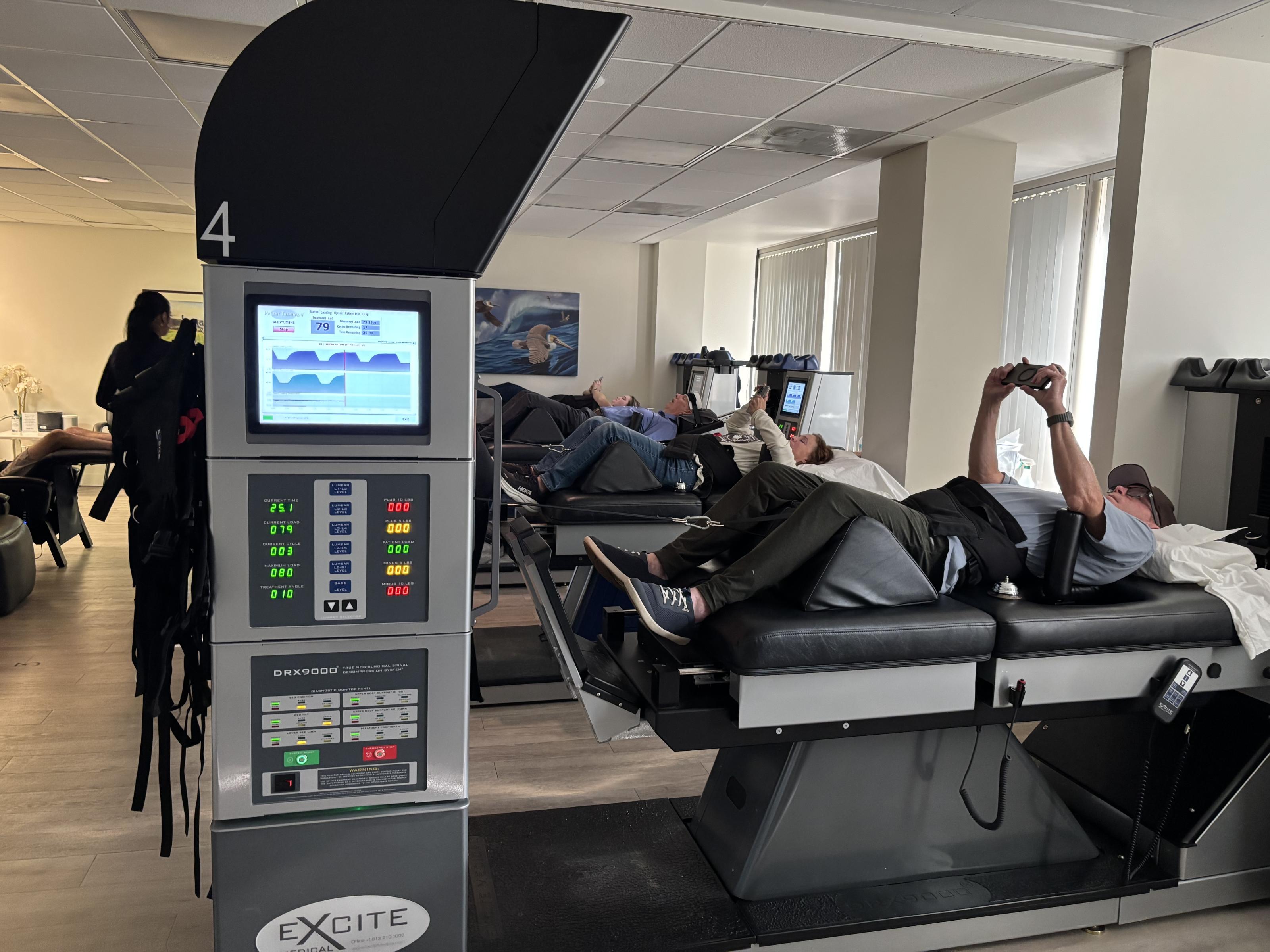
✔ Operates 7 DRX9000® Spinal Decompression Systems
- 4 Lumbar Systems
- 3 Cervical Systems
✔ Trains Doctors Throughout the United States and Internationally in advanced spinal decompression protocols
✔ Patients Travel From Throughout California, Across the United States, Mexico, Canada, Europe, and Other Countries Seeking His Expertise
✔ Honest Candidate Selection—if Dr. Boelk believes another treatment option is more appropriate, he'll tell you.
"Very Nice Doctor... And Honest."
"Very nice Dr. and Honest! I would definitely recommend anyone who hasn't had metal put in their back in a surgery to go to him and give his program a shot. I believe it would definitely help. Just not in my personal case, as I have a lot of hardware in my back. But I'm glad I took the time to meet with him. It was very informative all around."
⭐⭐⭐⭐⭐
— Toni W., Lake Elsinore, CA
A Personal Message From Dr. Cassidy James Boelk, DC
For many people, the hardest part about sciatica isn't simply the pain.
It's what the pain prevents them from doing.
Living in a community like La Jolla, many of my patients want to stay active. They want to walk along the coastline, surf, golf, hike, play tennis, travel, and spend time with family—not worry about whether they'll be able to sleep through the night because of back or leg pain.
My goal isn't simply to help patients find a more comfortable sleeping position.
My goal is to help them understand why they're experiencing sciatica so they can make informed decisions about their health.
Sometimes conservative treatment is appropriate.
Sometimes additional testing is needed.
Sometimes another healthcare provider—or even surgery—is the better recommendation.
Every patient deserves an honest evaluation, a clear diagnosis, and a complete understanding of their treatment options.
"Dr. Boelk Has Been a Lifesaver."
"Dr. Boelk has been a lifesaver.
I suffered from constant low back pain and sciatica for more than eight months. Pain medications didn't help, and I was headed toward multiple injections in hopes of finding relief.
After beginning treatment with Dr. Boelk, everything changed.
Today, my pain is completely gone.
As a firefighter who depends on his body every day to help others, being pain-free has made a tremendous difference in both my career and quality of life.
The results I experienced were absolutely worth it, and I highly recommend looking into what Dr. Boelk and his team can do for you."
⭐⭐⭐⭐⭐
— Joshua T., San Diego, CA
Frequently Asked Questions
Is sleeping on my side better than sleeping on my back?
Both can be excellent options. The best sleeping position depends on the underlying cause of your sciatica.
Should I sleep with a pillow between my knees?
Many side sleepers find that placing a pillow between their knees helps improve spinal alignment and may reduce stress on the lower back.
Can sleeping make sciatica worse?
Certain sleeping positions may aggravate symptoms, but they usually don't cause sciatica. They often reveal an underlying spinal condition.
Is a firm mattress always better?
Not necessarily. The right mattress depends on your body type, sleeping position, comfort preferences, and diagnosis.
Should I sleep in a recliner?
Some patients experience temporary relief sleeping in a reclined position, but it isn't the best long-term solution for everyone.
You Don't Have To Figure This Out Alone
If your symptoms continue returning, don't ignore them.
Make sure you're evaluated by a healthcare provider who specializes in diagnosing and treating spinal disc injuries so you receive an accurate diagnosis before deciding on treatment.
If you'd like to find out whether you may be a candidate for treatment in our office, contact us to schedule a No-Charge Consultation.
During your consultation, Dr. Cassidy James Boelk, DC will:
✔ Review your health history
✔ Perform a comprehensive orthopedic and neurological examination
✔ Review your MRI (if available)
✔ Explain your diagnosis in clear, easy-to-understand language
✔ Answer your questions
✔ Discuss all appropriate treatment options
✔ Determine whether you may be a candidate for treatment in our office
The Spinal Decompression & Chiropractic Center of San Diego
📍 5095 Murphy Canyon Road, Suite 300
San Diego, CA 92123
📞 (619) 298-0800
Schedule Your No-Charge Consultation
✔ Live Answering Service Available 24 Hours a Day, 7 Days a Week
✔ Hablamos Español