L4-L5 Herniated Disc: Symptoms & Treatment Options – La Jolla, CA
An L4-L5 herniated disc can cause much more than lower-back pain. Depending on the location of the herniation and whether a nerve is involved, patients may experience pain into the glute or leg, sciatica, numbness or tingling, burning pain, or weakness in the leg or foot.
For some people, sitting is the biggest problem. They may be able to walk reasonably well but can't sit through dinner or drive for 30 minutes without the leg starting to hurt. Others have trouble sleeping, getting dressed, bending forward, exercising, or simply getting comfortable.
Dr. Cassidy James Boelk, DC has focused heavily on disc injuries, sciatica and Non-Surgical Spinal Decompression for more than 22 years. One thing he regularly explains to patients is that an L4-L5 herniated disc on an MRI does not automatically mean surgery.
It also doesn't automatically mean spinal decompression.
The MRI needs to match what the patient is actually experiencing. Where does the pain travel? Is there numbness or tingling? Is the leg getting weaker? What happens with sitting, standing and walking? What has already been tried?
Those details matter when deciding what to do next.
When a Disc Problem Starts Interfering With Normal Life
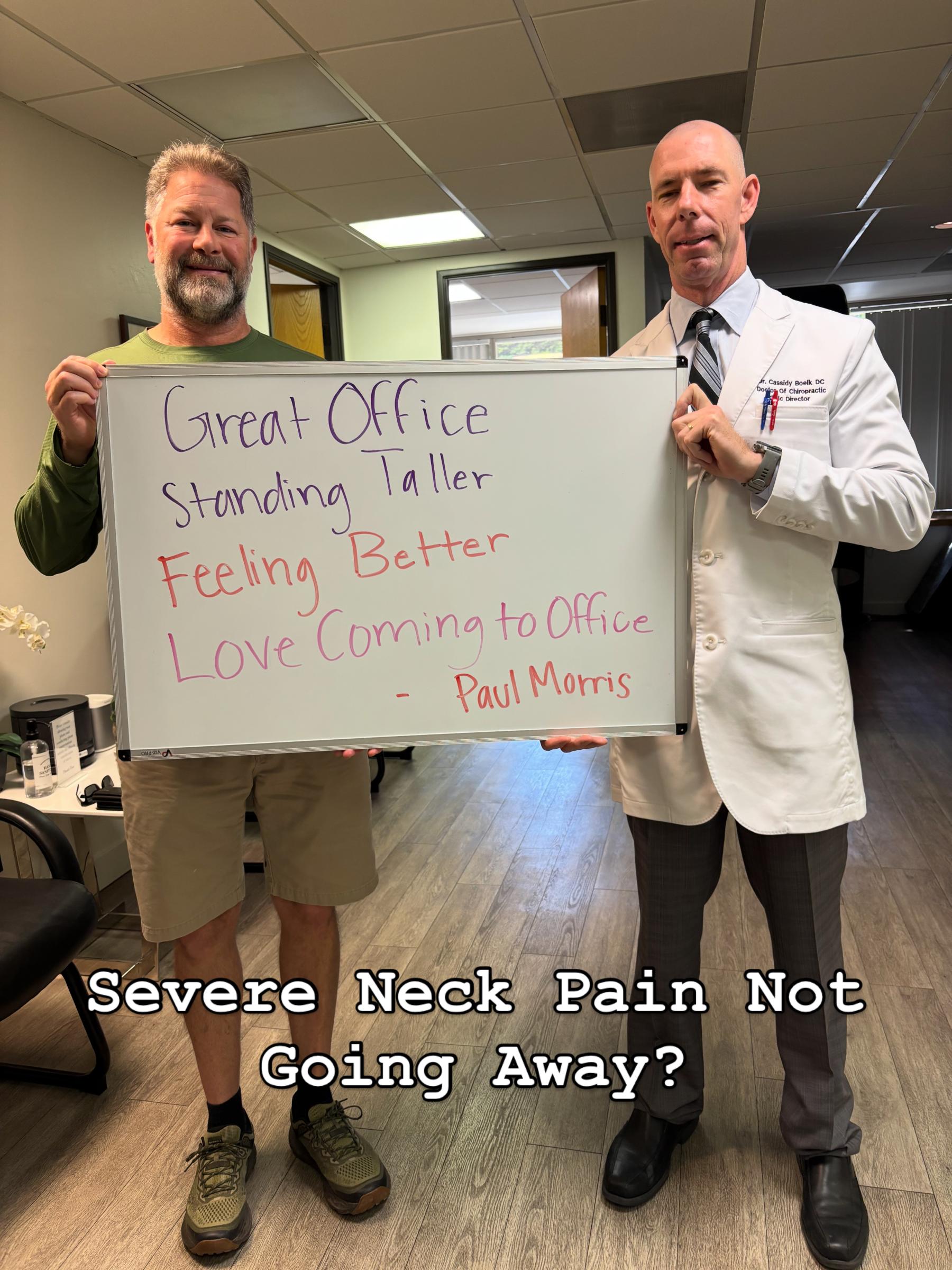
Paul C. came to Dr. Boelk with back pain from a disc herniation that had begun affecting his mobility and normal daily activities.
⭐⭐⭐⭐⭐ Paul C.
“I have been seeing Dr. Boelk since November for my back pain due to disc herniation. I lost mobility and had difficulty even putting shoes on. The pain was interfering with my everyday lifestyle. After reviewing the X-ray results, we agreed upon a treatment plan. Agreeing to this treatment plan was the best choice I've made for my back pain. The spinal decompression has relieved all the pain I felt in my lower back. I can walk, run and exercise without any pain and I'm able to get back in the gym and continue my daily routines. The office staff are very friendly and caring as well. I highly recommend Dr. Boelk's office to anyone seeking exceptional care.”
— Paul C.
What stands out about Paul's story isn't simply that his back hurt. He had reached the point where something as basic as putting on his shoes was difficult.
That is often when patients realize this is affecting more of their life than they initially thought.
Have an MRI? Bring It With You
Patients from La Jolla and throughout San Diego can schedule a No-Charge, No-Obligation Consultation with Dr. Boelk at The Spinal Decompression & Chiropractic Center of San Diego.
If you already have an MRI, bring the actual images if possible, along with the report and any previous X-rays. Dr. Boelk will review the imaging along with:
-
Where your pain starts and where it travels
-
Numbness, tingling or burning
-
Any weakness in the leg or foot
-
How long you can comfortably sit or stand
-
Whether driving aggravates the problem
-
How the condition is affecting your sleep
-
How and when the problem started
-
Previous injuries or spinal surgery
-
Treatments you have already tried and how you responded
If you don't have an MRI, that's okay. Dr. Boelk can determine whether additional evaluation or imaging may be appropriate.
The consultation is No-Charge and No-Obligation, and not every patient is a candidate for Non-Surgical Spinal Decompression.
The Spinal Decompression & Chiropractic Center of San Diego
5095 Murphy Canyon Road, Suite 300
San Diego, CA 92123
Phone: 619-298-0800
www.SanDiegoBackCare.com
Live 24/7 Answering Service • Hablamos Español
What Is an L4-L5 Herniated Disc?
L4-L5 is the disc between the fourth and fifth lumbar vertebrae. It is one of the lower discs in the lumbar spine and deals with a considerable amount of load and movement during normal daily activities.
When a disc becomes damaged, material can begin pushing outward through weakened outer fibers. Depending on what is happening, an MRI report may use terms such as:
-
Disc bulge
-
Disc protrusion
-
Disc herniation
-
Disc extrusion
-
Annular fissure
-
Foraminal narrowing
-
Spinal canal narrowing
-
Nerve-root contact or compression
Patients sometimes get very focused on how many millimeters the herniation measures. Size matters, but it is only part of the picture.
A relatively small protrusion located right where a nerve has limited room can produce significant symptoms. Another person may have several bulging or degenerative discs on an MRI and have very little pain.
Dr. Boelk wants to see where the disc problem is located and whether it makes sense with the symptoms the patient is describing.
What Symptoms Can L4-L5 Cause?
An L4-L5 herniation may cause lower-back pain, but nerve involvement can produce symptoms farther away from the spine.
Common complaints can include:
-
Lower-back pain or stiffness
-
Pain into one glute
-
Pain traveling into the leg
-
Sciatica
-
Burning or electrical-type pain
-
Numbness or tingling
-
Symptoms into the lower leg or foot
-
Leg or foot weakness
-
Difficulty standing upright during a bad flare-up
-
Increased symptoms with prolonged sitting or driving
-
Difficulty sleeping because of back or leg pain
Some patients come in with surprisingly little back pain. The leg is what is bothering them.
That can happen when a lumbar nerve is being irritated. The problem originates in the lower spine, but the symptoms are felt farther along the path of the nerve.
Can L4-L5 Cause Foot Numbness or Tingling?
Yes, an L4-L5 disc problem can sometimes produce altered sensation farther down the leg and into the foot when a nearby nerve is involved.
But foot numbness shouldn't automatically be blamed on L4-L5 simply because an MRI shows a disc bulge.
The location of the numbness, which side is involved, whether it is constant or intermittent, whether there is pain traveling down the leg, and whether there is associated weakness all help determine what may be going on.
Increasing weakness deserves particular attention. If the leg or foot is progressively becoming weaker, that is something Dr. Boelk wants to know about.
Things You Can Do at Home That May Help
There isn't one exercise or stretch that is right for every L4-L5 disc problem. In fact, something that feels good for one patient may aggravate another.
There are still some simple things worth paying attention to.
Break up long periods of sitting
If sitting clearly aggravates the back or leg, don't stay in the same position for hours.
Get up periodically. Walk around for a few minutes if walking is comfortable. Many disc patients tolerate shorter periods of sitting much better than one long stretch.
Check your driving position
If you spend a lot of time in the car, look at how you're sitting.
A very low seat position with the knees significantly higher than the hips can place the lumbar spine into more flexion. If that position consistently aggravates your symptoms, adjust the seat and see whether a more supported position feels better.
Don't automatically stretch harder because the leg feels tight
This is an important one with sciatica.
An irritated sciatic nerve can make the hamstring or calf feel extremely tight. Patients sometimes respond by stretching harder and harder.
If stretching causes pain, tingling or numbness to travel farther down the leg, stop forcing it.
Walk if walking feels comfortable
Complete bed rest is generally not necessary for a routine disc flare-up.
Short, comfortable walks may help some patients stay mobile without putting them into prolonged sitting positions.
That doesn't mean pushing through increasing leg pain. Pay attention to how the symptoms respond.
Watch what is happening in the leg
Don't monitor only the back pain.
Pay attention to:
-
Whether pain is traveling farther down the leg
-
Increasing numbness or tingling
-
Changes in foot sensation
-
New weakness
-
Changes in walking
-
Activities or positions that consistently increase the symptoms
That information can be very useful during an evaluation.
Can an L4-L5 Herniated Disc Heal Without Surgery?
Many lumbar disc herniations are managed without surgery.
Treatment may include activity modification, medication, physical therapy and rehabilitation, epidural steroid injections, and in selected cases Non-Surgical Spinal Decompression.
The appropriate approach depends on the patient's symptoms, neurological findings, MRI, spinal stability, previous treatment, health history and how the condition is progressing.
Dr. Boelk isn't against surgery. There are situations where surgery is necessary and appropriate.
The important thing is determining whether the patient has a reasonable nonsurgical option before making that decision.
Non-Surgical Spinal Decompression With the DRX9000
The Spinal Decompression & Chiropractic Center of San Diego uses the DRX9000 exclusively for lumbar Non-Surgical Spinal Decompression.
The office has four lumbar DRX9000 systems and three cervical DRX9000C systems.
Treatment involves controlled decompression and relaxation cycles directed toward the lumbar spine. Dr. Boelk considers the patient's disc level, imaging, symptoms, body size, positioning, treatment angle, starting force, tolerance and response to care.
There isn't one standard setting used for every person with an L4-L5 herniation.
Dr. Boelk has performed more than 100,000 spinal decompression treatments over more than 22 years, and experience has taught him that patient selection and the treatment protocol are every bit as important as the equipment being used.
Some Patients Travel a Long Way for This Type of Care
Lisa S. travels from the United Kingdom to see Dr. Boelk and his team. She describes having three bulging discs, including one affecting a nerve.
⭐⭐⭐⭐⭐ Lisa S. — United Kingdom
“I travel from the UK to see Dr Boelk and his wonderful team . I have 3 bulging disc and one is touching the nerve. I have the spinal decompression treatment and it really helps keep me in my active life . I will not go to anyone else for back treatment, this place is number one and they genuinely care about their patients.”
— Lisa S., United Kingdom
Patients have traveled to Dr. Boelk's San Diego office from throughout California, Arizona, Nevada, Alaska and other countries. His practice has become heavily focused on patients dealing with disc injuries, sciatica and chronic neck and lower-back problems.
Why Patients Seek Out Dr. Cassidy James Boelk, DC
Dr. Boelk's background includes:
-
Doctor of Chiropractic
-
Certified Spinal Decompression Doctor
-
Certified Pain-Free Performance Specialist
-
More than 22 years of clinical experience
-
More than 100,000 spinal decompression treatments performed
-
Founder, Non-Surgical Spinal Decompression Training Academy
-
Trains other doctors in spinal decompression protocols and techniques
-
Founding Member, American Spinal Decompression Society
-
Member, International Disc Education Association
-
California X-ray radiography credentials
-
Seven DRX9000 spinal decompression systems
Dr. Boelk also understands spinal injuries from personal experience. He suffered an L5 compression fracture at age 16 and later dealt with disc injuries and sciatica himself.
That experience is one reason his approach goes beyond simply asking whether the patient is “in pain.” He wants to know what the condition has stopped that person from doing and what they want to get back to doing.
For one patient that may be walking normally. For another it may be sleeping through the night, working without pain, getting back into the gym, playing golf, surfing or simply being able to sit through a family dinner.
Not Every Patient Is a Candidate
Knowing when not to perform spinal decompression is important.
Jan H. came to Dr. Boelk after a serious motocross neck injury. Dr. Boelk reviewed his MRI but did not treat him because his fracture needed additional healing. He also recommended another neurosurgical opinion.
⭐⭐⭐⭐⭐ Jan H. — San Marcos, CA
“I decided to see Dr. Boelk after a pretty gnarly motocoss neck injury. At the Hospital I was at, I felt I was getting pressured into a surgery which I refused. A friend of a friend referred him after Dr. Boelk successfully treated his broken back.
Dr. Boelk is a compassionate individual who truly cares about his patients. He looked at my MRI images, explained what he saw and potential routes for recovery. He could not treat me as I have to wait until the fracture in my neck heals, but the level of professionalism, compassion, caring and knowledge displayed by him was exceptional.
He also recommended to seek an additional opinion form another neurosurgeon. My experience was that he really cares and he's not someone who would take advantage of the situation someone's in (unlike some other doctors). I will definitely be back and already recommended him to others as well! Thank you Dr. Boelk!”
— Jan H., San Marcos, CA
Conditions that may make lumbar decompression inappropriate or require further evaluation can include:
-
Unstable spondylolisthesis
-
An unhealed spinal fracture
-
Significant osteoporosis
-
Abdominal aortic aneurysm
-
Pregnancy for lumbar treatment
-
Certain malignancies
-
Certain surgical hardware at the treatment level
-
Progressive neurological weakness
-
Cauda equina syndrome
-
Other conditions that may make decompression unsafe
If Dr. Boelk doesn't believe someone is a good candidate, he tells them.
Symptoms That Need Prompt Medical Attention
Severe pain doesn't necessarily mean there is an emergency, but certain neurological symptoms should not wait for a routine appointment.
Seek prompt medical attention for:
-
New bowel or bladder dysfunction
-
Difficulty urinating
-
Numbness around the groin or saddle region
-
Rapidly progressing leg weakness
-
Sudden loss of control of the leg or foot
Progressive weakness should also be evaluated even when bowel or bladder symptoms are not present.
Dealing With an L4-L5 Herniated Disc in La Jolla?
If you have an L4-L5 herniation and are still dealing with lower-back pain, sciatica, numbness, tingling or difficulty sitting, sleeping or exercising, Dr. Boelk can review what is going on and discuss the available options.
Bring your MRI images, X-rays and reports if you have them.
The consultation is No-Charge and No-Obligation.
There is no requirement to start treatment, and not every patient is a candidate for Non-Surgical Spinal Decompression.
The Spinal Decompression & Chiropractic Center of San Diego
5095 Murphy Canyon Road, Suite 300
San Diego, CA 92123
Phone: 619-298-0800
www.SanDiegoBackCare.com
Live 24/7 Answering Service • Hablamos Español
Call 619-298-0800 to schedule a No-Charge, No-Obligation Consultation.