Is Chiropractic Spinal Decompression Effective for Sciatica in San Diego, CA?
If you've ever experienced sciatica, you know it's not always just lower back pain.
Sometimes it's a sharp, shooting pain that travels through your buttock and down your leg. Other times it's burning, tingling, numbness, or a deep ache that makes sitting, driving, or sleeping uncomfortable.
For some people, symptoms come and go. For others, they become a daily problem that affects work, exercise, and quality of life.
And when physical therapy, chiropractic adjustments, medications, or injections haven't provided the relief you hoped for, it's natural to start looking at other options.
One question that comes up frequently is:
Is chiropractic spinal decompression effective for sciatica?
The answer depends largely on what's causing the sciatica, how severe the condition is, and whether you're an appropriate candidate for treatment.
At The Spinal Decompression & Chiropractic Center of San Diego, Dr. Cassidy James Boelk, DC, has spent more than 22 years evaluating patients with disc-related spinal conditions, including lumbar disc herniations and sciatica.
As a Certified Spinal Decompression Doctor and Certified Pain-Free Performance Specialist, he has overseen more than 100,000 spinal decompression treatment sessions.
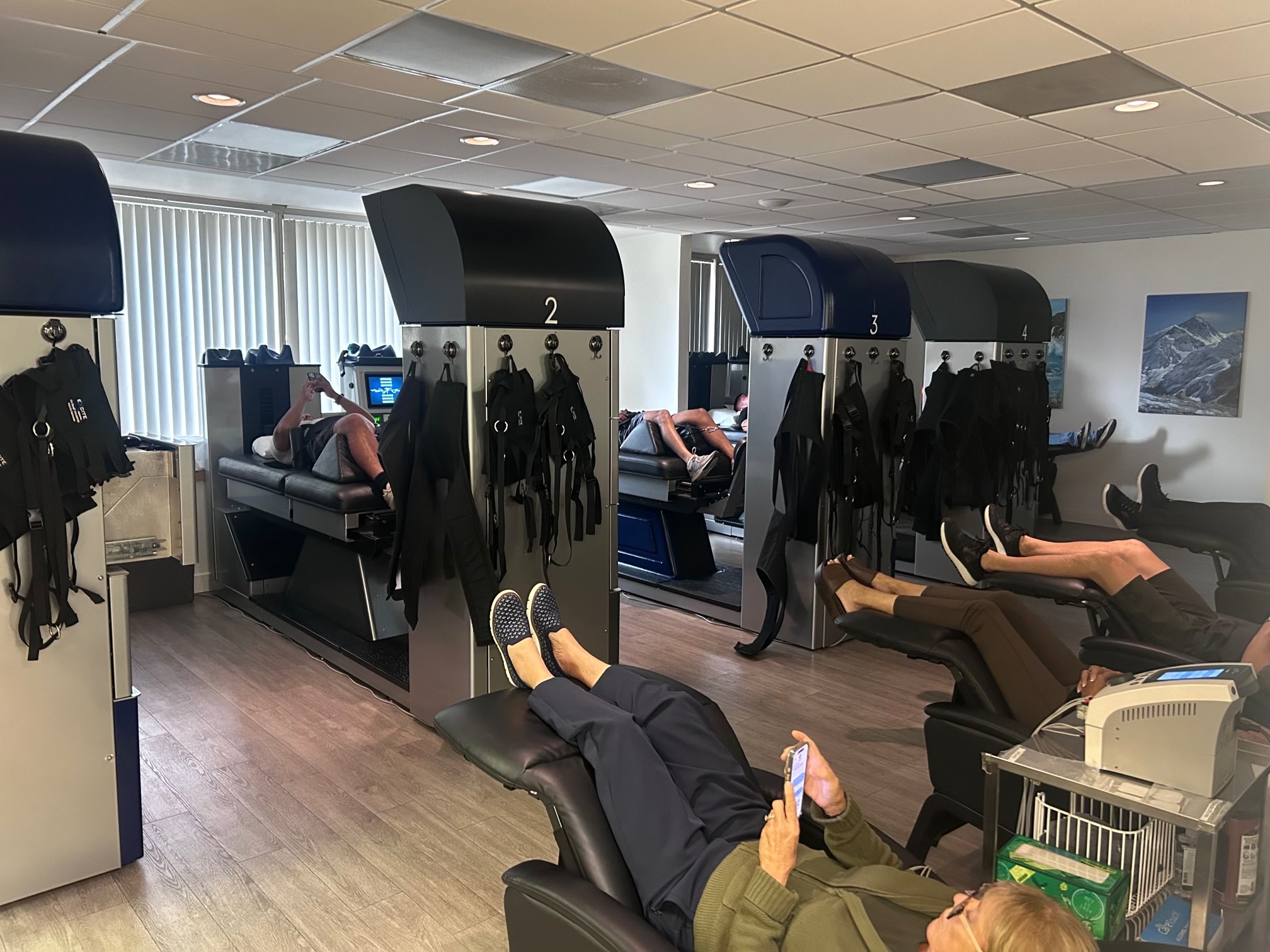
His Kearny Mesa practice features seven spinal decompression systems, including four lumbar DRX9000 units and three cervical decompression units.
But before discussing how spinal decompression works, it's important to understand why sciatica happens in the first place.
What Actually Causes Sciatica?
Sciatica describes symptoms associated with irritation or compression of nerve roots that contribute to the sciatic nerve.
The sciatic nerve is the largest nerve in the body, extending from the lower spine through the buttock and down the leg.
When a nerve root becomes irritated, symptoms can travel far beyond the lower back.
Common symptoms include:
-
Pain radiating through the buttock and down one leg
-
Burning or electric-like sensations
-
Numbness or tingling in the leg or foot
-
Weakness in certain leg or foot muscles
-
Pain aggravated by sitting, bending, coughing, or sneezing
A lumbar disc herniation is one common cause of sciatica.
However, spinal stenosis and other conditions can produce similar symptoms.
This distinction matters because not every cause of sciatica responds to the same treatment.
Why L4-L5 and L5-S1 Disc Herniations Often Cause Sciatica
Two of the most common locations for lumbar disc herniations are L4-L5 and L5-S1.
These levels are located in the lower portion of the lumbar spine, where substantial mechanical loads occur during everyday activities.
An L4-L5 disc herniation may irritate the L5 nerve root.
Patients may experience symptoms involving the buttock, outer leg, and portions of the foot.
An L5-S1 disc herniation may affect the S1 nerve root.
Symptoms may travel through the back of the leg toward the calf or outer foot.
Some patients experience weakness or changes in reflexes.
However, symptoms don't always follow textbook patterns.
An appropriate neurological examination and review of available imaging can help determine whether a disc abnormality is contributing to the patient's symptoms.
How Does Non-Surgical Spinal Decompression Work?
Non-surgical spinal decompression is a form of mechanical traction.
During treatment, controlled pulling forces are applied to selected regions of the spine.
Motorized systems use programmed cycles of traction and relaxation.
The objective is to temporarily alter mechanical loading across spinal structures.
For some patients with disc-related symptoms, traction may provide symptom relief.
However, spinal decompression has not been proven to reliably reverse herniated discs or eliminate the need for surgery.
The clinical evidence is mixed, and not every patient benefits.
That's why determining whether someone is an appropriate candidate is just as important as the treatment itself.
What Does the Research Say About Spinal Decompression for Sciatica?
Research on lumbar traction has produced different results depending on the patients studied, the treatment methods used, and the outcomes measured.
Some studies suggest that mechanical traction may provide short-term improvements in pain or disability for selected patients with lumbar radiculopathy.
Other studies have found little additional benefit when traction is added to exercise or other conservative treatments.
Overall, the evidence does not support promising that spinal decompression will resolve sciatica in every patient.
It also does not establish that one specific decompression machine is universally superior to other traction systems.
Still, for selected patients, traction may be considered as part of a broader conservative treatment plan.
The important question is whether the patient's symptoms, examination findings, and imaging suggest that this approach is reasonable.
A Patient's Experience With Sciatica
Abel T. came to The Spinal Decompression & Chiropractic Center of San Diego after experiencing significant lower back pain and sciatic symptoms following an accident.
Patient Testimonial — Abel T., San Diego, CA
“I had really bad back problems to the point I couldn’t sleep, also had pain radiating along the sciatic nerve which ran down one leg from the lower back—caused by an accident.
I came in and talked to Dr. Cassidy about my back problems. He evaluated me and mentioned I was a good candidate for this treatment. After the first 2 decompression sessions my sciatic pain was gone and we were able to work on the root of the problem. I did a total of 24 sessions, after which I was able to start rehabilitation training to strengthen my core.
The office is super nice and the staff’s customer service is above and beyond.
Back and neck issues are horrible to live with—trust me, I know firsthand. I gained weight, took pain killers, went into depression, and had major anxiety. I’m over it now—feeling better, walking, sleeping well, and starting to have a better social life as well.
The experience for me has been nothing but excellent. Dr. Cassidy Boelk is hands down amazing—super glad I came here.”
This is one patient's experience. Individual outcomes vary, and similar results cannot be guaranteed.
What Makes the DRX9000 Different From General Spinal Traction?
The DRX9000 is a computerized, motorized traction system designed to deliver controlled pulling forces through programmed treatment cycles.
Patients lie on a specialized table while the system applies traction according to selected settings.
The doctor can adjust treatment parameters based on the patient's condition, tolerance, and response.
At The Spinal Decompression & Chiropractic Center of San Diego, the facility includes:
-
Four lumbar DRX9000 spinal decompression units
-
Three cervical spinal decompression units
-
Seven total spinal decompression systems
-
Individualized treatment protocols
-
Dedicated treatment areas
-
Spinal rehabilitation and stabilization services
The equipment is one part of the treatment process.
Clinical experience, appropriate patient selection, and ongoing evaluation are equally important.
When Sciatica Doesn't Improve With Traditional Chiropractic Care
Some patients with sciatica have already received chiropractic adjustments without meaningful improvement.
That doesn't necessarily mean chiropractic care was inappropriate.
It may mean that the underlying condition requires a different treatment strategy.
Traditional chiropractic adjustments and mechanical spinal decompression are different procedures.
Adjustments generally involve controlled forces applied to joints.
Spinal decompression uses traction to apply pulling forces to selected spinal regions.
For some patients with disc-related symptoms, traction may be considered as an alternative or adjunct to other conservative treatments.
Other patients may benefit more from exercise, physical therapy, medication management, or specialist evaluation.
The appropriate approach depends on the diagnosis and clinical findings.
Why Dr. Boelk, DC, Specializes in Disc-Related Sciatica
Dr. Cassidy James Boelk, DC, has a personal understanding of spinal injuries.
At age 16, he sustained a fracture involving his lower back.
Later, he experienced lumbar disc herniations and sciatica.
Those experiences helped shape his professional interest in conservative spinal care and rehabilitation.
Over more than two decades, he has focused extensively on evaluating disc-related conditions and providing non-surgical spinal decompression for appropriate patients.
He also founded the Spinal Decompression Training Academy, where he trains other doctors in treatment protocols, techniques, and patient selection.
His credentials include:
-
Board-Certified Doctor of Chiropractic
-
Certified Spinal Decompression Doctor
-
Certified Pain-Free Performance Specialist
-
Founder of the Spinal Decompression Training Academy
-
Founding Member of the American Spinal Decompression Society
-
Member of the International Disc Education Association
-
California X-ray Radiology Licensed Doctor
-
More than 22 years of clinical experience
-
Experience overseeing more than 100,000 spinal decompression treatment sessions
-
Extensive experience with lumbar and cervical spinal decompression systems
His clinical approach emphasizes appropriate evaluation, realistic expectations, and helping patients improve their ability to function.
How Do You Know Whether Your Sciatica Is Coming From a Disc?
Not every patient with pain traveling down the leg has a herniated disc.
Symptoms may arise from several different conditions.
A clinical evaluation may include neurological testing, assessment of spinal movement, and review of MRI findings.
When appropriate, standing weight-bearing X-rays or flexion and extension X-rays may also be used to evaluate spinal alignment and possible instability.
MRI recommendations depend on the patient's symptoms and clinical findings.
The objective is to determine whether disc-related nerve irritation is contributing to the symptoms and whether spinal decompression is appropriate.
Another Patient's Experience With Persistent Back Pain
Ming T. described dealing with severe back pain that interfered with walking and getting out of bed.
Patient Testimonial — Ming T., San Diego, CA
“I came in with extreme back pain, resulting in days were it was difficult to get out of bed. There were moments where I would be walking and then my back would lock up. I thought it was something I have dealt with in the past but this last the entire month of July. I finally dedicated myself to finding the long term solution.
I came to Dr. Boelk unsure about the process, but after he identified exactly what my ailment was, I felt confident that this was the long term solution I was looking for.
I instantly felt better and Dr. Boelk kept encouraging me to trust the process and understand it will take time to feel 100%. I am now pain free and honestly feel stronger, even a little taller. I highly recommend you visit Dr. Boelk.”
Every patient's condition is different, and outcomes vary.
Why Rehabilitation Is Important When Treating Sciatica
For many patients, improving strength and movement tolerance is an important part of recovery.
Once symptoms are manageable, rehabilitation may include exercises designed to improve spinal stability, hip strength, and overall function.
Depending on the patient's condition, these may include modified curl-ups, bird dogs, side planks, walking, and progressive strengthening.
Not every exercise is appropriate for every patient.
Someone whose symptoms worsen with repeated spinal bending may require different modifications from someone who experiences discomfort with extension.
The goal is to help patients gradually return to normal activities without unnecessarily aggravating symptoms.
How Many Spinal Decompression Sessions Are Usually Recommended for Sciatica?
There isn't one treatment schedule that works for everyone.
At The Spinal Decompression & Chiropractic Center of San Diego, many treatment programs involve approximately 12 to 24 sessions, commonly scheduled three times per week.
A typical DRX9000 treatment session lasts approximately 20 to 25 minutes.
Recommendations depend on the patient's diagnosis, symptoms, clinical findings, and response.
Progress is reassessed periodically.
If meaningful improvement isn't occurring, the treatment plan should be reconsidered.
Who Should Not Receive Spinal Decompression?
Not every patient with sciatica is an appropriate candidate.
Certain conditions may make treatment unsuitable or require additional evaluation.
These can include acute spinal fractures, significant instability, progressive neurological weakness, severe osteoporosis, spinal tumors or infections, and certain postoperative conditions involving spinal hardware.
Pregnancy is an exclusion for lumbar decompression at the practice.
Patients experiencing new bowel or bladder dysfunction, saddle anesthesia, or rapidly progressive neurological weakness require emergency medical evaluation.
An experienced doctor should recognize when another form of treatment or specialist referral is appropriate.
Patient Testimonial — Jeff J., Tucson, AZ
“I found this terrific practice on social media. I followed up and did my own research so I decided to pay them a visit. The place is clean, well organized and run by a very efficient receptionist. I met with the doctor and after a honest and forthright conversation, we both determined that surgery was my only option to correct my back issues. I will return as a customer when the time is right.”
This experience highlights the importance of honest patient selection.
Is Spinal Decompression Worth Considering for Your Sciatica?
For some patients with disc-related sciatica, non-surgical spinal decompression may be a reasonable conservative treatment option.
For others, exercise, physical therapy, medication management, or specialist evaluation may be more appropriate.
The best decision depends on identifying the likely cause of symptoms and understanding the available treatment options.
Patients should be cautious of anyone promising to permanently eliminate sciatica or reverse a herniated disc.
A more useful starting point is an individualized evaluation and a realistic discussion of what treatment may accomplish.
Frequently Asked Questions About Sciatica and Spinal Decompression
Can spinal decompression relieve sciatic nerve pain?
Some patients experience symptom improvement with mechanical traction. However, results vary, and the evidence is mixed.
Can sciatica go away without surgery?
Yes. Many cases improve with time and appropriate conservative care, although some patients require additional medical treatment or surgery.
Is spinal decompression painful?
Treatment tolerance varies. Patients should communicate discomfort or worsening symptoms to their provider.
Do I need an MRI?
Not necessarily. MRI recommendations depend on symptoms, examination findings, and clinical circumstances.
How long does a DRX9000 treatment take?
A typical treatment session at Dr. Boelk's practice lasts approximately 20 to 25 minutes.
Can spinal decompression prevent back surgery?
Some patients improve with conservative care and may not require surgery. However, spinal decompression cannot be guaranteed to prevent surgery.
Schedule a No-Charge Sciatica and Spinal Decompression Consultation in San Diego, CA
If you're dealing with sciatica, a herniated disc, or persistent lower back pain, you may be wondering whether non-surgical spinal decompression is worth exploring.
At The Spinal Decompression & Chiropractic Center of San Diego, Dr. Cassidy James Boelk, DC, offers a limited number of no-charge, no-obligation spinal decompression consultations.
Patients can discuss their symptoms, previous treatments, and available imaging while learning about the DRX9000 system.
The consultation is provided at no charge. Any recommended examination, imaging, or treatment is discussed separately.
Call 619-298-0800 to schedule your consultation.
The Spinal Decompression & Chiropractic Center of San Diego
Dr. Cassidy James Boelk, DC
Certified Spinal Decompression Doctor
Certified Pain-Free Performance Specialist
Founder, Spinal Decompression Training Academy
Office Address:
5095 Murphy Canyon Road, Suite 300
San Diego, CA 92123
Phone: 619-298-0800
Website: www.SanDiegoBackCare.com
Email: frontdesk@sandiegobackcare.com
24/7 telephone answering available. Hablamos Español.
Located in Kearny Mesa, serving San Diego, Mission Valley, Clairemont, Tierrasanta, Linda Vista, University City, and surrounding communities.
If you're wondering whether spinal decompression may help your sciatica, call 619-298-0800 to schedule a consultation with Dr. Boelk, DC.