How to Choose the Best Chiropractor for Spinal Decompression La Jolla, CA
If you're searching for the best chiropractor for spinal decompression in La Jolla, California, you may be dealing with a herniated disc, sciatica, degenerative disc disease, or chronic neck and lower back pain that hasn't responded to previous treatment.
Perhaps you've been told that you have an L4-L5 or L5-S1 disc herniation. Maybe an MRI revealed a cervical disc problem at C5-C6 or C6-C7. Or perhaps you've already tried physical therapy, chiropractic adjustments, medications, or injections and are now researching other conservative treatment options.
One of the most important questions to ask is not simply which chiropractor offers spinal decompression, but which provider has the experience, diagnostic approach, and specialized equipment necessary to determine whether it may be appropriate for your particular condition.
For residents of La Jolla, Bird Rock, UTC, Torrey Pines, and surrounding coastal San Diego communities, The Spinal Decompression & Chiropractic Center of San Diego offers specialized non-surgical spinal decompression using the DRX9000 system.
Located in Kearny Mesa, the center is directed by Dr. Cassidy James Boelk, DC, a Certified Spinal Decompression Doctor and Certified Pain-Free Performance Specialist with more than 22 years of clinical experience.
Dr. Boelk, DC, has overseen more than 100,000 spinal decompression treatment sessions throughout his career.
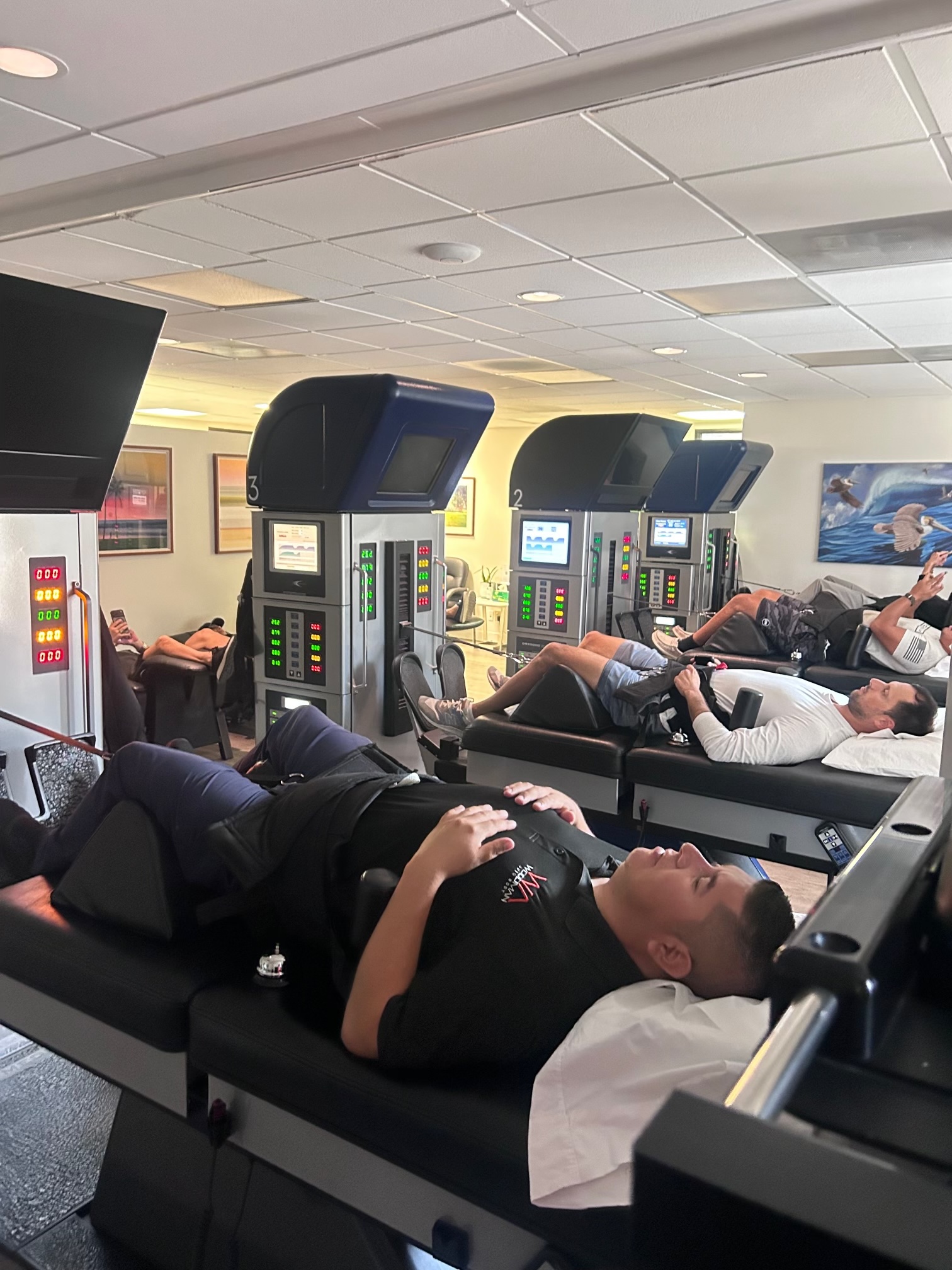
His facility features seven spinal decompression systems, including four lumbar DRX9000 units and three cervical decompression units.
He is also the founder of the Spinal Decompression Training Academy, where he teaches other doctors about spinal decompression protocols, patient selection, and treatment techniques.
For patients researching the best chiropractor for spinal decompression in La Jolla, understanding a provider's experience and approach to treating disc-related conditions can help make the decision easier.
Limited No-Charge Spinal Decompression Consultations for La Jolla Residents
The Spinal Decompression & Chiropractic Center of San Diego offers a limited number of no-charge, no-obligation consultations for individuals interested in learning whether spinal decompression may be appropriate for their condition.
During the consultation, patients can:
-
Discuss their lower back pain, neck pain, sciatica, or disc-related symptoms.
-
Review previous treatment experiences and available MRI findings.
-
Learn how DRX9000 non-surgical spinal decompression works.
-
Understand the difference between traditional chiropractic adjustments and spinal decompression.
-
Discuss whether additional examination or imaging may be appropriate.
-
Explore conservative treatment options before making a decision.
The consultation is provided at no charge. Any recommended examination, imaging, or treatment is discussed separately.
Call 619-298-0800 to schedule.
Website: www.SanDiegoBackCare.com
What Makes a Chiropractor a Good Choice for Spinal Decompression?
There is no universally recognized ranking system that determines the single best chiropractor for spinal decompression.
Instead, patients should evaluate several important factors before choosing a provider.
These include clinical experience, familiarity with disc-related conditions, diagnostic procedures, equipment, treatment planning, and the ability to recognize when spinal decompression is not appropriate.
A chiropractor who primarily performs spinal adjustments may have a different clinical focus from a doctor who regularly evaluates herniated discs, nerve irritation, and other disc-related conditions.
Neither type of practice is automatically better for every patient.
However, patients considering specialized spinal decompression should look for a doctor who understands the treatment, its limitations, and the importance of appropriate patient selection.
Seven Things to Look for When Comparing Spinal Decompression Chiropractors
1. Extensive Experience With Herniated Discs and Sciatica
A chiropractor who offers spinal decompression should be familiar with common lumbar and cervical disc conditions.
These may include L4-L5 and L5-S1 herniations, cervical disc protrusions, degenerative disc disease, and nerve-related symptoms.
The provider should understand how symptoms differ depending on which spinal level and nerve root are affected.
2. Experience Performing Spinal Decompression
Ask how frequently the office provides spinal decompression and how much experience the doctor has with the equipment.
An office that performs traction occasionally may have a different level of practical experience from a practice that focuses extensively on disc-related conditions.
3. Appropriate Diagnostic Evaluation
Treatment should not begin solely because an MRI report mentions a herniated disc.
The doctor should consider symptoms, medical history, physical examination findings, and imaging together.
4. Understanding of Spinal Instability
Certain conditions involving spinal instability may make traction inappropriate.
Standing weight-bearing X-rays and flexion-extension views may be recommended when clinically indicated to help assess alignment and instability.
5. Realistic Expectations
Be cautious of anyone guaranteeing that spinal decompression will reverse a herniated disc or eliminate the need for surgery.
Although some patients experience improvement, research findings are mixed and results vary.
6. A Rehabilitation Component
For many patients, improving strength, mobility, and movement tolerance is an important part of recovery.
Spinal decompression should not automatically replace appropriate rehabilitation.
7. Willingness to Refer Patients Elsewhere
An experienced provider should recognize when another treatment or specialist evaluation is more appropriate.
Not every patient is a candidate for spinal decompression.
Why Experience Matters When Treating Disc-Related Spinal Conditions
Two patients may have similar MRI findings but very different symptoms.
For example, one patient with an L4-L5 disc herniation may experience severe radiating leg pain, while another patient with the same level of herniation may have only occasional lower back discomfort.
Similarly, some patients with cervical disc herniations experience neck pain alone, while others develop numbness, tingling, or weakness extending into an arm.
A clinician must evaluate more than the MRI report.
The patient's neurological findings, symptom patterns, previous treatment response, and overall medical history are important.
Dr. Boelk, DC, has focused extensively on spinal decompression and disc-related spinal conditions throughout his career.
He has overseen more than 100,000 spinal decompression treatment sessions and founded the Spinal Decompression Training Academy to teach other doctors about patient selection and treatment protocols.
Although experience cannot guarantee results, it is an important consideration when selecting a provider.
Patient Experience: More Than Five Years of Lower Back Problems
Many patients begin researching specialized spinal decompression after years of trying different approaches.
Calder Pearce described his experience after dealing with persistent lower back problems and consulting multiple doctors.
Patient Testimonial – Calder Pearce, San Diego, CA
“Dr. Boelk and his team are the best in the business! I have had lower back problems for over 5 years and been to 6 other doctors seeking options other than surgery. I came in early January not able to bend and walking with a limp. By February I was able to bend again with minimal pain and by March I am now able to bend without any pain and am able to walk normally.
I am EXTREMELY happy I did not have surgery and found Dr. Boelk. Trust him and the process and he will get you feeling better. He also said from the beginning that if at any stage in the process he felt like progress wasn't happening he would let me know which was not the case with other specialist I have seen in the past so I appreciate that.”
Individual experiences vary, and this testimonial does not establish that every patient will achieve the same results.
What Is Non-Surgical Spinal Decompression?
Non-surgical spinal decompression is a form of mechanical traction that applies controlled pulling forces to selected regions of the spine.
The treatment is intended to temporarily alter mechanical loading across spinal structures.
Depending on the equipment and protocol, traction forces may be applied through programmed cycles of pulling and relaxation.
For selected patients, mechanical traction may help reduce symptoms or improve function.
However, the available research does not establish that spinal decompression reliably reverses disc herniations or prevents the need for surgery.
The effectiveness of treatment varies depending on the patient's condition, clinical findings, and response.
Why the DRX9000 System Is Worth Understanding
The DRX9000 is a specialized motorized traction system designed to deliver controlled spinal traction.
Patients lie on a treatment table while the equipment applies programmed traction and relaxation cycles.
Treatment settings can be adjusted based on the patient's condition, tolerance, and response.
The Spinal Decompression & Chiropractic Center of San Diego features:
-
Four lumbar DRX9000 spinal decompression units
-
Three cervical spinal decompression units
-
Seven total spinal decompression systems
-
Dedicated treatment areas
-
Individualized treatment protocols
-
Rehabilitation and spinal stabilization services
The DRX9000 is one of several motorized traction systems used in conservative spinal care.
Current research does not establish that it is universally superior to other traction systems.
The experience of the provider, appropriate patient selection, and clinical judgment remain important.
Can Spinal Decompression Help an L4-L5 or L5-S1 Herniated Disc?
L4-L5 and L5-S1 are common locations for lumbar disc herniations.
These spinal levels experience substantial mechanical loading during sitting, bending, lifting, and everyday movement.
When disc material extends beyond its normal boundaries, it may irritate or compress nearby spinal nerves.
Depending on the location of the herniation, patients may experience:
-
Lower back pain
-
Buttock pain
-
Pain traveling down one leg
-
Numbness or tingling
-
Burning or electric-like sensations
-
Weakness in certain leg or foot muscles
-
Difficulty sitting or walking comfortably
For selected patients, mechanical traction may be considered as part of conservative treatment.
However, the presence of a herniated disc does not automatically mean spinal decompression is appropriate.
Clinical examination, neurological findings, spinal stability, and available imaging should guide treatment decisions.
Can Spinal Decompression Help With Sciatica?
Sciatica refers to symptoms involving irritation of nerve structures that contribute to the sciatic nerve.
Patients commonly describe pain traveling from the lower back into the buttock and down one leg.
Symptoms may include burning, shooting pain, numbness, tingling, or weakness.
A lumbar disc herniation is one possible cause, but sciatica-like symptoms can also occur with spinal stenosis and other conditions.
For selected patients with disc-related sciatica, mechanical traction may provide short-term relief.
However, research findings are mixed, and the treatment is not appropriate for everyone.
The most important step is identifying the underlying cause of the symptoms.
Patient Experience: Sciatica and Difficulty Sleeping
Abel T. described his experience after an accident resulted in significant lower back pain and radiating sciatic symptoms.
Patient Testimonial – Abel T., San Diego, CA
“I had really bad back problems to the point I couldn’t sleep, also had pain radiating along the sciatic nerve which ran down one leg from the lower back—caused by an accident.
I came in and talked to Dr. Cassidy about my back problems. He evaluated me and mentioned I was a good candidate for this treatment. After the first 2 decompression sessions my sciatic pain was gone and we were able to work on the root of the problem. I did a total of 24 sessions, after which I was able to start rehabilitation training to strengthen my core.
The office is super nice and the staff’s customer service is above and beyond.
Back and neck issues are horrible to live with—trust me, I know firsthand. I gained weight, took pain killers, went into depression, and had major anxiety. I’m over it now—feeling better, walking, sleeping well, and starting to have a better social life as well.
The experience for me has been nothing but excellent. Dr. Cassidy Boelk is hands down amazing—super glad I came here.”
What About Cervical Disc Herniations and Neck Pain?
Spinal decompression is not limited to the lower back.
Certain cervical disc conditions may also be evaluated for conservative traction-based treatment.
Common cervical disc levels include C5-C6 and C6-C7.
Symptoms may include neck pain, shoulder discomfort, radiating arm pain, numbness, tingling, or weakness.
Some research supports cervical traction as an adjunct to exercise and rehabilitation for selected patients with cervical radiculopathy.
However, patients with significant spinal cord compression, instability, progressive neurological deficits, or other concerning findings may require additional medical evaluation.
Dr. Boelk, DC, evaluates cervical disc-related conditions and determines whether conservative treatment or referral may be appropriate.
Spinal Decompression vs. Chiropractic Adjustments
Traditional chiropractic adjustments and non-surgical spinal decompression are different procedures.
A chiropractic adjustment generally involves applying a controlled manual or instrument-assisted force to a spinal or other joint.
Spinal decompression uses mechanical traction to apply controlled pulling forces to selected spinal regions.
Chiropractic adjustments may be appropriate for certain mechanical pain patterns or joint mobility problems.
Spinal decompression may be considered for selected patients with disc-related symptoms.
Neither treatment is automatically superior for every patient.
Some individuals may benefit from exercise, rehabilitation, or other conservative approaches without requiring spinal decompression.
What Does the Research Say About Spinal Decompression?
Research on mechanical traction and non-surgical spinal decompression has produced mixed findings.
Some studies suggest that traction may provide short-term improvements in pain or disability for selected patients with lumbar radiculopathy.
Other studies have found limited or inconsistent additional benefits when traction is combined with broader conservative treatment programs.
Research varies in patient populations, treatment methods, traction settings, and outcome measurements.
For cervical radiculopathy, some evidence supports traction as an adjunct to exercise and physical therapy in selected patients.
However, no spinal decompression system has been conclusively demonstrated to reverse disc herniations or reliably eliminate the need for surgery.
Patients should understand both the potential benefits and limitations of the evidence before beginning treatment.
Meet Dr. Cassidy James Boelk, DC
Dr. Boelk's interest in spinal rehabilitation is closely connected to his personal experience.
As a teenager, he sustained a fracture involving his lower back.
Later, he experienced lumbar disc herniations and sciatica.
These experiences influenced his interest in helping patients with difficult spinal conditions.
He understands how frustrating it can be when back or neck pain interferes with exercise, work, family activities, and everyday life.
Throughout his career, he has focused extensively on evaluating disc-related spinal conditions and developing conservative treatment approaches for appropriate patients.
He also founded the Spinal Decompression Training Academy to educate other doctors about spinal decompression protocols and patient selection.
Professional Credentials and Experience
-
Board-Certified Doctor of Chiropractic
-
Certified Spinal Decompression Doctor
-
Certified Pain-Free Performance Specialist
-
Founder of the Spinal Decompression Training Academy
-
Founding Member of the American Spinal Decompression Society
-
Member of the International Disc Education Association
-
California X-ray Radiology Licensed Doctor
-
More than 22 years of clinical experience
-
Experience overseeing more than 100,000 spinal decompression treatment sessions
-
Extensive experience with DRX9000 lumbar and cervical spinal decompression systems
-
Instructor for doctors learning non-surgical spinal decompression protocols
-
Experience evaluating herniated discs, sciatica, and chronic spinal conditions
-
Specialized interest in spinal rehabilitation, mobility, and stabilization
-
Personal experience recovering from a spinal fracture, disc herniations, and sciatica
Dr. Boelk, DC, maintains an active lifestyle that includes strength training, surfing, and other recreational activities.
His approach emphasizes helping patients improve function and return to meaningful activities whenever possible.
How Does Dr. Boelk Determine Whether Someone Is a Candidate?
Before recommending spinal decompression, it is important to understand the patient's symptoms, medical history, previous treatments, and available imaging.
A comprehensive evaluation may include:
-
Reviewing the location and duration of symptoms
-
Discussing previous chiropractic, physical therapy, injection, or surgical treatments
-
Assessing spinal movement and function
-
Evaluating neurological findings when indicated
-
Reviewing available MRI studies
-
Considering standing spinal X-rays
-
Assessing possible spinal instability
-
Determining whether further imaging or specialist referral is appropriate
Standing flexion and extension X-rays may be recommended when clinically appropriate to evaluate certain forms of spinal instability.
Not every patient needs an MRI immediately, and imaging recommendations are individualized.
The goal is to understand the patient's condition before recommending a treatment program.
How Many Spinal Decompression Sessions Are Typically Needed?
The number of sessions depends on the patient's diagnosis, symptom severity, treatment response, and clinical findings.
At Dr. Boelk's practice, many spinal decompression programs involve approximately 12 to 24 sessions, commonly scheduled several times per week.
A typical session lasts approximately 20 to 25 minutes.
Some patients may also benefit from spinal stabilization and rehabilitation exercises.
Progress is reassessed periodically to determine whether meaningful improvement is occurring.
Treatment recommendations should be adjusted according to the patient's response rather than continuing without evidence of progress.
Why Rehabilitation Matters Alongside Spinal Decompression
Spinal decompression is not intended to replace the importance of movement, strength, and physical conditioning.
For many patients, rehabilitation is an important part of returning to everyday activities.
Depending on the patient's condition, exercises may include:
-
Modified curl-ups
-
Side planks
-
Bird dogs
-
Glute strengthening
-
Hip mobility exercises
-
Progressive resistance training
-
Walking programs
-
Postural endurance exercises
-
Movement modification
-
Gradual return to sports and recreational activities
Exercises should be individualized according to the patient's symptoms and diagnosis.
Some people with disc herniations are sensitive to repeated spinal flexion, while others may experience discomfort with extension.
The objective is to improve function without unnecessarily aggravating symptoms.
Not Everyone Is a Candidate for Spinal Decompression
One of the most important responsibilities of a chiropractor who offers spinal decompression is recognizing when the treatment is not appropriate.
Certain conditions may require additional evaluation or make decompression unsuitable.
These may include:
-
Acute spinal fractures
-
Significant spinal instability
-
Progressive neurological weakness
-
Certain postoperative conditions involving spinal hardware
-
Spinal tumors or infections
-
Severe osteoporosis
-
Certain cases of significant spondylolisthesis
-
Pregnancy when considering lumbar decompression
-
Other conditions requiring specialist or surgical management
New bowel or bladder dysfunction, saddle anesthesia, or rapidly progressive neurological weakness requires emergency medical evaluation.
Dr. Boelk, DC, emphasizes patient selection and may recommend another specialist when appropriate.
Patient Testimonial – Toni W., Lake Elsinore, CA
“Very nice Dr. and Honest ! I would definitely recommend anyone who hasn't had metal put in there back in a surgery to go to him and give his program a shot. I believe it would definitely help. Just not in my personal case. As I have a lot of hardware in my back. But I'm glad I took the time to meet with him. It was very informative all around.”
This experience illustrates why recognizing when not to recommend spinal decompression is an important part of responsible patient care.
Do You Need an MRI Before Starting Spinal Decompression?
Not every patient requires an MRI before beginning conservative care.
However, MRI imaging may be appropriate when symptoms suggest significant nerve compression, neurological deficits are present, or additional diagnostic information is necessary.
Dr. Boelk, DC, reviews existing imaging and may recommend further studies when clinically indicated.
Standing spinal X-rays, including flexion and extension views when appropriate, may also be used to assess spinal alignment and possible instability.
The objective is to understand the patient's condition before recommending treatment.
Questions La Jolla Patients Should Ask Before Choosing a Spinal Decompression Chiropractor
Before beginning treatment, patients should feel comfortable asking questions.
Important considerations include:
-
How much experience does the doctor have with disc-related spinal conditions?
-
What spinal decompression equipment does the practice use?
-
How is treatment candidacy determined?
-
Will the doctor review existing MRI findings?
-
What happens if spinal decompression is not appropriate?
-
How many sessions may be recommended?
-
How will progress be measured?
-
Is rehabilitation part of the treatment approach?
-
Are the fees and treatment recommendations explained in advance?
-
Will the doctor recommend another specialist when necessary?
A clear understanding of the diagnosis, treatment options, and realistic expectations can help patients make informed decisions.
Serving La Jolla, UTC, Bird Rock, and Surrounding Communities
The Spinal Decompression & Chiropractic Center of San Diego is located in Kearny Mesa and welcomes patients from La Jolla and surrounding San Diego communities.
Patients travel to the center from:
-
La Jolla
-
Bird Rock
-
La Jolla Shores
-
UTC and University City
-
Torrey Pines
-
Del Mar
-
Pacific Beach
-
Clairemont
-
Sorrento Valley
-
Mira Mesa
-
Mission Valley
-
Other San Diego County communities
The office is located at 5095 Murphy Canyon Road, Suite 300, San Diego, CA 92123.
Patients from La Jolla can reach the Kearny Mesa location using major San Diego roadways, including Interstate 5, State Route 52, and Interstate 805, depending on their starting point.
The center also welcomes inquiries from individuals traveling from outside California and international locations, including Mexico, Canada, Spain, and the United Kingdom.
For patients traveling longer distances, the office can discuss consultation availability, previous imaging, and scheduling considerations before they make arrangements.
Schedule a No-Charge Consultation With a Spinal Decompression Chiropractor in La Jolla, CA
If you're researching the best chiropractor for spinal decompression in La Jolla, the most important step is finding a provider who understands your condition and can determine whether treatment may be appropriate.
Dr. Cassidy James Boelk, DC, offers limited no-charge consultations at The Spinal Decompression & Chiropractic Center of San Diego.
With more than 22 years of clinical experience, extensive involvement in spinal decompression education, and seven dedicated spinal decompression systems, the center offers a specialized setting for patients exploring conservative treatment options.
During the consultation, patients can discuss their symptoms, review previous treatment experiences, and learn about the DRX9000 spinal decompression system.
The consultation is provided at no charge and carries no obligation to begin treatment. Any recommended examination, imaging, or treatment is discussed separately.
The Spinal Decompression & Chiropractic Center of San Diego
Dr. Cassidy James Boelk, DC
Certified Spinal Decompression Doctor
Certified Pain-Free Performance Specialist
Founder, Spinal Decompression Training Academy
Office Address:
5095 Murphy Canyon Road, Suite 300
San Diego, CA 92123
Phone: 619-298-0800
Website: www.SanDiegoBackCare.com
Email: frontdesk@sandiegobackcare.com
24/7 telephone answering service available. Hablamos Español.
Located in Kearny Mesa, serving La Jolla and communities throughout San Diego County.
Contact the office to learn whether a no-charge spinal decompression consultation with Dr. Boelk, DC, may be appropriate for your condition.