How Do I Know If My Herniated Disc Is Healing? | San Diego, CA
What Are the Signs That a Herniated Disc Is Getting Better?
If you've been dealing with a herniated disc for weeks or months, it can be difficult to know whether you're actually healing.
You might have two good days followed by a painful day.
Maybe your back pain is improving, but you still feel something in your leg.
Or perhaps the pain isn't dramatically different, but you're suddenly able to sit longer, walk farther, sleep better, or do things you couldn't do several weeks ago.
So how do you know if your herniated disc is actually healing?
One of the biggest things to look for is an overall improvement in your symptoms and function—not necessarily the complete disappearance of pain overnight.
Signs of improvement may include:
-
Less intense pain
-
Pain occurring less frequently
-
Leg or arm symptoms traveling a shorter distance
-
Less numbness or tingling
-
Improved strength
-
Increased walking tolerance
-
Sitting or standing longer
-
Sleeping more comfortably
-
Moving more normally
-
Returning to everyday activities
-
Needing fewer modifications because of pain
Recovery from a disc injury isn't always a perfectly straight line.
You can have an occasional bad day and still be making progress overall.
The more important question is what the trend looks like over time.
⭐⭐⭐⭐⭐ “I Never Ended Up Needing Either of Those Appointments.”
Amanda came to the office after months of severe pain caused by an extruded disc pressing on her L5 nerve.
Her symptoms had become so severe that walking and standing were extremely difficult, and she had already been scheduled for pain management injections and a surgical evaluation.
Here is how she described what happened:
**“Last year, I spent three months constantly going back and forth between doctor's appointments and urgent care. The pain was unbearable—I was taking medication regularly just to get through the day. Getting out of bed was excruciating, and walking or standing felt like torture. Every step filled me with dread.
In December, my doctor finally ordered an MRI. That's when I learned I had an extruded disc pressing on my L5 nerve, which affects the leg and foot. My doctor scheduled two follow-up appointments: one for pain management (spinal injections), and another to evaluate me for surgery.
Then I discovered spinal decompression therapy. I was thrilled to find a non-invasive alternative. I never ended up needing either of those appointments.
Now, I'm walking regularly, standing up straight—something I couldn't do before. When I first sought help, I was so hunched over that I had to use a cane just to move forward. Because of the pain, I hadn't exercised in months. But now, I'm doing a program called 75 Hard, which requires not one but two 45-minute workouts every day, and I've even gotten back to lifting weights!
I'm so thankful I found this place. It's conveniently located near my work, which makes it easy to fit sessions into my lunch break. Dr. Boelk and the staff are incredibly friendly and polite—it's always a pleasure to come in. The environment is so relaxing that I look forward to each visit. I truly thank God for leading me to this alternative. It's made such a difference in my life.”**
— Amanda, San Diego, CA
Amanda's experience is an individual patient result. Results vary, and not every patient will experience the same outcome or avoid injections or surgery.
But notice how many of her improvements involved function:
She went from struggling to walk and needing a cane to walking regularly, standing upright, exercising twice a day, and lifting weights again.
Those functional changes can be just as important as asking someone to rate their pain from 1 to 10.
Find Out If You're a Candidate
If a herniated disc, sciatica, or persistent neck or lower-back pain isn't improving the way you expected, Non-Surgical Spinal Decompression may be an option.
Dr. Cassidy James Boelk, DC can evaluate your condition, review your symptoms and available imaging, and determine whether you're an appropriate candidate for treatment.
📞 Call 619-298-0800
🌐 SanDiegoBackCare.com
📍 5095 Murphy Canyon Road, Suite 300
San Diego, CA 92123
7 Signs Your Herniated Disc May Be Healing
1. Your Pain Isn't as Intense
This is probably the most obvious sign.
If pain that was previously severe is becoming more manageable, that can be encouraging.
But don't evaluate your recovery based on a single day.
Look at the overall pattern.
If your pain was consistently an 8 or 9 and you're increasingly having days where it is considerably lower, that may represent meaningful improvement.
2. Your Sciatica or Arm Pain Isn't Traveling as Far
This can be particularly important with disc-related nerve symptoms.
Someone with a lumbar disc problem may initially experience pain extending from the lower back through the buttock, thigh, calf, and into the foot.
As the condition improves, symptoms may sometimes retreat and become less extensive.
For example, pain that previously traveled all the way into the foot may become primarily buttock or thigh pain.
With a cervical disc problem, symptoms that previously traveled into the hand may become more localized toward the shoulder or neck.
Changes in the location of symptoms can sometimes be as meaningful as changes in intensity.
3. Numbness and Tingling Are Decreasing
Pain isn't the only symptom caused by nerve irritation.
A herniated disc may also cause:
-
Numbness
-
Tingling
-
Pins-and-needles sensations
-
Burning
-
Altered sensation
If these neurological symptoms are becoming less frequent or less extensive, that may be another positive sign.
Nerve-related symptoms can sometimes take longer to resolve than pain, so improvement may be gradual.
4. Your Strength Is Improving
Muscle weakness deserves attention.
A lumbar disc injury affecting a nerve may interfere with strength in the leg, ankle, or foot.
A cervical disc injury may affect strength in the shoulder, arm, wrist, or hand.
Improving strength can be an important indicator of neurological recovery.
On the other hand, progressively worsening weakness should not simply be ignored.
It warrants appropriate medical evaluation.
5. You Can Sit, Stand, or Walk Longer
This is one of the most practical ways to measure progress.
Ask yourself:
What can I do now that I couldn't comfortably do two or four weeks ago?
Maybe you can:
-
Sit through a meal
-
Drive farther
-
Stand while preparing dinner
-
Walk around the neighborhood
-
Work longer
-
Get through a full workday
-
Travel more comfortably
Those improvements matter.
6. You're Sleeping Better
Disc and nerve pain can make sleep miserable.
Patients may wake repeatedly, struggle to find a comfortable position, or experience increased pain every time they turn over.
If you're sleeping for longer periods without being awakened by pain, that can be another indication that symptoms are settling down.
7. You're Returning to Normal Activities
Ultimately, most patients aren't seeking treatment just to change a number on a pain scale.
They want their life back.
That might mean returning to:
-
Work
-
Exercise
-
Golf
-
Surfing
-
Hiking
-
Traveling
-
Playing with their children
-
Household activities
-
Simply walking without constantly thinking about pain
Improved function is one of the most meaningful ways to evaluate recovery.
Can You Still Have Bad Days While a Herniated Disc Is Healing?
Absolutely.
Recovery isn't necessarily linear.
A patient can feel considerably better, increase activity, and then experience temporary soreness or a flare-up.
That doesn't automatically mean the disc has been re-injured or that treatment has failed.
There can be ups and downs during the healing process.
The important thing is the overall trajectory.
Are you doing more?
Are neurological symptoms decreasing?
Is pain less intense or less frequent?
Are you recovering from flare-ups faster?
Those trends can provide a more useful picture than evaluating one isolated day.
Does Less Pain Mean the Disc Is Completely Healed?
Not necessarily.
Pain and structural healing aren't exactly the same thing.
Symptoms may improve as inflammation and nerve irritation decrease even though the injured tissues are still recovering.
This is one reason patients should be cautious about immediately returning to every activity simply because they have a few pain-free days.
Feeling better is an important milestone, but it isn't always the same as being fully recovered.
A progressive return to normal activity may be more appropriate than going directly from restricted activity to heavy lifting, intense exercise, or other demanding activities.
Can an MRI Show Whether a Herniated Disc Is Healing?
Sometimes follow-up imaging can demonstrate structural changes, but another MRI isn't automatically necessary every time symptoms improve.
Clinical progress matters.
Dr. Boelk looks at the patient as a whole rather than relying on an MRI image alone.
Important factors can include:
-
Pain pattern
-
Neurological symptoms
-
Muscle strength
-
Sensation
-
Functional ability
-
Orthopedic findings
-
Walking and standing tolerance
-
Ability to perform normal activities
Imaging is valuable when clinically appropriate, but the patient is more than an MRI report.
What If My Herniated Disc Isn't Getting Better?
If several weeks or months have passed and you continue experiencing significant symptoms, it may be appropriate to reevaluate what's happening.
Questions worth considering include:
-
Is the disc actually responsible for the symptoms?
-
Is a spinal nerve still being irritated?
-
Is there significant spinal or foraminal stenosis?
-
Is there instability?
-
Are certain activities continually aggravating the condition?
-
Is another structure contributing to the pain?
-
Does the treatment approach need to change?
For appropriate patients, Non-Surgical Spinal Decompression Therapy may be another conservative treatment option.
Non-Surgical Spinal Decompression for Herniated Discs
At The Spinal Decompression & Chiropractic Center of San Diego, Dr. Cassidy James Boelk, DC uses the DRX9000® Non-Surgical Spinal Decompression System for appropriate cervical and lumbar disc conditions.
The practice has 7 DRX9000 Spinal Decompression Systems dedicated to Non-Surgical Spinal Decompression Therapy.
Based on the number of dedicated DRX9000 systems in the practice, the center is one of the largest known Non-Surgical Spinal Decompression practices in California.
Dr. Boelk has more than 22 years of clinical experience and has performed more than 100,000 spinal decompression treatments.
But experience and equipment don't mean every patient should receive treatment.
Patient selection matters.
Not Everyone Is a Candidate
Sometimes the most important thing Dr. Boelk can tell a patient is that Non-Surgical Spinal Decompression isn't appropriate for them.
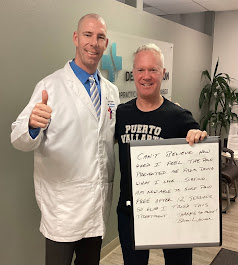
Jeff traveled from Tucson hoping to determine whether there was another option for his condition.
After his evaluation, the answer was surgery.
⭐⭐⭐⭐⭐
“I found this terrific practice on social media. I followed up and did my own research so I decided to pay them a visit. The place is clean, well organized and run by a very efficient receptionist. I met with the doctor and after a honest and forthright conversation, we both determined that surgery was my only option to correct my back issues. I will return as a customer when the time is right.”
— Jeff J., Tucson, AZ
That's an important distinction.
The objective isn't to recommend spinal decompression to every patient.
It's to determine whether the patient's condition is appropriate for treatment.
Why Patients Seek Out Dr. Cassidy James Boelk, DC
✔ Certified Spinal Decompression Doctor
✔ Certified Pain-Free Performance Specialist
✔ California X-Ray Radiology Licensed Doctor
✔ Founder, Non-Surgical Spinal Decompression Training Academy
✔ Founding Member, American Spinal Decompression Society
✔ More Than 22 Years Clinical Experience
✔ More Than 100,000 Spinal Decompression Treatments Performed
✔ 7 DRX9000® Spinal Decompression Systems
✔ One of the Largest Known Non-Surgical Spinal Decompression Practices in California
✔ Patients Travel From Across the United States and Internationally
Dr. Boelk has spent more than two decades working with difficult neck, back, disc, and nerve-related conditions.
His experience is also personal. After dealing with significant spinal injuries himself, Dr. Boelk has spent thousands of hours studying and working through rehabilitation strategies for his own neck and back injuries as well as those of his patients.
Dr. Boelk also trains other doctors in Non-Surgical Spinal Decompression protocols and techniques through the Non-Surgical Spinal Decompression Training Academy, based in his San Diego private practice.
When Should You Be Concerned That You're NOT Improving?
Some symptoms deserve more immediate attention.
Seek prompt medical evaluation if you're experiencing progressively worsening muscle weakness, increasing neurological symptoms, or a significant decline in your ability to walk or function.
Seek emergency medical attention for symptoms including:
-
New loss of bowel or bladder control
-
Numbness in the groin or saddle region
-
Rapidly progressing muscle weakness
-
Significant or rapidly worsening neurological deficits
These symptoms may indicate serious nerve compression and shouldn't be delayed while seeking conservative treatment.
⭐⭐⭐⭐⭐ “One of the Best Decisions I Made for My Back.”
**“The care I received at Dr. Boelk's office was so wonderful. I went from having to lay down for several hours a day, to being able to live my life normally, and even began working up my exercise capacity. I always felt cared about, and there was a lot of feedback. The exercise and information Dr. Boelk provides is so critical to maintaining positive results and pain reduction with increased mobility and freedom.
All the staff are so caring, and it's one of the best decisions I made for my back!”**
— Kaitelyn H., San Diego, CA
Individual results vary. Not every patient is a candidate for Non-Surgical Spinal Decompression Therapy.
Find Out If You're a Candidate for Non-Surgical Spinal Decompression
If your herniated disc, sciatica, or persistent neck or lower-back pain isn't improving the way you expected, the first step is understanding why.
Your evaluation with Dr. Cassidy James Boelk, DC may include:
✔ A review of your symptoms, health history, and previous treatments
✔ A focused orthopedic and neurological examination
✔ Review of your existing MRI or other imaging, when available
✔ Digital X-rays when clinically indicated
✔ Evaluation of spinal stability and other factors that may affect whether decompression is appropriate
✔ An explanation of what may be causing your ongoing symptoms
✔ A determination of whether you're a candidate for Non-Surgical Spinal Decompression
✔ A discussion of your treatment options and recommended next steps
Not everyone is a candidate. If Dr. Boelk doesn't believe Non-Surgical Spinal Decompression is appropriate for your condition, he'll tell you and discuss appropriate next steps.
Ready to Find Out If You're a Candidate?
📞 Call 619-298-0800
🌐 SanDiegoBackCare.com
📍 The Spinal Decompression & Chiropractic Center of San Diego
5095 Murphy Canyon Road, Suite 300
San Diego, CA 92123
Hablamos Español.