Herniated Discs: When Is Back Surgery Necessary? – Kearny Mesa, CA
You finally have an answer on your MRI report: a herniated disc. But the report doesn’t tell you whether you can keep working, whether the pain down your leg will settle, or whether you need to see a surgeon.
Those decisions start with what’s happening in your day. Can you still walk around the block? Is the pain keeping you up at night? Have you started catching your toes on the carpet because your foot feels weaker?
Many people with a herniated disc in the lower back improve without surgery. A surgical opinion may make sense when leg pain continues to limit daily life despite appropriate nonsurgical care, or when the examination shows significant or worsening weakness. The MRI helps the clinician see whether the location of the herniation fits the symptoms.
At The Spinal Decompression & Chiropractic Center of San Diego, Dr. Cassidy James Boelk, DC, helps Kearny Mesa patients understand their imaging and decide what needs to happen next. He is a Certified Spinal Decompression Doctor and Certified Pain-Free Performance Specialist with more than 22 years of clinical experience.
A Patient Whose Back Pain Was Disrupting Everyday Life
⭐⭐⭐⭐⭐
“I came in with extreme back pain, resulting in days were it was difficult to get out of bed. There were moments where I would be walking and then my back would lock up. I thought it was something I have dealt with in the past but this last the entire month of July. I finally dedicated myself to finding the long term solution.
I came to Dr. Boelk unsure about the process, but after he identified exactly what my ailment was, I felt confident that this was the long term solution I was looking for.
I instantly felt better and Dr. Boelk kept encouraging me to trust the process and understand it will take time to feel 100%. I am now pain free and honestly feel stronger, even a little taller. I highly recommend you visit Dr. Boelk.”
— Ming T., San Diego, CA
Ming remembers the mornings he could barely get out of bed and the walks that stopped when his back locked up. Those details help describe what pain has taken away and give you something concrete to track if you begin care.
Start With a Complimentary, No-Obligation Consultation
If you have an MRI, bring the written report and the images if you can access them. If a surgeon has recommended a procedure, bring those notes too. It helps to know what the surgeon saw and what they expect the procedure to improve.
During the consultation, Dr. Boelk can discuss where your symptoms travel, what you’ve already tried, and whether a formal evaluation for DRX9000 nonsurgical spinal decompression may be appropriate.
The consultation is complimentary, no-charge, and carries no obligation. A physical examination, new imaging, and treatment are separate services.
Call 619-298-0800 to request your consultation at the Kearny Mesa office.
What If the MRI Shows More Than One Herniated Disc?
A report can list a herniation at one level and a bulge at another. When you’re reading it at home, the finding with the strongest wording can draw your attention first. During an evaluation, the clinician checks which finding lines up with the side of your symptoms, where the pain travels, and any change in strength, sensation, or reflexes. Some disc changes are also seen in people without back pain.
For example, suppose your right leg hurts and you’ve recently started having trouble lifting the front of your right foot. Mention that change, even if the report spends more time describing a finding on the left. It gives the clinician a specific detail to examine and compare with the images.
A question you can bring to your appointment is “Which finding on my MRI fits my symptoms, and what on the exam makes you think so?”
When Does Waiting Become a Concern?
If your leg pain is gradually easing and you’re doing more from week to week, tell your clinician what has improved. If the pain still keeps you from walking, sleeping, or working after appropriate nonsurgical care, a surgical opinion can help you understand what else is available. Ask which symptom the operation is intended to improve and how soon you need to decide.
New or worsening leg or foot weakness needs prompt medical evaluation. Tell your clinician if your foot has started slapping the ground, you’re tripping over your toes, or stairs suddenly feel harder. New difficulty urinating, loss of bladder or bowel control, or numbness around the groin or saddle area requires emergency evaluation.
Where Does DRX9000 Spinal Decompression Fit?
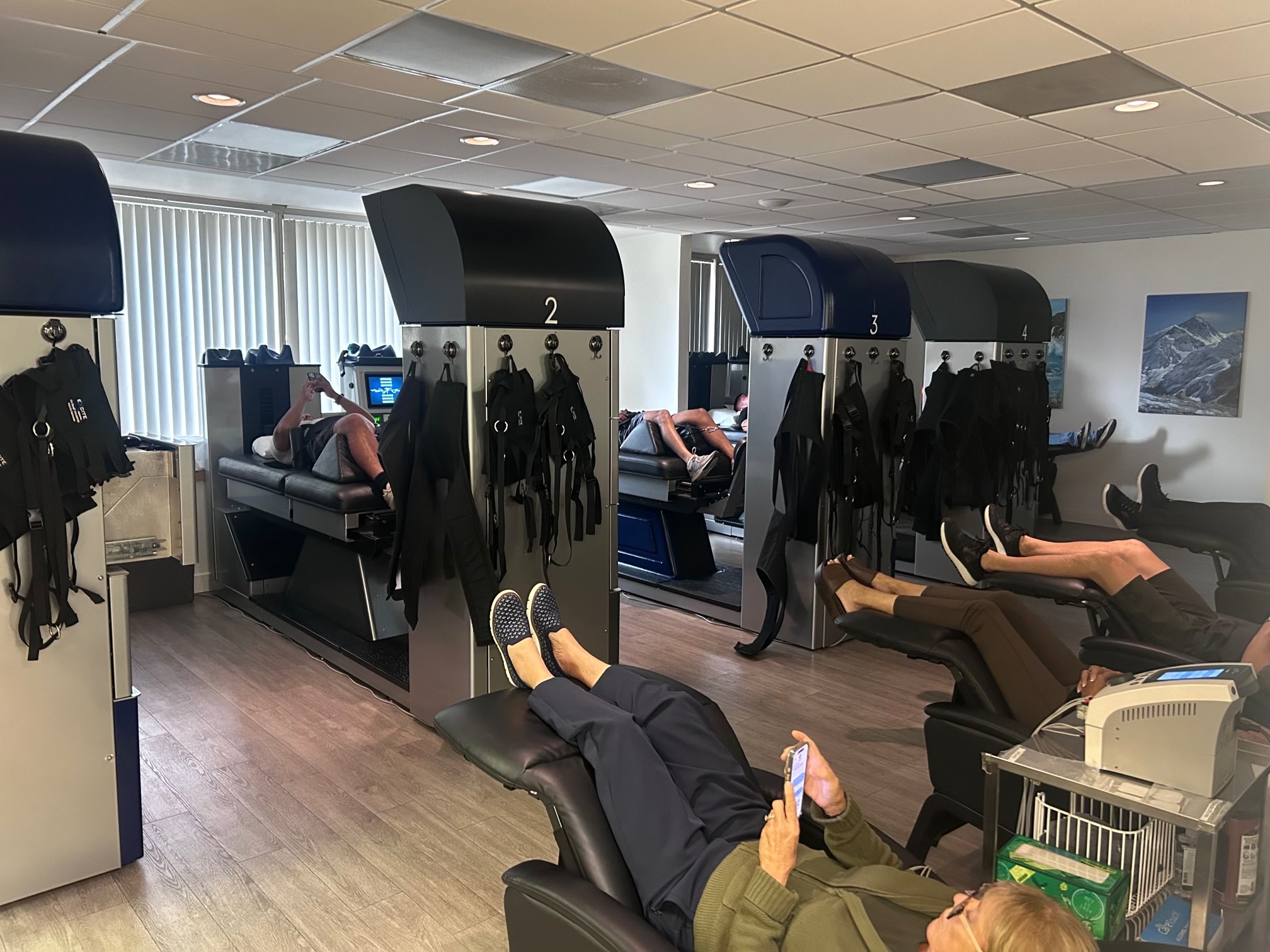
Lumbar DRX9000 spinal decompression uses a motorized table to apply controlled traction while your body is supported. Dr. Boelk considers it for selected patients after reviewing their history, examination, and relevant imaging. Depending on the findings, he may recommend another approach or refer you for a specialist opinion.
If a trial is appropriate, decide what you want to measure before the first session. Maybe you can drive ten minutes before pain reaches your foot, or you can only stand at the kitchen counter long enough to make coffee. When you come back for reassessment, those same activities help you judge how much has changed.
Learn more about DRX9000 Spinal Decompression Therapy.
7 Reasons Kearny Mesa Patients Choose Dr. Cassidy James Boelk, DC
-
More than 22 years of clinical experience. Dr. Boelk evaluates disc-related neck and back conditions, including symptoms that have continued after previous treatment.
-
More than 100,000 spinal decompression sessions performed or overseen. That experience informs how the practice screens patients, selects treatment settings, and checks progress.
-
Training in decompression and rehabilitation. As a Certified Spinal Decompression Doctor and Certified Pain-Free Performance Specialist, Dr. Boelk considers how symptoms affect the activities you want to get back to.
-
Seven dedicated DRX9000 systems. The Kearny Mesa office uses DRX9000 equipment exclusively for spinal decompression, with four lumbar and three cervical units.
-
Personal experience with spinal injuries. Dr. Boelk fractured his lower back at 16 and later experienced lumbar disc herniations and sciatica. He has spent thousands of hours rehabilitating his own injuries and helping patients with theirs.
-
Experience training other doctors. He founded the Spinal Decompression Training Academy and teaches doctors about treatment protocols and patient selection.
-
A clear recommendation. If the findings point toward further testing, a different type of care, or a surgical evaluation, Dr. Boelk explains what led him there.
A Patient Who Travels From the United Kingdom
⭐⭐⭐⭐⭐
“I travel from the UK to see Dr Boelk and his wonderful team . I have 3 bulging disc and one is touching the nerve. I have the spinal decompression treatment and it really helps keep me in my active life . I will not go to anyone else for back treatment, this place is number one and they genuinely care about their patients.”
— Lisa S., United Kingdom
Frequently Asked Questions
Does a large herniation mean surgery is necessary?
The size is one part of the decision. Its location, the symptoms it may explain, and what the clinician finds on the neurological exam all matter. Ask which finding is driving the recommendation and what would change it.
What should I ask if a surgeon has already recommended a procedure?
Ask what the procedure is expected to improve, what the risks are if you wait, and which symptom changes should prompt you to call sooner. Those questions are especially helpful if you’re considering another course of nonsurgical care.
Can I schedule a consultation with just the MRI report?
Yes. Bring the written report and any notes from previous visits. If the imaging center provides a disc or online access to the actual images, bring that as well.
A Personal Message From Dr. Boelk
“If you bring me an MRI, I’ll also ask what your day looks like right now. Can you make it through the drive to work? Are you waking up with leg pain? Have you noticed that one foot feels weaker on the stairs? I’ve had sciatica myself, and I know how easy it is to start organizing your whole day around it. Tell me what’s changed. We’ll talk about what the scan may explain and what your next step should be.”
— Dr. Cassidy James Boelk, DC
Schedule Your Complimentary Consultation in Kearny Mesa
The Spinal Decompression & Chiropractic Center of San Diego
5095 Murphy Canyon Road, Suite 300
San Diego, CA 92123
Office Phone 619-298-0800
Website www.SanDiegoBackCare.com
Live 24/7 Answering Service • Hablamos Español
Call 619-298-0800 to request a complimentary, no-charge, no-obligation consultation. Physical examination, new imaging, and treatment are separate services.