Do I Need Surgery for a Herniated Disc? – San Diego, CA
A Herniated Disc Does Not Automatically Mean Surgery
Being told that you have a herniated disc can be frightening, especially if you are also dealing with severe back pain, sciatica, numbness, or weakness.
Many patients assume the MRI has already decided their future. They see words such as “herniation,” “extrusion,” or “nerve compression” and believe surgery is inevitable.
That is not always the case.
Many people with disc injuries improve without surgery. The right decision depends on the type of disc injury, the amount of nerve involvement, spinal stability, previous treatment, and whether there are signs that require urgent surgical attention.
The MRI matters, but it is only one part of the decision.
She Was Scheduled for Injections and a Surgical Evaluation
⭐⭐⭐⭐⭐
“Last year, I spent three months constantly going back and forth between doctor’s appointments and urgent care. The pain was unbearable. I was taking medication regularly just to get through the day.
Getting out of bed was excruciating, and walking or standing felt like torture. Every step filled me with dread.
In December, my doctor finally ordered an MRI. That’s when I learned I had an extruded disc pressing on my L5 nerve, which affects the leg and foot. My doctor scheduled two follow-up appointments: one for pain management and spinal injections, and another to evaluate me for surgery.
Then I discovered spinal decompression therapy. I was thrilled to find a non-invasive alternative. I never ended up needing either of those appointments.
Now, I’m walking regularly and standing up straight—something I couldn’t do before. When I first sought help, I was so hunched over that I had to use a cane just to move forward.
Because of the pain, I hadn’t exercised in months. But now, I’m doing a program called 75 Hard, which requires not one but two 45-minute workouts per day, and I've even gotten back to lifting weights!
I’m so thankful I found this place. Dr. Boelk and the staff are incredibly friendly and polite—it’s always a pleasure to come in.
The environment is so relaxing that I look forward to each visit. I truly thank God for leading me to this alternative. It’s made such a difference in my life.”
— Amanda, San Diego, CA
Amanda’s experience does not mean every extruded disc can be treated without surgery. It does show that even a significant disc injury pressing on a nerve does not automatically make surgery the only option.
Get an Experienced Opinion Before Making the Decision
If you have been diagnosed with a herniated or extruded disc, call 619-298-0800 to schedule a no-charge, no-obligation consultation with Dr. Cassidy Boelk, DC.
Bring your MRI images if you have them—not just the written report. Dr. Boelk will review your condition and tell you honestly whether you appear to be a candidate for non-surgical spinal decompression or whether another direction makes more sense.
Call 619-298-0800 to schedule. Hablamos Español.
When Can a Herniated Disc Be Treated Without Surgery?
Many disc injuries can initially be treated conservatively when the spine is stable and there are no signs of a neurological emergency.
Non-surgical treatment may be worth considering when:
-
Pain is severe but neurological function remains stable
-
Sciatica or arm pain is connected to a disc injury
-
Numbness or tingling is present but not rapidly worsening
-
The patient has already tried medication, physical therapy, or injections
-
Surgery has been discussed, but it is not considered an emergency
-
The patient wants to explore a reasonable non-surgical option first
The size of a herniation is not the only factor. Dr. Boelk also considers where the disc material is located, which nerve is involved, how the patient is functioning, and whether the symptoms match the MRI.
When Surgery May Be Necessary
There are situations in which surgery may be the appropriate choice.
A surgical consultation becomes more urgent when a patient has rapidly progressing weakness, loss of bladder or bowel control, numbness in the groin or saddle region, or other signs of severe nerve compression.
Surgery may also make sense when the condition cannot be treated safely with decompression, the spine is unstable, or a reasonable course of non-surgical treatment has failed.
The goal should not be to avoid surgery at any cost. The goal is to avoid unnecessary surgery while recognizing when an operation may truly be needed.
How Non-Surgical Spinal Decompression May Help
A herniated disc can create pressure and inflammation around a spinal nerve. That may cause pain in the back or neck, but it can also create symptoms that travel into an arm or leg.
Non-surgical spinal decompression uses controlled pulling and releasing cycles to reduce pressure at a targeted spinal level.
At The Spinal Decompression & Chiropractic Center of San Diego, Dr. Boelk uses DRX9000 systems for both lumbar and cervical disc conditions. The treatment settings are based on the disc level involved, the patient’s symptoms, imaging, body type, and response.
The goal is to create a better environment around the damaged disc and irritated nerve. As symptoms improve, appropriate rehabilitation is used to rebuild the strength and stability needed for daily life.
Spinal decompression is not the correct treatment for every herniated disc. Proper patient selection is one of the most important parts of the process.
Why the MRI Report Is Not Enough
MRI reports often include several findings. A patient may have multiple disc bulges, degenerative changes, or areas of narrowing, but not every finding is necessarily causing symptoms.
Dr. Boelk personally reviews the images and compares them with:
-
Where the pain travels
-
Numbness or tingling
-
Muscle weakness
-
Reflex changes
-
Orthopedic and neurological findings
-
Previous treatment
-
Previous spinal surgery
-
Weight-bearing alignment
-
Possible instability
When appropriate, weight-bearing and flexion-extension X-rays may provide additional information about how the spine behaves while standing and moving.
This helps Dr. Boelk determine whether the disc finding matches the symptoms and whether decompression can be performed safely.
One Patient Was Told Surgery Was the Right Option
⭐⭐⭐⭐⭐
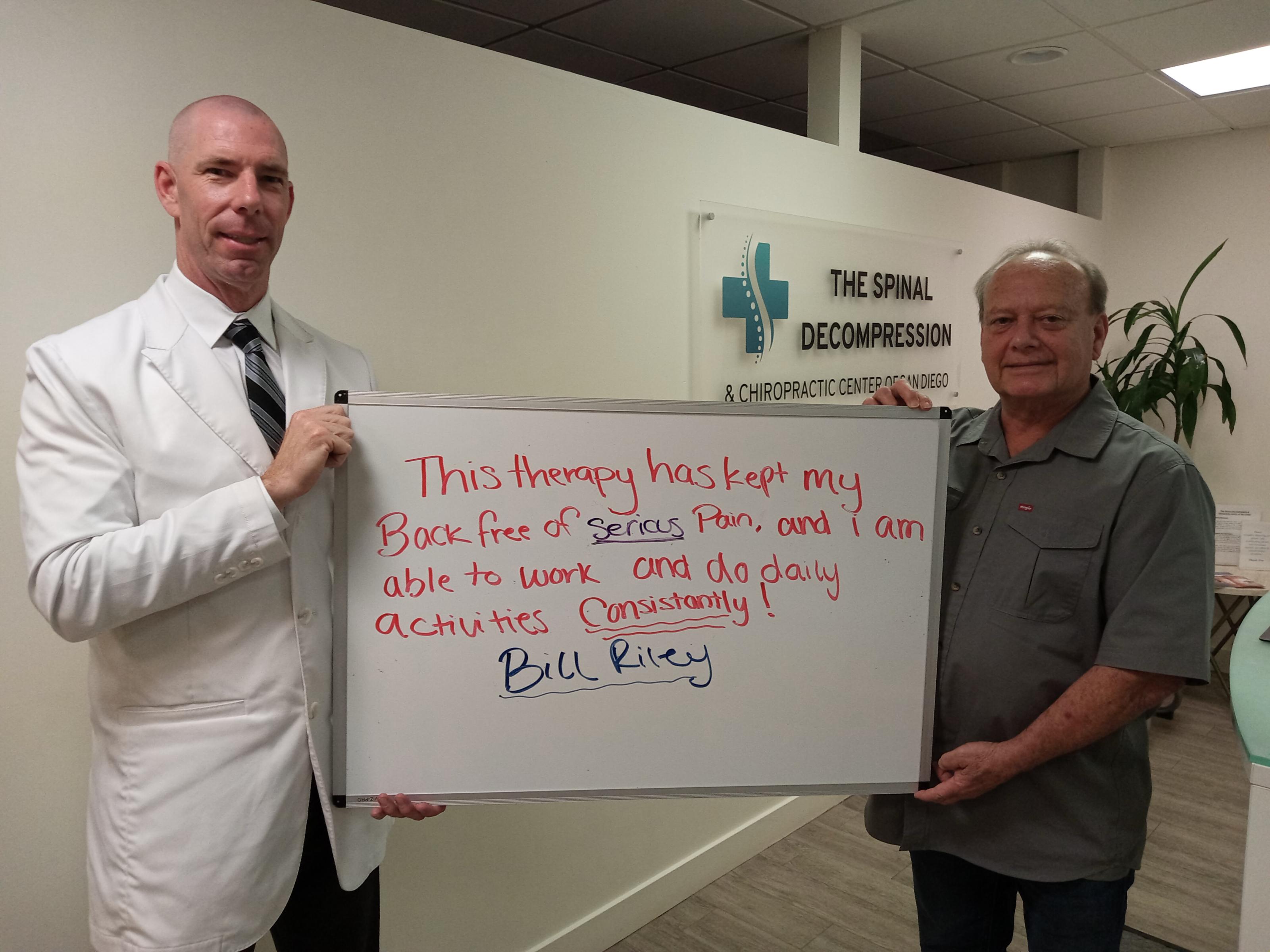
“I found this terrific practice on social media. I followed up and did my own research, so I decided to pay them a visit.
The place is clean, well organized and run by a very efficient receptionist.
I met with the doctor and after an honest and forthright conversation, we both determined that surgery was my only option to correct my back issues.
I will return as a customer when the time is right.”
— Jeff J., Tucson, AZ
Jeff came to the office hoping to find a non-surgical solution. After reviewing his condition, Dr. Boelk agreed that surgery was the appropriate direction.
He was not placed into a decompression program simply because he wanted to avoid an operation.
That honesty is important. A no-charge consultation should help you understand your options—not pressure you into treatment.
Why Patients Seek Out Dr. Cassidy Boelk, DC
Dr. Boelk’s practice is focused on spinal decompression, herniated discs, sciatica, radiating arm pain, and difficult neck and back conditions.
His background includes:
-
Certified Spinal Decompression Doctor
-
Certified Pain-Free Performance Specialist
-
More than 21 years of clinical experience
-
Over 100,000 spinal decompression treatments performed
-
Founder of the Non-Surgical Spinal Decompression Training Academy
-
Trains other doctors in spinal decompression protocols and techniques
-
Founding Member of the American Spinal Decompression Society
-
Member of the International Disc Education Association
-
California-licensed doctor with X-ray radiography certification
-
Seven DRX9000 systems: four lumbar and three cervical
Dr. Boelk has also spent thousands of hours rehabilitating his own neck and lower-back injuries. That personal experience has influenced how he combines decompression with rehabilitation and spinal-stability training.
Patients seek his help from throughout California, other states, Mexico, Spain, and the United Kingdom.
Before You Commit to Surgery, Find Out Whether You Have Another Option
If you have been told that you may need back or neck surgery, it is reasonable to find out whether your condition can be treated non-surgically first—provided there is no neurological emergency.
A consultation does not commit you to treatment.
Schedule a No-Charge, No-Obligation Consultation
The Spinal Decompression & Chiropractic Center of San Diego
5095 Murphy Canyon Road, Suite 300
San Diego, CA 92123
Call: 619-298-0800
Website: www.SanDiegoBackCare.com
Hablamos Español
Call 619-298-0800 to schedule a no-charge, no-obligation consultation with Dr. Cassidy Boelk, DC. Bring your MRI if available, and find out whether non-surgical spinal decompression may be a reasonable option before moving forward with surgery.