Can a Herniated Disc in the Neck Cause Arm Pain? – Kearny Mesa, CA
Yes. A herniated disc in the neck can irritate a nerve that travels into the shoulder, arm, or hand. You might feel a sharp pain down the arm, tingling in your fingers, or weakness when you grip something. Sometimes the arm symptoms are what you notice first, even when your neck barely hurts.
The harder question is whether your symptoms are actually coming from your neck. A shoulder problem or a nerve irritated at the elbow or wrist can cause overlapping symptoms. If you’ve been treating your shoulder for weeks or looking at an MRI report that lists several bulging discs, it’s worth finding out which findings fit what you’re feeling.
The Spinal Decompression & Chiropractic Center of San Diego is located in Kearny Mesa. The practice is led by Dr. Cassidy James Boelk, DC, a Certified Spinal Decompression Doctor and Certified Pain-Free Performance Specialist with more than 22 years of clinical experience. The clinic specializes in DRX9000 Non-Surgical Spinal Decompression Therapy for appropriately selected patients with neck and lower back disc conditions.
A Patient Who Came In With Neck Pain and Tingling Into Her Arms and Hands
⭐⭐⭐⭐⭐
“I've been seeing Dr. Boelk for almost four years, and it has been one of the best healthcare decisions I've ever made.
I was diagnosed with severe cervical disc bulging, dizziness, neck pain, and numbness and tingling into my arms and hands. After trying multiple chiropractors, traction machines, and pain management specialists, I was told surgery was likely my next option.
Then I found Dr. Boelk. He explained how spinal decompression could help and developed a treatment plan specific to my condition. My pain level dropped from a 7 down to a 3 after several intensive sessions and eventually improved to a 1–2 with maintenance care.
During my most recent MRI, the images showed my cervical spine had returned to a much more normal position.
I continue with maintenance care and am incredibly thankful I found Dr. Boelk. He is practical, professional, and one of my favorite doctors. I highly recommend giving him a chance.”
— Justine Lai, Patient Review
Start With a Complimentary, No-Obligation Consultation
If you’re unsure whether your arm symptoms come from your neck, the consultation gives you time to talk through what you’ve been experiencing and learn what an evaluation would involve.
What Your Complimentary Consultation Includes
-
Discuss your symptoms. Tell Dr. Boelk where the pain starts, whether it travels below the elbow, and which fingers tingle or go numb.
-
Review what you’ve already tried. Discuss treatments for your neck, shoulder, or arm and how your symptoms responded.
-
Discuss your existing X-rays or MRI. Bring any images and reports you have. Dr. Boelk can explain the available findings and how they may relate to your symptoms.
-
Learn how cervical DRX9000 decompression works. Find out how your neck is supported and what a typical treatment session involves.
-
Discuss whether further evaluation makes sense. Dr. Boelk can explain what a formal exam could help clarify and whether another type of evaluation may be more appropriate.
-
Ask questions before deciding. You’ll have time to discuss the next steps and any costs associated with them.
The consultation is complimentary and carries no obligation. A physical examination, new X-rays, and treatment are separate services.
Call 619-298-0800 or text 619-884-8298 to request a consultation.
How Can a Disc in Your Neck Cause Pain in Your Hand?
Nerves leave the cervical spine through small openings and travel into the shoulder, arm, and hand. If disc material presses against or irritates one of those nerve roots, you can feel symptoms anywhere along the area that nerve serves. This is called cervical radiculopathy.
Where your symptoms travel gives the clinician a clue. So does what happens when you move. For example, some people notice a familiar pain shoot below the elbow when they turn their head to check a blind spot. Others mainly feel pain when reaching into a cabinet or lying on the affected shoulder. Tingling that appears when the elbow stays bent or wakes you at night may lead the clinician to examine the nerves at the elbow or wrist as well.
These patterns overlap. During a formal evaluation, Dr. Boelk compares your history with findings from the neck and shoulder exam and checks arm strength, sensation, and reflexes as appropriate. If an MRI shows several disc changes, he looks at whether the side and level of the finding match the symptoms and examination. That matters when deciding which problem to address first.
For more on how to read the terminology in an MRI report, see What Is the Difference Between a Bulging Disc and a Herniated Disc?
A Patient Who Sought Care for Neck Symptoms From a Pinched Nerve
⭐⭐⭐⭐⭐
“Great service, an amazing staff, and an excellent doctor.
Treatment made a significant improvement in my neck symptoms that were being caused by a pinched nerve.
Highly recommended.”
— Christine Sherk, Patient Review
When Might Cervical DRX9000 Spinal Decompression Be Considered?
Cervical decompression uses a dedicated motorized system to apply controlled traction while you lie with your head and neck supported. For an appropriate candidate, Dr. Boelk selects the position and settings based on the clinical findings and the patient’s tolerance.
Cervical traction is one option that may be considered as part of a conservative plan. Research findings vary. A systematic review found that adding traction produced a small average reduction in pain, with low-quality evidence and a difference below what the authors considered meaningful to patients. If Dr. Boelk recommends a trial, he looks for changes that matter in daily life, such as fewer episodes of tingling, better sleep, or an easier time using the arm.
Learn more about DRX9000 Spinal Decompression Therapy.
7 Reasons Kearny Mesa Patients Choose Dr. Cassidy James Boelk, DC
1. More Than 22 Years of Clinical Experience
Dr. Boelk has spent more than two decades evaluating patients with disc-related neck and lower back conditions. Your response to previous treatment, changes in arm symptoms, and what you can do comfortably now all help guide the evaluation.
2. More Than 100,000 Spinal Decompression Sessions Performed or Overseen
That experience informs how he screens patients, adjusts treatment settings, and reassesses progress. In a case involving arm symptoms, he wants to know what changes between visits and whether everyday tasks are getting easier.
3. Specialized Training in Decompression and Rehabilitation
As a Certified Spinal Decompression Doctor and Certified Pain-Free Performance Specialist, Dr. Boelk considers what brought the symptoms on and what you want to get back to doing. When appropriate, care may include movement guidance, rehabilitation, or a gradual return to exercise.
4. Personal Experience With Neck and Back Injuries
After fracturing his lower back at age 16 and later dealing with disc-related problems, Dr. Boelk spent thousands of hours working through rehabilitation and helping patients with their own injuries. He understands why being able to sleep, drive, or get back to a workout can matter as much as a lower pain score.
5. A Practice Focused on Non-Surgical Spinal Decompression
The clinic’s process starts with reviewing your history and deciding what needs to be evaluated. Dr. Boelk considers existing imaging and may recommend further testing if it would clarify the diagnosis or change the care plan.
6. Seven Dedicated DRX9000 Systems
The clinic uses DRX9000 systems exclusively for decompression, with three cervical systems for the neck and four lumbar systems for the lower back. The cervical equipment provides dedicated support and positioning for neck treatment.
7. He Trains Other Doctors in Treatment and Patient Selection
Dr. Boelk founded the Spinal Decompression Training Academy, where he trains other doctors in equipment use, treatment protocols, and patient selection. That includes recognizing when a patient needs further testing, a different conservative approach, or a surgical opinion.
A Patient Whose Shoulder Symptoms Were Disrupting Sleep and Exercise
⭐⭐⭐⭐⭐
“I initially saw Dr. Boelk for a pinched nerve in my shoulder that would flare up in the middle of the night, causing severe pain and disrupting my sleep. It even started affecting my confidence during workouts because I was worried about triggering another episode.
During my first visit, Dr. Boelk performed a thorough examination and quickly identified the source of the problem. After only a few treatments, the flare-ups completely stopped and I was able to return to my normal routine.
He also gave me valuable tools and exercises to help prevent future issues and provided helpful advice regarding my extremely tight shoulders.
I've continued to return periodically for adjustments and always leave feeling better.
Dr. Boelk and his staff are professional, knowledgeable, and genuinely care about their patients. I highly recommend him.”
— Amir Rezai, Patient Review
What to Pay Attention to Before Your Visit
When symptoms happen during normal activities, jot down where they start, how far they travel, and what you were doing. “My thumb and index finger start tingling after twenty minutes at the computer” gives your clinician more to work with than “my arm hurts.” Mention changes in function too, such as trouble turning a key, opening a jar, or holding a coffee mug.
If a position consistently sends symptoms farther down your arm, change positions or take a break. You can bring a clear description to your appointment without repeatedly recreating the pain.
When Arm Symptoms Need Prompt Medical Evaluation
New or worsening weakness in the arm or hand needs prompt medical evaluation. New trouble with balance or walking, or increasing hand clumsiness such as suddenly struggling with buttons or repeatedly dropping objects, also warrants prompt attention. Those symptoms can occur when the spinal cord in the neck is affected and call for a different evaluation.
A recent injury, suspected fracture, prior cervical surgery, or concern about spinal instability can also change what care is appropriate. Sometimes the best next step is additional testing or a specialist’s opinion.
A Patient Who Needed a Different Next Step After a Neck Injury
⭐⭐⭐⭐⭐
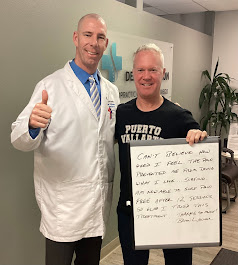
“I decided to see Dr. Boelk after a pretty gnarly motocoss neck injury. At the Hospital I was at, I felt I was getting pressured into a surgery which I refused. A friend of a friend referred him after Dr. Boelk successfully treated his broken back.
Dr. Boelk is a compassionate individual who truly cares about his patients. He looked at my MRI images, explained what he saw and potential routes for recovery. He could not treat me as I have to wait until the fracture in my neck heals, but the level of professionalism, compassion, caring and knowledge displayed by him was exceptional.
He also recommended to seek an additional opinion form another neurosurgeon. My experience was that he really cares and he's not someone who would take advantage of the situation someone's in (unlike some other doctors). I will definitely be back and already recommended him to others as well! Thank you Dr. Boelk!”
— Jan H., San Marcos, CA
Frequently Asked Questions About Neck-Related Arm Pain
Can a herniated disc cause arm pain even if my neck barely hurts?
Yes. Arm pain, numbness, or tingling can be more noticeable than neck pain. A clinician can check whether your symptoms fit irritation of a nerve root in the neck or whether the shoulder, elbow, or wrist needs a closer look.
Can a C5-C6 disc herniation cause thumb tingling?
It can if the herniation affects the C6 nerve root. Thumb tingling can also occur with irritation of a nerve elsewhere along the arm, so the finger pattern is one part of the evaluation. Strength, sensation, reflexes, and how symptoms respond to movement add context.
Do I need an MRI before the consultation?
You can schedule the consultation before getting an MRI. Bring any reports or images you already have. Dr. Boelk can discuss whether an exam or additional imaging would help clarify the next step.
Does everyone with a cervical disc herniation need surgery?
Many people with cervical radiculopathy improve with nonsurgical care. The right approach depends on the severity and course of the symptoms, examination findings, and whether there are signs of worsening nerve function or spinal cord involvement.
About Dr. Cassidy James Boelk, DC
Clinic Director & Founder, The Spinal Decompression & Chiropractic Center of San Diego
-
Board-Certified Doctor of Chiropractic
-
Certified Spinal Decompression Doctor
-
Certified Pain-Free Performance Specialist
-
California Licensed X-Ray Supervisor & Operator
-
Founder, Spinal Decompression Training Academy
-
Founding Member, American Spinal Decompression Society
-
Member, International Disc Education Association
A Personal Message From Dr. Boelk
“When someone tells me their hand goes numb on the drive to work or they’ve stopped lifting because they don’t trust their grip, that tells me what we need to understand first. I want to know when it started, where it travels, and what you’ve already tried. If you bring an MRI, we can talk through what it shows and what we still need to find out. My goal is for you to leave with a clearer idea of which next step makes sense for you.”
— Dr. Cassidy James Boelk, DC
Schedule Your Complimentary Consultation in Kearny Mesa
If you’re dealing with neck pain, pain down the arm, or persistent tingling in your hand, call 619-298-0800 or text 619-884-8298 to request a complimentary, no-charge, no-obligation consultation with Dr. Boelk.
The Spinal Decompression & Chiropractic Center of San Diego
5095 Murphy Canyon Road, Suite 300
San Diego, CA 92123
Office 619-298-0800
Text 619-884-8298
www.SanDiegoBackCare.com
Live 24/7 Answering Service • Hablamos Español