Can a Herniated Disc in the Neck Cause Arm Pain? – Chula Vista, CA
Yes. A herniated disc in the neck can irritate a nerve that runs into your arm. That can feel like a sharp pain near the shoulder blade, a burning sensation down the forearm, or pins and needles in your hand. For some people, the arm pain is more noticeable than the neck pain.
If you’ve already had an MRI, you might be looking at a report that says C5–C6 disc protrusion and wondering whether that explains why your thumb keeps going numb. It could. The useful question is whether the finding is on the same side as your symptoms and fits what shows up when your strength, sensation, and reflexes are checked.
Dr. Cassidy James Boelk, DC, a Certified Spinal Decompression Doctor and Certified Pain-Free Performance Specialist, sees Chula Vista patients at The Spinal Decompression & Chiropractic Center of San Diego in Kearny Mesa. He evaluates disc-related neck and arm symptoms and offers cervical DRX9000 spinal decompression for appropriately selected patients.
A Patient’s Experience at the Clinic
⭐⭐⭐⭐⭐
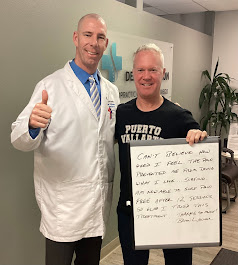
“If you're fortunate enough to find this office, it's possible to regain a quality of life you may have thought was gone.
The care is exceptional, and the staff is kind, compassionate, and extremely knowledgeable.
Dr. Boelk is the GOAT.
Highly recommended.”
— Fran Cohen, Patient Review
Start With a Complimentary, No-Obligation Consultation
If you’ve been told you have a disc problem but still have questions about your arm pain, bring the report and tell Dr. Boelk what’s been happening. If you’ve already had your shoulder or wrist examined, that history can help too.
During the consultation, you can:
-
Describe what you’re feeling. Is it an ache around the shoulder, a burning line down the arm, or numbness in a particular finger? Mention any change in strength or grip.
-
Talk through what you’ve already tried. Discuss physical therapy, adjustments, medications, injections, or exercises and what happened afterward.
-
Discuss your existing X-rays or MRI. Bring the images and report if you have them. Dr. Boelk can explain the available findings in plain language.
-
Ask about cervical DRX9000 spinal decompression. Find out how your neck is supported during treatment and what the clinic looks for before recommending it.
-
Find out what comes next. Dr. Boelk can explain whether a formal exam, additional imaging, or another type of evaluation would help clarify the cause.
The consultation is complimentary and carries no obligation. A physical examination, new imaging, and treatment are separate services.
Call 619-298-0800 to request a consultation.
What Does C5–C6 or C6–C7 Mean on an MRI?
Those numbers identify where the disc sits between two bones in your neck. C5–C6 is the disc between the fifth and sixth cervical vertebrae. If a herniation there irritates the C6 nerve root, symptoms may extend into the outer forearm or thumb. A C6–C7 herniation can affect the C7 nerve root, which may cause symptoms around the middle finger or weakness in the triceps, the muscle you use to straighten your elbow.
Those are common patterns, and people can feel symptoms outside those areas. Thumb tingling, for example, can also happen when a nerve is irritated at the wrist. This is where the exam earns its keep. A clinician can compare strength and reflexes on both sides, check sensation, and see how neck and arm movements affect the symptoms.
Say your MRI describes two disc changes, one larger than the other. If the smaller finding is on the side that hurts and lines up with the changes in strength or sensation, it may deserve a closer look. The size of the finding is one piece of the picture.
If your report uses both terms, see What Is the Difference Between a Bulging Disc and a Herniated Disc?
What Should You Bring Up at Your Appointment?
Try to describe one ordinary task that has changed. “My right arm starts burning halfway through my drive home” tells Dr. Boelk when the symptoms begin. “I’m having trouble pushing open a heavy door with that arm” brings up a different question about strength. Even if the pain has eased, mention any weakness that’s still there.
If you have an MRI report, bring it along with the actual images when available. If you haven’t had a scan, you can still come in for a consultation. The history and exam can help determine whether imaging would answer a question that affects your care.
Where Cervical Spinal Decompression Fits
During cervical DRX9000 treatment, you lie with your head and neck supported while the machine applies controlled traction. Dr. Boelk uses the examination findings to decide whether treatment is appropriate and how to set up the session.
Research on cervical traction has found mixed results. One systematic review found a small average reduction in pain when traction was added to other care. The evidence was low quality, and the average improvement fell below what the researchers considered meaningful to patients.
If a trial is appropriate, Dr. Boelk follows the symptoms you came in with. For example, if tingling used to wake you three times a night, how often is it waking you now? If you came in because your arm felt weak, what does a repeat strength check show? Those details help guide whether to continue or reassess the plan.
Learn more about DRX9000 Spinal Decompression Therapy.
7 Reasons Chula Vista Patients Choose Dr. Cassidy James Boelk, DC
-
More than 22 years of clinical experience. Dr. Boelk evaluates disc-related neck and back problems, including cases where symptoms persist after previous care.
-
More than 100,000 decompression sessions performed or overseen. That experience informs how he selects patients, adjusts treatment, and reassesses progress.
-
Three dedicated cervical DRX9000 systems. The clinic uses DRX9000 equipment exclusively for spinal decompression, with three systems for the neck and four for the lower back.
-
A review of the images in context. Dr. Boelk considers your MRI alongside the symptoms you describe and the findings from your examination.
-
Rehabilitation and movement guidance. As a Certified Pain-Free Performance Specialist, he can help you think through a return to lifting, exercise, or work tasks when appropriate.
-
Firsthand experience with spinal injuries. Dr. Boelk fractured his lower back at 16 and later dealt with disc problems. He has spent thousands of hours working through his own rehabilitation and helping patients with theirs.
-
Experience training other doctors. He founded the Spinal Decompression Training Academy, where he teaches treatment protocols and patient selection, including when someone needs a different approach.
A Patient Who Valued the Exercise Guidance Alongside Care
⭐⭐⭐⭐⭐
“I've had a great experience at The Spinal Decompression & Chiropractic Center of San Diego. I had visited a couple places before beginning treatment, had a great feeling about Dr. Boelk and the staff, and how their approach was a full body treatment, using nutrition, exercises, and more. I was in terrible shape before, with fairly constant pain that affected all aspects of my life, but now am fully mobile. I have phased out regular visits and go in infrequently but still have the best care. I highly recommend, thanks for all, Doc!”
— David Wasserman, Patient Review
When Arm Symptoms Need Prompt Medical Attention
Seek prompt medical evaluation if you notice new or worsening arm or hand weakness, increasing difficulty with tasks such as buttoning a shirt, or new trouble walking or keeping your balance. Changes in hand coordination and walking can be signs of spinal cord involvement and need a different evaluation.
A recent neck injury, previous cervical surgery, or suspected instability can also change which care is appropriate. Depending on the findings, the next step may be additional testing or a spine specialist’s opinion.
Frequently Asked Questions
Can the pain improve while my fingers still feel numb?
Yes. Pain and sensation can change at different rates. Tell your clinician if numbness persists, spreads, or comes with weakness, even if the pain has improved.
Can an X-ray show a herniated disc in my neck?
X-rays can show bones, alignment, and changes such as reduced disc space. MRI shows the soft tissues in greater detail and can help identify a herniation or pressure on a nerve root when that information is needed.
Does a cervical disc herniation mean I’ll need surgery?
Many people with cervical radiculopathy improve over time or with nonsurgical care. Worsening weakness or signs of spinal cord involvement can change the recommendation and warrant specialist evaluation.
About Dr. Cassidy James Boelk, DC
Clinic Director & Founder, The Spinal Decompression & Chiropractic Center of San Diego
-
Board-Certified Doctor of Chiropractic
-
Certified Spinal Decompression Doctor
-
Certified Pain-Free Performance Specialist
-
California Licensed X-Ray Supervisor & Operator
-
Founder, Spinal Decompression Training Academy
-
Founding Member, American Spinal Decompression Society
-
Member, International Disc Education Association
A Personal Message From Dr. Boelk
“If you bring in an MRI report, show me the part you’ve been trying to make sense of. Then tell me what happens when you drive, reach for something, or try to sleep. We can talk through how those pieces might fit and what we’d need to check before recommending care.”
— Dr. Cassidy James Boelk, DC
Schedule Your Complimentary Consultation
The practice serves Chula Vista patients from its Kearny Mesa office. To discuss your neck or arm symptoms with Dr. Boelk, call 619-298-0800 to request a complimentary, no-charge, no-obligation consultation.
The Spinal Decompression & Chiropractic Center of San Diego
5095 Murphy Canyon Road, Suite 300
San Diego, CA 92123
Office 619-298-0800
www.SanDiegoBackCare.com
Live 24/7 Answering Service • Hablamos Español