Can a Herniated Disc in My Neck Heal Without Surgery in San Diego, CA?
If you've been diagnosed with a herniated disc in your neck, you may be wondering whether the disc can heal naturally or whether cervical spine surgery is eventually going to be necessary.
Perhaps your symptoms started as a stiff neck or pain between your shoulder blades. Then the pain began traveling into your shoulder, arm, or hand. You might experience burning, tingling, numbness, or weakness, making it difficult to sleep, work at a computer, exercise, or even find a comfortable position.
For some patients, the pain is constant. Others experience sudden flare-ups that make them afraid to move their neck.
You may have already tried physical therapy, medications, chiropractic adjustments, or injections. Perhaps those treatments helped temporarily, but the pain returned.
The good news is that many cervical disc herniations improve without surgery. In some cases, the body can gradually reabsorb a portion of the herniated disc material through a natural biological process. In other cases, symptoms improve as inflammation decreases and the irritated nerve becomes less sensitive.
However, not every cervical disc herniation is the same. Understanding the location of the herniation, which nerves may be involved, and whether there is pressure on the spinal cord is essential when determining the most appropriate treatment.
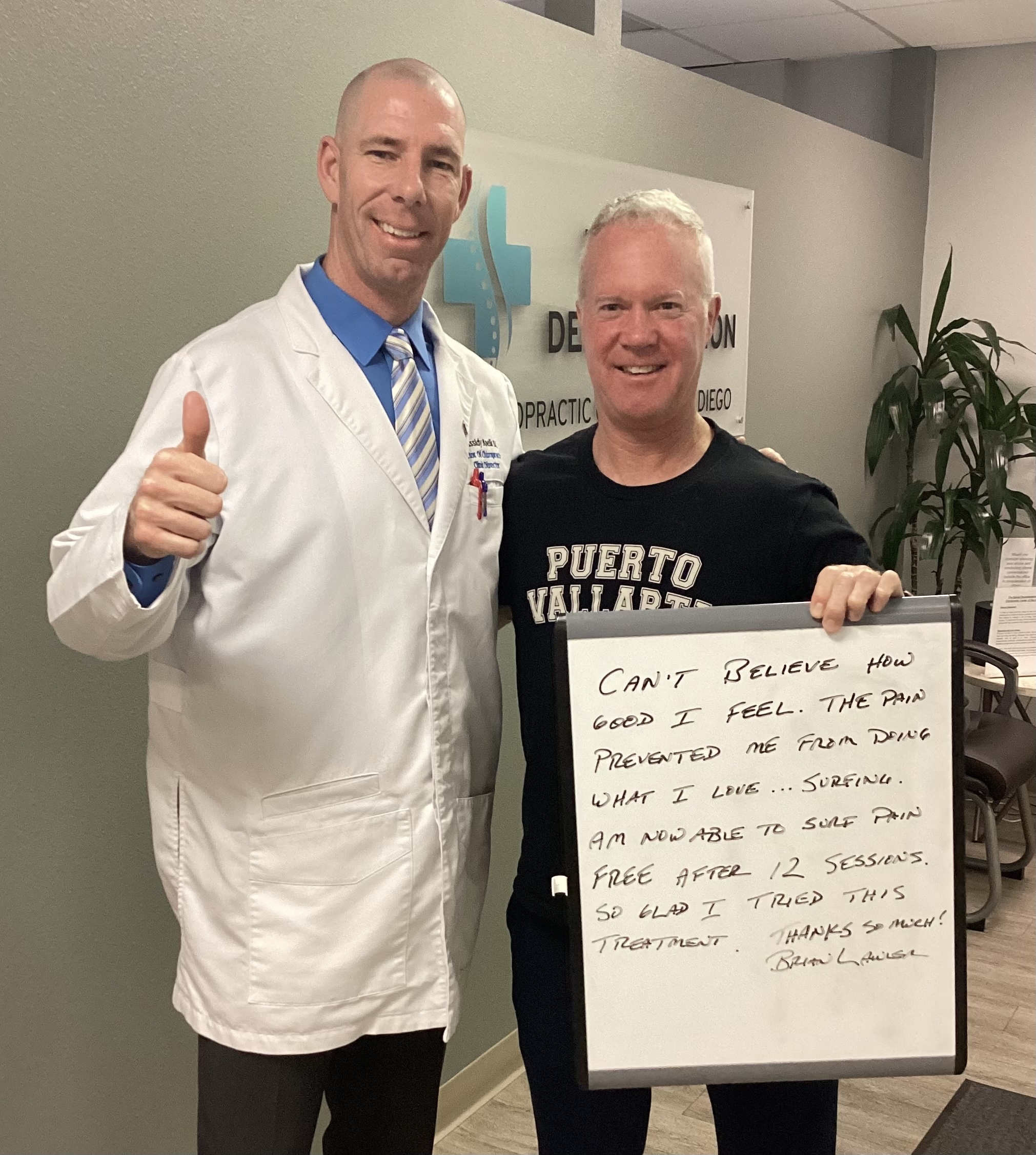
At The Spinal Decompression & Chiropractic Center of San Diego, Dr. Cassidy James Boelk, DC, has spent more than 22 years helping patients with herniated discs, pinched nerves, and other spinal conditions explore non-surgical treatment options.
As a Certified Spinal Decompression Doctor and Certified Pain-Free Performance Specialist, Dr. Boelk focuses on individualized spinal evaluation, non-surgical treatment, and rehabilitation.
His San Diego practice has seven DRX9000 spinal decompression tables, including three dedicated cervical decompression units.
Before Considering Neck Surgery, Understand Your Options
Being told you have a herniated disc in your cervical spine can be frightening, especially when the symptoms involve numbness, tingling, or weakness in your arms or hands.
Some patients are concerned that the herniation will continue getting worse. Others worry that if they don't have surgery immediately, they could develop permanent nerve damage.
These concerns deserve careful attention, but a cervical disc herniation doesn't automatically mean surgery is necessary.
Many patients with cervical radiculopathy, the medical term for symptoms caused by irritation or compression of a cervical nerve root, improve with appropriate conservative care.
The important first step is determining what's causing your symptoms and whether there are neurological findings that require additional medical attention.
Start With a Complimentary, No-Charge, No-Obligation Consultation
If you're uncertain about your next step, Dr. Boelk offers a Complimentary, No-Charge, No-Obligation Consultation at his San Diego office.
This gives you an opportunity to meet personally with Dr. Boelk, discuss your symptoms, and learn about your options before deciding whether to proceed with a comprehensive new patient examination.
During your consultation, you'll have an opportunity to discuss your neck pain, arm symptoms, medical history, previous treatments, and how your condition is affecting your daily life.
If you already have a cervical MRI or spinal X-rays, you can bring them to discuss the findings and ask questions about what they may mean.
Dr. Boelk can also explain how the DRX9000 computerized cervical spinal decompression system works, what treatment involves, and its potential benefits and limitations.
You'll have time to discuss whether a comprehensive new patient examination may be appropriate to investigate the source of your symptoms and determine whether you're a potential candidate for treatment.
Most importantly, you can ask questions without feeling pressured to make an immediate decision.
The consultation is completely complimentary, with no charge and no obligation. It is an informational discussion rather than a comprehensive diagnostic physical examination and does not include new X-rays or treatment. Those services are separately charged when appropriate.
If you're ready for a complete evaluation, you can schedule a new patient examination instead.
Call 619-298-0800 to schedule your new patient examination or request your complimentary consultation.
24/7 Answering Service | ¡Hablamos Español!
Can a Herniated Cervical Disc Actually Heal Naturally?
This is one of the most important questions patients ask, and the answer may surprise you.
Your cervical spine contains seven vertebrae, labeled C1 through C7. Between most of these vertebrae are intervertebral discs that help distribute forces and allow your neck to move.
Each disc contains a tougher outer structure called the annulus fibrosus and a softer central region called the nucleus pulposus.
When disc material extends beyond its normal boundaries, it may be described as a disc protrusion, extrusion, or another type of herniation.
If that material irritates or compresses a nearby nerve root, you may experience pain, tingling, numbness, or weakness traveling into your shoulder, arm, or hand.
But something many patients don't realize is that the body has natural biological mechanisms that can help reduce some disc herniations over time.
How the Body Can Reabsorb Herniated Disc Material
When disc material becomes exposed to tissues outside its usual boundaries, the immune system may recognize it and initiate an inflammatory response.
Specialized immune cells called macrophages participate in breaking down and clearing portions of the exposed disc material.
New blood vessels may also develop around the herniated tissue, supporting the biological processes involved in resorption.
Over time, some herniations decrease in size. This process can sometimes be seen on follow-up MRI examinations.
Larger extruded or sequestered disc fragments may be more likely to undergo spontaneous resorption than certain contained protrusions, although individual outcomes vary.
This doesn't mean every herniated disc will disappear. It also doesn't mean that a disc must completely return to its original appearance for symptoms to improve.
In many cases, pain decreases as inflammation subsides, nerve irritation improves, and the patient gradually regains normal function.
Does the Disc Have to Disappear for the Pain to Go Away?
No.
A patient may experience significant improvement in neck pain and arm symptoms even when a disc herniation remains visible on MRI.
That's because pain isn't determined solely by the size of the herniation.
Inflammation around the nerve root, chemical irritation, mechanical pressure, and nerve sensitivity can all contribute to symptoms.
As these factors improve, the nerve may become less irritated, allowing pain and other symptoms to decrease.
This is one reason Dr. Boelk considers clinical findings and functional improvement alongside imaging rather than relying entirely on the MRI report.
What Does a Herniated Disc at C5-C6 or C6-C7 Feel Like?
Two commonly affected levels in the cervical spine are C5-C6 and C6-C7.
The location of the herniation can influence which nerve root becomes irritated and where symptoms are experienced.
C5-C6 Disc Herniation
A typical posterolateral disc herniation at C5-C6 may irritate the C6 nerve root.
Patients may experience pain traveling from the neck into the shoulder, outer arm, or forearm, sometimes extending toward the thumb.
Some individuals notice tingling or numbness in the thumb or index finger. Others may experience weakness involving elbow flexion or wrist extension.
C6-C7 Disc Herniation
A typical posterolateral herniation at C6-C7 may affect the C7 nerve root.
Symptoms can include pain traveling down the arm toward the middle finger, altered sensation, or weakness involving the triceps.
These patterns aren't universal. Individual anatomy varies, and conditions involving the shoulder, elbow, wrist, or peripheral nerves can sometimes produce similar symptoms.
For example, carpal tunnel syndrome may cause hand numbness, but the source of that problem is different from a compressed cervical nerve root.
A careful neurological examination can help distinguish between these conditions.
A San Diego Patient's Experience With Cervical Disc Bulging and Arm Numbness
For patients who have struggled with persistent neck pain, arm numbness, and uncertainty about surgery, hearing about someone else's experience can be encouraging.
One patient described her experience with severe cervical disc bulging and persistent neurological symptoms before seeking care with Dr. Boelk.
⭐⭐⭐⭐⭐
"I've been seeing Dr. Boelk for almost four years, and it has been one of the best healthcare decisions I've ever made.
I was diagnosed with severe cervical disc bulging, dizziness, neck pain, and numbness and tingling into my arms and hands. After trying multiple chiropractors, traction machines, and pain management specialists, I was told surgery was likely my next option.
Then I found Dr. Boelk. He explained how spinal decompression could help and developed a treatment plan specific to my condition. My pain level dropped from a 7 down to a 3 after several intensive sessions and eventually improved to a 1–2 with maintenance care.
During my most recent MRI, the images showed my cervical spine had returned to a much more normal position.
I continue with maintenance care and am incredibly thankful I found Dr. Boelk. He is practical, professional, and one of my favorite doctors. I highly recommend giving him a chance."
— Justine Lai
Justine's experience reflects how challenging persistent cervical disc symptoms can become and why patients often seek additional treatment options when previous approaches haven't provided the improvement they hoped for.
Her reported improvement is encouraging, although an individual testimonial cannot establish that decompression caused changes seen on MRI or predict another patient's results.
For patients dealing with similar symptoms, the most important starting point is understanding the diagnosis and determining whether non-surgical treatment remains appropriate.
What Are the Best Non-Surgical Treatments for a Herniated Disc in the Neck?
The most appropriate treatment depends on the patient's symptoms, neurological findings, imaging results, previous treatments, and overall medical history.
For patients without signs of serious neurological compromise, conservative treatment is often considered first.
Activity Modification and Education
Certain positions and movements can increase symptoms when a cervical nerve root is irritated.
Prolonged computer work, looking downward at a phone, or maintaining the neck in one position for extended periods may aggravate symptoms in some patients.
Simple changes, such as adjusting monitor height, taking regular movement breaks, and modifying activities that consistently increase arm pain, can help patients remain active while managing symptoms.
The goal isn't to immobilize the neck or avoid movement indefinitely. It's to reduce repeated aggravation while gradually restoring comfortable movement and function.
Physical Therapy and Rehabilitation
Exercise-based rehabilitation may help improve neck function, shoulder strength, posture-related endurance, and tolerance for everyday activities.
Depending on the patient's condition, treatment may include gentle cervical movement, deep neck flexor training, scapular strengthening, and progressive upper-body exercises.
However, not every exercise is appropriate for every cervical disc condition.
Some patients experience increased arm symptoms with certain neck positions or aggressive stretching. Others respond favorably to carefully selected movements.
A useful clinical observation is whether symptoms begin moving out of the hand or forearm and become more localized toward the neck. This response, sometimes called centralization, may be favorable, although it doesn't prove the herniation has physically reduced.
Exercises that repeatedly increase radiating pain, numbness, or weakness should be reassessed.
Medications and Epidural Steroid Injections
Medications may help manage symptoms while the underlying condition improves. Treatment decisions should consider the patient's medical history, potential side effects, and expected benefits.
For selected patients with persistent cervical radicular pain, epidural steroid injections may be discussed with an appropriately qualified medical specialist.
These injections may provide symptom relief in some cases, but benefits vary, and cervical injections carry risks that should be carefully reviewed.
They don't physically remove the herniated disc.
DRX9000 Computerized Cervical Spinal Decompression
For appropriately selected patients, Dr. Boelk may consider DRX9000 computerized cervical spinal decompression as part of an individualized conservative treatment approach.
During treatment, the patient lies on a specialized table while controlled distraction forces are applied to the cervical spine.
The DRX9000 uses programmed pulling and relaxation cycles, with treatment settings selected according to the patient's condition and clinical assessment.
The treatment doesn't require surgery, anesthesia, or injections.
The intention is to provide controlled mechanical unloading of spinal structures and potentially reduce symptoms in patients who respond favorably to traction-based care.
Dr. Boelk's San Diego facility has three DRX9000 cervical decompression tables and four lumbar units.
It's important to understand that evidence for computerized spinal decompression remains limited and mixed. Although some patients may benefit from traction-based care, the treatment hasn't been established as a reliable way to reverse cervical disc herniations or prevent surgery.
It also isn't appropriate for every cervical condition, particularly when significant instability, fracture, spinal cord compression, or other contraindications are present.
A comprehensive examination and appropriate imaging review are essential before considering this type of treatment.
Another Patient's Experience With a Pinched Nerve in the Neck
Not every patient experiences the same symptoms or follows the same recovery path.
Some people have persistent arm pain, while others primarily experience numbness, tingling, or discomfort associated with particular movements.
One patient described improvement in neck symptoms associated with a pinched nerve after receiving treatment at Dr. Boelk's office.
⭐⭐⭐⭐⭐
"Great service, an amazing staff, and an excellent doctor.
Treatment made a significant improvement in my neck symptoms that were being caused by a pinched nerve.
Highly recommended."
— Christine Sherk
Christine's review is a reminder that patients often value more than pain reduction alone. They want clear explanations, a professional team, and a treatment approach that considers their individual symptoms.
For patients with cervical nerve irritation, the first step is identifying which structures may be involved and determining whether conservative treatment is appropriate.
Three Common Mistakes to Avoid With a Cervical Herniated Disc
Many patients unintentionally aggravate their symptoms while trying to help themselves recover.
Although recommendations should be individualized, there are several important issues worth understanding.
Ignoring Arm Weakness Because the Pain Is Improving
Pain reduction is encouraging, but it isn't the only measure of neurological recovery.
If you're noticing increasing difficulty gripping objects, extending your wrist, straightening your elbow, or performing normal tasks with your hand, those changes deserve medical evaluation.
Progressive weakness may indicate worsening nerve dysfunction even when pain is less severe.
Aggressively Stretching an Irritated Nerve
When a patient feels tightness in the neck, shoulder, or arm, the natural instinct is often to stretch harder.
However, aggressive neck stretching or nerve-tension movements can aggravate symptoms in certain patients with cervical radiculopathy.
Exercises should be guided by how symptoms respond, particularly whether pain or tingling begins traveling farther down the arm.
Returning to Heavy Exercise Too Quickly
Feeling better doesn't always mean the neck and surrounding tissues are ready for every activity.
A patient who has experienced several weeks of cervical nerve irritation may need to gradually rebuild strength, endurance, and tolerance for exercise.
For active adults who enjoy golf, surfing, weight training, or other sports, a progressive return to activity can be an important part of recovery.
The objective isn't to avoid exercise permanently. It's to rebuild the ability to participate safely and comfortably.
When Neck Pain Is More Than a Pinched Nerve
One important distinction is the difference between cervical radiculopathy and cervical myelopathy.
Cervical radiculopathy involves irritation or compression of a nerve root as it exits the spine. It commonly causes pain, numbness, tingling, or weakness traveling into one arm.
Cervical myelopathy involves dysfunction of the spinal cord itself, often associated with compression within the spinal canal.
Symptoms may include increasing hand clumsiness, difficulty with buttons or handwriting, balance problems, changes in walking, or weakness affecting multiple limbs.
These findings are particularly important because spinal cord compression requires a different level of evaluation and may need prompt specialist assessment.
New or progressive weakness, increasing difficulty walking, or loss of hand coordination should not be ignored. New bowel or bladder dysfunction with neurological symptoms requires emergency assessment.
Patients with suspected cervical myelopathy should receive prompt medical evaluation rather than beginning cervical traction or decompression without appropriate clearance.
Why Dr. Boelk Doesn't Recommend Cervical Decompression to Everyone
One of the most important responsibilities of a doctor is recognizing when a particular treatment isn't appropriate.
Not every patient who visits The Spinal Decompression & Chiropractic Center of San Diego is a candidate for spinal decompression.
Certain cervical conditions require additional medical assessment, specialist referral, or a different treatment approach.
For example, patients with suspected cervical myelopathy, significant spinal instability, an acute fracture, or progressive neurological deficits should not simply begin a decompression program.
Previous cervical surgery, osteoporosis, and other medical conditions may also influence treatment decisions.
One patient described how Dr. Boelk approached her case after a serious neck injury.
⭐⭐⭐⭐⭐
“I decided to see Dr. Boelk after a pretty gnarly motocoss neck injury. At the Hospital I was at, I felt I was getting pressured into a surgery which I refused. A friend of a friend referred him after Dr. Boelk successfully treated his broken back.
Dr. Boelk is a compassionate individual who truly cares about his patients. He looked at my MRI images, explained what he saw and potential routes for recovery. He could not treat me as I have to wait until the fracture in my neck heals, but the level of professionalism, compassion, caring and knowledge displayed by him was exceptional.
He also recommended to seek an additional opinion form another neurosurgeon. My experience was that he really cares and he's not someone who would take advantage of the situation someone's in (unlike some other doctors). I will definitely be back and already recommended him to others as well! Thank you Dr. Boelk!”
— Jan H., San Marcos, CA
Jan's experience illustrates why appropriate patient selection matters.
A patient with a fracture or another condition requiring medical clearance may need to postpone or avoid spinal decompression.
Sometimes the most appropriate recommendation is additional imaging, another medical opinion, or referral to a specialist.
The goal is to help patients make informed decisions rather than assuming everyone should receive the same treatment.
Why Patients Choose Dr. Cassidy James Boelk, DC
Dr. Cassidy James Boelk, DC, has spent more than 22 years focusing on non-surgical spinal care, including the evaluation and management of patients with herniated discs, pinched nerves, and other spinal conditions.
His experience also extends beyond treating patients. Through the Spinal Decompression Training Academy, he teaches other doctors about non-surgical spinal decompression protocols, treatment techniques, and patient selection.
Dr. Boelk's Credentials, Experience & Professional Affiliations
-
Doctor of Chiropractic (DC)
-
Certified Spinal Decompression Doctor
-
Certified Pain-Free Performance Specialist
-
Member, International Disc Education Association
-
Founding Member, American Spinal Decompression Society
-
Founder, Spinal Decompression Training Academy
-
California X-Ray Supervisor and Operator License
-
22+ Years as a Spinal Decompression Specialist
-
100,000+ Spinal Decompression Treatments Performed
-
Seven DRX9000 Spinal Decompression Tables (4 Lumbar, 3 Cervical)
Personal Experience With Serious Spinal Injuries
Dr. Boelk's interest in spinal rehabilitation is also rooted in his own experiences with significant back injuries.
As a teenager, he sustained fractures involving his lower lumbar spine and developed spondylolisthesis. Later in life, he experienced lumbar disc herniations and sciatica.
These experiences contributed to his interest in spinal rehabilitation and non-surgical treatment options.
Over the years, he has devoted thousands of hours to studying spinal rehabilitation, improving his own spinal health, and helping patients work toward returning to the activities they enjoy.
This personal experience continues to influence his approach to patient education, rehabilitation, and long-term spinal health.
What Happens During a Comprehensive Cervical Spine Examination?
If you're ready to move beyond an informational consultation, a comprehensive new patient examination helps investigate the source of your symptoms.
The evaluation may include a detailed history of your neck and arm symptoms, assessment of cervical movement, neurological testing, and review of existing MRI images or reports.
Depending on your condition, the examination may assess strength, reflexes, sensation, and whether certain movements reproduce or relieve symptoms.
Weight-bearing cervical X-rays, including flexion and extension views, may be recommended when clinically indicated to evaluate alignment or stability.
Dr. Boelk also considers your previous treatments, functional limitations, and goals when discussing potential next steps.
If further medical evaluation or specialist referral is appropriate, that recommendation can be made.
The comprehensive examination is separate from the Complimentary, No-Charge, No-Obligation Consultation and has its own fees.
To schedule your new patient examination, call 619-298-0800.
Frequently Asked Questions About Cervical Herniated Discs in San Diego
Can a herniated disc in the neck go back into place naturally?
Some cervical disc herniations decrease in size through natural biological processes, including immune-mediated resorption. However, not every herniation shrinks, and improvement in symptoms doesn't necessarily mean the disc has returned to its original appearance.
How long does a cervical herniated disc take to heal?
Recovery varies considerably. Some patients experience improvement within several weeks, while others have symptoms lasting months or longer. The severity of nerve irritation, neurological findings, underlying condition, and response to treatment all influence recovery.
Can a C5-C6 disc herniation cause numbness in my hand?
Yes. A C5-C6 disc herniation may irritate the C6 nerve root, potentially producing pain, tingling, or numbness traveling toward the thumb and index finger. However, other conditions can cause similar symptoms, so examination is important.
Can cervical spinal decompression help a herniated disc?
Some selected patients may experience symptom relief with traction-based treatment, but research remains limited and mixed. Computerized cervical decompression hasn't been established as a reliable way to reverse disc herniations or prevent surgery.
When should I see a surgeon for a herniated disc in my neck?
Surgical evaluation may be appropriate when symptoms remain disabling despite suitable conservative treatment, when significant or progressive weakness develops, or when spinal cord compression is suspected.
New neurological problems affecting walking, balance, or hand coordination require prompt assessment.
Where Can I Find Non-Surgical Cervical Disc Treatment in San Diego?
The Spinal Decompression & Chiropractic Center of San Diego is located in Kearny Mesa at 5095 Murphy Canyon Road, Suite 300, San Diego, CA 92123.
The office welcomes patients from San Diego, La Jolla, Mission Valley, Carmel Valley, Chula Vista, Scripps Ranch, and surrounding communities.
Call 619-298-0800 to schedule a new patient examination or request a complimentary consultation.
Looking for Non-Surgical Treatment for a Herniated Disc in Your Neck in San Diego?
If you've been experiencing persistent neck pain, arm numbness, tingling, or weakness, understanding the underlying cause is an important first step toward choosing appropriate treatment.
A cervical disc herniation doesn't automatically mean surgery is necessary. Many patients improve with conservative care, and some herniations decrease in size naturally over time.
However, the most appropriate treatment depends on your symptoms, neurological findings, imaging results, and overall medical history.
At The Spinal Decompression & Chiropractic Center of San Diego, Dr. Cassidy James Boelk, DC, has spent more than 22 years helping patients with disc-related spinal conditions explore non-surgical treatment options.
His practice offers comprehensive spinal evaluations, individualized rehabilitation recommendations, and DRX9000 computerized cervical spinal decompression for appropriately selected patients.
If you're ready to understand what's causing your symptoms and explore your options, schedule a comprehensive new patient examination.
If you'd prefer to meet Dr. Boelk, discuss your condition, and ask questions before proceeding, you can begin with a Complimentary, No-Charge, No-Obligation Consultation.
Contact The Spinal Decompression & Chiropractic Center of San Diego
Dr. Cassidy James Boelk, DC
Certified Spinal Decompression Doctor
Certified Pain-Free Performance Specialist
Founder, Spinal Decompression Training Academy
The Spinal Decompression & Chiropractic Center of San Diego
5095 Murphy Canyon Road, Suite 300
San Diego, CA 92123
Phone: 619-298-0800
Email: frontdesk@sandiegobackcare.com
Website: www.SanDiegoBackCare.com
24/7 Answering Service | ¡Hablamos Español!
Call 619-298-0800 today to schedule your new patient examination or request your Complimentary, No-Charge, No-Obligation Consultation.
Understanding what's causing your neck pain and arm symptoms is the first step toward making an informed decision about your treatment options.