Can a Herniated Disc Heal on Its Own? – San Diego, California
One of the most common questions people ask after being diagnosed with a herniated disc is:
“Can this heal on its own, or will I eventually need surgery?”
It’s a fair and important question. Many people in San Diego are told conflicting information—some are advised to wait it out, others are pushed toward injections or surgery—without a clear explanation of why outcomes differ so widely from person to person.
The truth is more nuanced than a simple yes or no.
The Short Answer: Sometimes — But Not Always
Yes, some herniated discs can improve over time without surgery.
But many do not, especially when certain mechanical factors are present.
Understanding why some discs heal and others continue to cause pain is essential for making informed decisions.
What a Herniated Disc Actually Is
A herniated disc occurs when the inner portion of a spinal disc pushes outward through its outer layer. When this material irritates or compresses a nearby spinal nerve, symptoms may include:
-
Low back or neck pain
-
Pain radiating into the leg or arm
-
Numbness or tingling
-
Weakness
-
Difficulty sitting, standing, or sleeping
Importantly, the pain does not come from the disc itself—it comes from nerve irritation and mechanical pressure.
Why Some Herniated Discs Improve on Their Own
In certain cases, symptoms improve when:
-
Inflammation around the nerve decreases
-
The body reabsorbs part of the herniated disc material
-
Pressure on the nerve is reduced naturally
-
The spine is not repeatedly compressed during daily activities
These situations are more common with milder herniations, minimal nerve compression, and individuals who are not continuously loading the spine.
Why Many Herniated Discs Do NOT Heal on Their Own
Healing becomes far less likely when:
-
Disc pressure remains constant with sitting, bending, or lifting
-
The spine is repeatedly compressed day after day
-
The herniation is larger or contacting the nerve
-
Symptoms have lasted for months or years
-
Pain worsens with sitting or driving
-
There is associated weakness or loss of function
In these cases, the disc often never gets a true opportunity to unload and heal, even if inflammation temporarily settles.
Why “Waiting It Out” Can Be Risky
Many people are advised to rely on rest, stretching, medications, or injections while waiting to see if symptoms improve. While these approaches may temporarily reduce discomfort, they do not reduce disc pressure.
When mechanical compression remains:
-
Pain often returns after short-term relief
-
Symptoms may become more frequent
-
Intermittent pain can become constant
-
Sleep, work, and mental health may suffer
This is when people often start looking for answers beyond symptom control.
How Non-Surgical Spinal Decompression (NSSD) Fits In
Non-Surgical Spinal Decompression is not a cure-all, and it is not appropriate for everyone. However, for properly selected patients, it can support the body’s natural healing process by addressing disc pressure directly.
NSSD is designed to:
-
Reduce pressure inside the affected disc
-
Decrease mechanical compression on spinal nerves
-
Create a pressure gradient that may help draw fluids and nutrients back into the disc
This is accomplished using computer-controlled, highly specific spinal loading and unloading, not generic traction.
At our clinic, decompression is performed exclusively using DRX9000 true spinal decompression machines, allowing force levels and angles to be customized precisely to each patient’s spine and condition.
Why Evaluation Matters More Than the Treatment Itself
Not all herniated discs should be decompressed.
Before recommending care, it is essential to determine:
-
Whether disc and nerve involvement is present
-
Whether spinal instability exists
-
Whether there are contraindications such as hardware, severe bone loss, or other red flags
This evaluation-first approach helps ensure care is appropriate, safe, and worth pursuing.
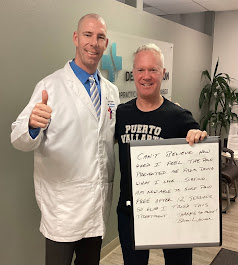
Real Patient Experiences With Herniated Disc Relief
Many patients who come to our San Diego clinic have already tried multiple treatments—or even surgery—before learning whether their disc condition can be helped without another invasive procedure.
“I have been dealing with back pain for several years. It got so bad that I had surgery 5 years ago for a bulging disc. About 5 months ago the disc bulged again hitting my sciatic nerve creating pain in my legs that made me want to cry it hurt so bad. After trying so many other options I was fortunate enough to find the spinal decompression and chiropractic center of San Diego. After just a few sessions I noticed a difference. Now after being there for the past few months I'm able to go about my normal life again.
What a blessing it was to find a Dr that genuinely cares and knows how to help people in my situation. Thank you Dr Boelk!”
— Anthony K., San Diego, CA
Summary:
Anthony previously underwent surgery for a bulging disc and later experienced a recurrence that caused severe sciatic nerve pain. After exhausting other options, he noticed improvement during decompression care and was able to return to normal daily activities.
“I travel from the UK to see Dr Boelk and his wonderful team . I have 3 bulging disc and one is touching the nerve. I have the spinal decompression treatment and it really helps keep me in my active life . I will not go to anyone else for back treatment, this place is number one and they genuinely care about their patients.”
— Lisa S., United Kingdom
Summary:
Lisa manages multiple bulging discs with nerve involvement and travels internationally for care, highlighting the role of ongoing, properly delivered decompression in supporting an active lifestyle.
So… Can a Herniated Disc Heal on Its Own?
-
Some can, particularly mild cases with minimal ongoing compression
-
Many do not, especially when disc pressure persists
-
Early, accurate evaluation matters
-
Supporting healing often requires reducing disc pressure, not just masking pain
Knowing where you fall on this spectrum is the most important next step.
About Dr. Cassidy Boelk, DC
• Board-Certified Doctor of Chiropractic
• Certified Spinal Decompression Doctor
• Certified Pain-Free Performance Specialist
• California X-Ray Radiology Licensed Doctor
• Member, International Disc Education Association
• Founder, Spinal Decompression Training Academy
• Over 100,000 Spinal Decompression Treatments Performed
• 7 DRX9000 True Spinal Decompression Machines in One Clinic
• Largest Known Provider of Spinal Decompression in California
• Nearly 21 Years Specializing Exclusively in Decompression Care
• Rated #1 Non-Surgical Spinal Decompression Office in San Diego
Next Steps Toward Lasting Relief
If you’re dealing with disc pain, nerve compression, or chronic neck or back issues, now is the time to take action before your condition becomes harder to correct.
Here’s how to get started:
-
Call (619) 298-0800 or text (619) 884-8298 after hours
-
Schedule your no-charge consultation to find out if you qualify for DRX9000 spinal decompression
-
Bring your MRI or X-rays if available
-
Review your exam findings with Dr. Boelk and learn about your treatment options so you can make an informed decision
👉 Consultations are no-charge and carry no obligation.
Because availability is limited and many patients travel in from out of state and overseas, appointments fill quickly, so securing your spot early ensures timely evaluation and care.
📍 The Spinal Decompression & Chiropractic Center of San Diego
5095 Murphy Canyon Road, Suite 300
San Diego, CA 92123
📞 Office: (619) 298-0800
📱 Text Line: (619) 884-8298
🌐 www.SanDiegoBackCare.com
Se habla español.
Referral Policy
Whether you were referred by a medical doctor, neurologist, orthopedic surgeon, chiropractor, physical therapist, massage therapist, attorney, or through a friend or family member, all patients are seen on a first-come, first-served basis. This ensures Dr. Boelk has the necessary time to personally evaluate whether you’re a candidate for Non-Surgical Spinal Decompression and whether your case can be accepted for care.