Articles


Can a Bulging Disc Become a Herniated Disc? – Kearny Mesa, CA

Can a Bulging Disc Become a Herniated Disc? – Kearny Mesa, CA

Understanding What Your MRI Means Before Assuming the Worst

If you've recently had an MRI and the report says "bulging disc," it's normal for your mind to race.

"Is this serious?"

"Is it eventually going to become a herniated disc?"

"Am I headed toward surgery?"

These are questions we hear almost every day from patients throughout Kearny Mesa, Serra Mesa, Tierrasanta, Mira Mesa, and the greater San Diego area.

The problem is that MRI reports are written for medical professionals—not patients. They describe what the radiologist sees, but they don't always explain why you're having pain or what should happen next.

Many people assume a bulging disc is simply an early herniated disc. Others believe it's only a matter of time before they'll need surgery.

Fortunately, neither assumption is necessarily true.

A bulging disc can become a herniated disc, but many never do. More importantly, the MRI itself doesn't determine how much pain someone experiences. Two people can have nearly identical MRI reports and feel completely different.

That's why understanding your diagnosis is far more important than simply reading the words on the report.


Quick Answer

Yes, a bulging disc can progress into a herniated disc, but it doesn't always happen. A bulging disc means the outer portion of the disc has begun extending beyond its normal boundary while remaining intact. A herniated disc occurs when the outer fibers weaken enough to allow some of the inner disc material to move outward. Whether that progression occurs depends on many factors, including age, genetics, daily spinal stress, previous injuries, and the overall health of the disc.

The encouraging news is that many people improve with conservative treatment and never require surgery.


Looking for Answers? Start with the Right Evaluation.

Choosing the right treatment begins with understanding exactly what's causing your symptoms.

If you've recently been diagnosed with a bulging disc, herniated disc, sciatica, degenerative disc disease, or chronic neck or back pain, Dr. Cassidy James Boelk offers a No-Charge, No-Obligation Consultation to help determine whether you're an appropriate candidate for care.

During your visit, we'll:

  • Review your MRI (if you've already had one)
  • Discuss your symptoms and health history
  • Perform the appropriate examination
  • Explain your diagnosis in plain English
  • Discuss your treatment options honestly

If Dr. Boelk believes you're not a candidate for treatment in our office, he'll tell you. If another specialist or treatment option is more appropriate, we'll point you in the right direction.

The Spinal Decompression & Chiropractic Center of San Diego

5095 Murphy Canyon Road, Suite 300

San Diego, CA 92123

619-298-0800

24-Hour Live Answering Service • Hablamos Español


A Story We See Every Week

One of the biggest misconceptions surrounding bulging discs is that they always progress into something worse.

Anthony's experience reminds us that every patient's journey is different.

After previously undergoing surgery for a bulging disc, his symptoms eventually returned. This time, the disc began irritating his sciatic nerve, creating severe pain that affected his daily life. Like many people we meet, he had already tried multiple treatment options before searching for a conservative alternative.

**“I have been dealing with back pain for several years. It got so bad that I had surgery 5 years ago for a bulging disc. About 5 months ago the disc bulged again hitting my sciatic nerve creating pain in my legs that made me want to cry it hurt so bad. After trying so many other options I was fortunate enough to find the spinal decompression and chiropractic center of San Diego. After just a few sessions I noticed a difference. Now after being there for the past few months I'm able to go about my normal life again.

What a blessing it was to find a Dr that genuinely cares and knows how to help people in my situation. Thank you Dr Boelk!”**

Anthony K., San Diego, CA


What's the Difference Between a Bulging Disc and a Herniated Disc?

Although the terms are often used interchangeably, they describe two different conditions.

A bulging disc occurs when the outer portion of the disc begins extending beyond its normal borders without tearing. Think of it as a tire that develops a slight bulge in its sidewall. The structure is still intact, but it's showing signs of wear.

A herniated disc is different.

Instead of simply bulging outward, the outer fibers of the disc develop a tear or significant weakness. This allows some of the softer inner material to push farther outward. If that material irritates a nearby spinal nerve, symptoms such as sciatica, numbness, tingling, weakness, or burning pain may develop.

The important point is this:

A bulging disc isn't automatically "better" than a herniated disc.

Likewise, a herniated disc isn't automatically "worse."

What matters most is whether the injured disc is affecting the surrounding nerves and whether those findings match what you're actually experiencing.


"I Wasn't Even Lifting Anything Heavy."

This is probably one of the most common statements we hear.

Patients often tell us they were doing something incredibly ordinary.

They bent over to tie a shoe.

Reached into the dishwasher.

Picked up a grocery bag.

Coughed.

Sneezed.

Then suddenly they felt a sharp pain in their back or a burning sensation shooting down the leg.

It's easy to blame that single movement.

In reality, that movement usually wasn't the cause of the injury.

More often, the disc had been gradually weakening over months—or even years. Everyday bending, prolonged sitting, repetitive lifting, previous injuries, and the normal aging process slowly change the structure of the disc. Eventually, one ordinary movement becomes the moment the symptoms finally appear.

Understanding that concept is important because it changes the focus from "What did I do yesterday?" to "What has been happening to my spine over time?"

That question often leads to much better long-term decisions.


From Dr. Cassidy James Boelk DC

One of the first things I tell patients after reviewing their MRI is not to panic over a single word in the report.

Over the past two decades, I've reviewed thousands of MRI studies. One thing has become very clear: the MRI doesn't tell the whole story.

I've seen patients with large herniated discs who had surprisingly little pain, and I've seen patients with relatively small disc injuries who could barely sit because the disc was irritating a spinal nerve.

That's why I never make recommendations based on imaging alone.

Your MRI is one piece of the puzzle. Equally important are your symptoms, neurological examination, physical findings, activity level, and what you're hoping to get back to doing.

My goal isn't simply to explain what the MRI says. It's to help determine whether those findings actually explain what you're feeling—and what the most appropriate next step may be.


"Does This Mean I'm Eventually Going to Need Surgery?"

This is often the next question patients ask.

The answer depends on far more than the MRI itself.

A bulging disc—even a herniated disc—does not automatically mean surgery is necessary.

In fact, many people improve with conservative care and never require an operation.

Surgery is typically considered when there is significant neurological loss, progressive weakness, loss of bowel or bladder control, or when appropriate conservative treatment has failed and symptoms continue to significantly impact quality of life.

The important point is that every case is different.

The MRI is one piece of the evaluation, but it should never be the only factor used when making treatment decisions.


Why Does Sitting Often Make the Pain Worse?

One question that surprises many people is why they can walk around the grocery store fairly comfortably but struggle to sit through a 30-minute drive.

It comes down to mechanics.

When you sit—especially with poor posture—the pressure inside the lumbar discs increases. If one of those discs is already irritated, prolonged sitting may place additional stress on the injured tissues.

Think about a typical weekday.

You drive to work.

You sit at your desk.

You drive home.

You eat dinner.

You relax on the couch.

Without realizing it, you may spend eight to ten hours sitting.

If your injured disc doesn't tolerate prolonged sitting well, it's easy to understand why your symptoms gradually become worse as the day goes on.


Can a Bulging Disc Heal?

Another question we hear regularly is whether a bulging disc can actually heal.

The honest answer is that it depends on what someone means by "heal."

The disc itself doesn't receive a direct blood supply the way muscles or skin do. Because of that, disc injuries often heal more slowly than many other tissues in the body.

For some people, the bulging portion remains visible on future MRI scans even though their pain has significantly improved.

Others may continue having symptoms because inflammation persists or because the disc continues to irritate a nearby nerve.

The goal isn't always to make the MRI look normal.

The goal is to help patients return to sleeping comfortably, working, exercising, traveling, playing with their children, and enjoying life again.


What Can You Do Right Now?

Although every patient is different, there are several simple habits that may reduce unnecessary stress on an injured lumbar disc.

These include:

  • Avoid prolonged sitting whenever possible.
  • Get up and walk every 30 to 45 minutes.
  • Use proper lifting mechanics.
  • Continue gentle walking if tolerated.
  • Avoid spending days in bed unless specifically instructed by your physician.
  • Follow an individualized rehabilitation program rather than random internet exercises.
  • Seek an accurate diagnosis before beginning treatment.

One of the biggest mistakes people make is treating every episode of back pain the same way.

Different disc injuries often require different treatment approaches.


Common Misconception

"If My MRI Says Herniated Disc, Surgery Is Inevitable."

Fortunately, that's simply not true.

Some of the happiest patients in our office arrived convinced surgery was their only remaining option.

Others truly did require surgical consultation.

The difference wasn't determined by one word on the MRI.

It was determined by the complete clinical picture.

That's why honest evaluation is so important.

Sometimes the best recommendation is treatment.

Sometimes it's additional imaging.

Sometimes it's another specialist.

The goal is never to fit every patient into the same treatment plan.

The goal is finding the treatment that's most appropriate for that individual.


Why Patients Choose Dr. Cassidy James Boelk, DC

Choosing a doctor for a spinal disc injury isn't simply about finding someone who offers spinal decompression. It's about finding someone with the experience to determine whether you're actually an appropriate candidate.

Board-Certified Doctor of Chiropractic

More than two decades evaluating and treating complex spinal conditions.

Certified Spinal Decompression Doctor

Advanced training in non-surgical spinal decompression and disc-related injuries.

Certified Pain-Free Performance Specialist (PPSC)

Extensive education in biomechanics, rehabilitation, movement, and helping patients safely return to the activities they enjoy.

Founder, Non-Surgical Spinal Decompression Training Academy

Dr. Boelk trains other doctors in advanced spinal decompression protocols, patient selection, rehabilitation, and treatment planning.

Founding Member, American Spinal Decompression Society

Committed to advancing the education and clinical standards surrounding non-surgical spinal decompression.

California Licensed X-Ray Supervisor & Operator

Weight-bearing X-rays and imaging interpretation are an important part of evaluating many spinal conditions.

More Than 22 Years Treating Spinal Disc Injuries

Experience matters when evaluating complicated spinal cases.

More Than 100,000 Spinal Decompression Treatments Performed

One of the largest clinical experiences with spinal decompression in California.

Personally Reviews MRI Studies

Every MRI is reviewed in conjunction with the patient's symptoms and examination findings—not simply the written report.

Seven DRX9000® Spinal Decompression Systems

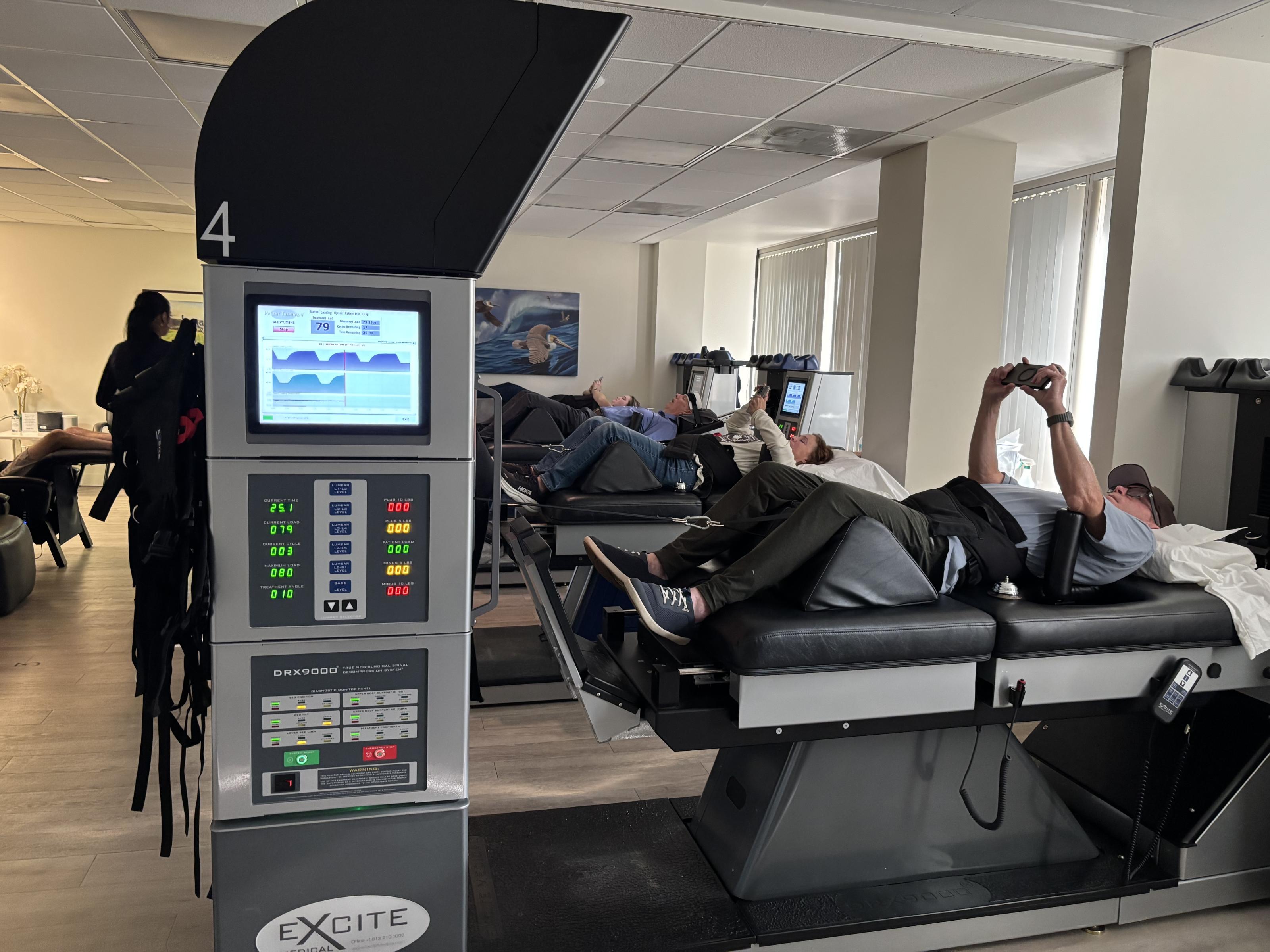
Four lumbar systems and three cervical systems allow the office to care for multiple patients simultaneously while using one of the most researched spinal decompression technologies available.

Patients Travel for Care

Patients routinely travel from throughout California, across the United States, and internationally seeking Dr. Boelk's evaluation and expertise.

Honest Candidate Selection

If Dr. Boelk doesn't believe someone is an appropriate candidate for treatment, he'll explain why and discuss other options.


A Message from Dr. Cassidy James Boelk

One thing I've learned after treating spinal disc injuries for more than two decades is that patients are often far more frightened by their MRI than they need to be.

I've seen patients come into the office convinced they were headed for surgery simply because of a word they read on their report.

Sometimes that concern is justified.

Many times, it isn't.

My job isn't to convince someone they need treatment. My responsibility is to determine whether the MRI findings actually explain their symptoms and whether I believe our office is the right place to help.

If I believe someone isn't a candidate, I'll tell them. If I think another doctor or another treatment would better serve them, I'll tell them that as well.

I've always believed patients deserve honesty before anything else.


Frequently Asked Questions

Can a bulging disc become a herniated disc?

Yes. It can, but many bulging discs never progress to a herniation.

Is a bulging disc permanent?

Not necessarily. Some patients remain symptom-free despite MRI changes, while others improve significantly over time with appropriate conservative care.

Can exercise make a bulging disc worse?

The wrong exercise can aggravate symptoms. The right exercise, performed at the right stage of healing, is often an important part of recovery.

Should I avoid walking?

In many cases, gentle walking is encouraged because it helps maintain mobility without placing excessive stress on the spine. Every patient should follow recommendations based on their specific diagnosis.

How do I know if I'm a candidate for spinal decompression?

That depends on your MRI findings, physical examination, medical history, and diagnosis. Not every patient is an appropriate candidate, which is why a thorough evaluation is important.


If You're Looking for Answers...

Reading about spinal conditions online can be overwhelming. There is no shortage of opinions, but every spine—and every patient—is different.

If you've been diagnosed with a bulging disc, herniated disc, sciatica, or another disc-related condition and would simply like an honest opinion about whether you may be a candidate for treatment, we'd be happy to help.

Schedule a No-Charge, No-Obligation Consultation with Dr. Cassidy James Boelk.

Bring your MRI if you have one.

We'll review it together, answer your questions, explain your options, and honestly let you know whether we believe treatment in our office is appropriate for your condition.

If we don't, we'll tell you.

Sometimes the most valuable part of a consultation isn't recommending treatment—it's giving someone the confidence that they're making the right decision about their spine.


Get Fast Pain Relief Now

Schedule a Complimentary, No-Charge, No-Obligation Consultation or to submit a question, simply fill out the form to the right and click submit.

(619) 298-0800