Can Spinal Decompression Help Sciatica Nerve Pain? – La Jolla, CA
When Sciatica Keeps You From Surfing, Golfing, Exercising, Traveling, and Staying Active
One of the hardest things about sciatica is how quickly it can change what you are able to do.
You may consider yourself healthy and active. You exercise. You surf, golf, walk, hike, travel, or spend time outdoors.
Then pain begins in your lower back or buttock.
Soon it is traveling into your thigh or calf. Maybe your foot starts tingling or going numb. Sitting becomes uncomfortable. Driving becomes difficult. You stop exercising because you are afraid of making the problem worse.
Before long, your life starts revolving around the nerve pain.
For many patients, the biggest question becomes:
“How do I actually fix this so I can get back to doing the things I enjoy?”
Sciatica can have several causes, but one of the most common is irritation of a lumbar nerve root associated with a bulging disc, herniated disc, degenerative disc, loss of disc height, or narrowing around the nerve.
When the underlying condition is appropriate for treatment, non-surgical spinal decompression can be an effective option for disc-related sciatica without injections or surgery.
The first step is determining exactly what is irritating the nerve.
His Sciatica Was Gone After a Structured Course of Treatment
⭐⭐⭐⭐⭐
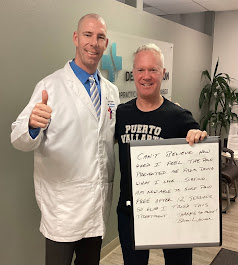
“I have had an outstanding experience with Dr. Boelk and his staff at The Spinal Decompression & Chiropractic Center of San Diego.
They follow a very structured treatment protocol and utilize the best spinal decompression equipment available. I’ve been treated elsewhere using lower-quality decompression systems and never experienced meaningful improvement.
Dr. Boelk is attentive, professional, and genuinely cares about every patient. You can see it in the way he interacts with everyone who walks through the door.
After about 12 treatments, my sciatica was gone and I was nearly back to normal. Honestly, I wasn’t sure I would ever heal. What surprised me most was that after my very first treatment, I experienced significant relief and was able to sleep mostly pain-free for the first time in months.
The improvement has allowed me to get back to hiking, traveling, and enjoying life again.
This treatment was one of the best investments I’ve ever made.
Thank you, Dr. Boelk and your entire team.”
— Michael Langsdale, San Diego, CA
Michael’s results are his own, and individual responses vary.
His experience highlights something important: the objective of treating sciatica is not simply lowering a pain score.
For most patients, the real goal is getting their life back.
Find Out Whether Your Sciatica Is Coming From a Disc
If sciatica is preventing you from exercising, surfing, golfing, walking, traveling, sleeping, working, or simply sitting comfortably, call 619-298-0800 for a no-charge, no-obligation consultation with Dr. Cassidy Boelk, DC.
You do not need an MRI simply to schedule.
If you already have imaging, Dr. Boelk can personally review it. If you do not, the process can begin with your symptoms, neurological findings, history, previous treatment, and an appropriate clinical examination.
If additional imaging is necessary, Dr. Boelk will explain what is needed and why.
The Spinal Decompression & Chiropractic Center of San Diego is located in Kearny Mesa and regularly treats patients from La Jolla and surrounding coastal communities.
Call 619-298-0800 to schedule. Our answering service is available 24 hours a day, seven days a week. Hablamos Español.
Why Does Sciatica Cause Pain Down the Leg?
Sciatica is different from ordinary muscular lower-back pain.
The sciatic nerve is formed by nerve roots originating in the lower spine.
When one of those nerve roots becomes inflamed, irritated, or compressed, symptoms can travel from the spine into the leg.
Depending upon which nerve is involved, symptoms may occur in the:
-
Buttock
-
Back or outside of the thigh
-
Calf
-
Shin
-
Ankle
-
Heel
-
Top of the foot
-
Bottom of the foot
-
Toes
Symptoms can include:
-
Sharp or shooting pain
-
Burning
-
Electrical sensations
-
Tingling
-
Numbness
-
Leg weakness
-
Foot weakness
-
A heavy feeling in the leg
-
Pain aggravated by sitting
-
Pain with bending
-
Symptoms aggravated by coughing or sneezing
The National Library of Medicine describes sciatica as pain, weakness, numbness, or tingling that can begin in the lower back and extend into the calf, foot, or toes.
National Library of Medicine: Sciatica
Where the symptoms travel can provide valuable information about which nerve may be involved.
But this distinction is extremely important:
Sciatica is a symptom. It is not the underlying diagnosis.
What Is Actually Irritating the Nerve?
Several spinal conditions can cause sciatica.
These include:
-
Lumbar disc herniation
-
Bulging discs
-
Degenerative disc disease
-
Loss of disc height
-
Foraminal narrowing
-
Spinal stenosis
-
Spondylolisthesis
-
Inflammation surrounding a lumbar nerve root
However, not every pain that travels into the buttock or leg is sciatica.
Hip conditions, sacroiliac joint problems, muscular injuries, and peripheral nerve disorders can sometimes produce similar symptoms.
That is why Dr. Boelk does not recommend decompression simply because someone says, “I have sciatica.”
The underlying condition needs to be evaluated first.
Why Can Exercise Make Sciatica Worse?
Staying active is generally good for your spine.
But when a lumbar disc and nerve are acutely irritated, certain activities can increase symptoms.
Repeated bending, twisting, heavy lifting, prolonged sitting, impact, or loading the spine in a position it currently cannot tolerate may aggravate the affected area.
Patients often make one of two mistakes.
Some stop moving completely because they are afraid of worsening the condition.
Others repeatedly push through significant nerve pain because they believe they simply need to stretch or strengthen more.
Neither extreme is ideal.
The appropriate amount and type of activity depends on the underlying condition and stage of recovery.
Why Stretching Doesn't Always Fix Sciatica
One of the first things many active patients try is stretching.
Sometimes gentle movement feels good.
But aggressive stretching is not automatically the answer for radiating nerve pain.
If a nerve root is highly irritated, repeatedly placing tension on the nerve can sometimes aggravate symptoms.
This is why Dr. Boelk looks at what reduces symptoms and what increases them rather than giving every sciatica patient the same stretching routine.
Treatment and rehabilitation should match the condition.
Sciatica Can Involve Inflammation and Compression
Sciatica is commonly described as a “pinched nerve,” but mechanical compression is only part of the picture.
An injured spinal disc can also produce inflammation around a nerve root.
A patient can therefore experience significant burning, electrical pain, or tingling even when an MRI does not demonstrate dramatic compression.
More substantial nerve compression can affect:
-
Sensation
-
Reflexes
-
Muscle strength
-
Foot control
-
Walking ability
An NIH clinical review explains that sciatica frequently involves nerve-root irritation associated with inflammation, while significant motor dysfunction can indicate direct compression.
This distinction matters because severe pain and progressive weakness are not the same clinical finding.
Progressively worsening weakness requires prompt evaluation.
How the DRX9000 Addresses Disc-Related Sciatica
The DRX9000 applies controlled decompression and relaxation cycles to a targeted region of the lumbar spine.
The objective is to unload the affected spinal segment, reduce mechanical stress, and improve the environment surrounding the injured disc and irritated nerve.
Treatment can be individualized according to:
-
Suspected disc level
-
Location of symptoms
-
How far symptoms travel
-
Patient positioning
-
Treatment angle
-
Starting force
-
Body size
-
Number of cycles
-
Duration of cycles
-
Response during treatment
-
Response following treatment
Dr. Cassidy Boelk uses DRX9000 systems exclusively for non-surgical spinal decompression.
His San Diego center has seven DRX9000 systems—four lumbar and three cervical.
But Dr. Boelk emphasizes that the machine is only one component of care.
Results also depend upon:
-
Proper patient selection
-
Accurate treatment settings
-
Appropriate force
-
Treatment frequency
-
Monitoring neurological symptoms
-
Adjusting treatment according to patient response
-
Activity modification
-
Progressive rehabilitation
Spinal decompression should be treated as a clinical procedure—not simply putting someone on a machine.
What Does Research Show About Non-Surgical Spinal Decompression?
Clinical research supports non-surgical spinal decompression for appropriately selected patients with lumbar disc conditions.
In a randomized clinical trial involving patients with lumbar disc herniations, patients treated with DRX9000 non-surgical spinal decompression experienced significant reductions in pain and significant improvements in functional ability.
Randomized DRX9000 Clinical Trial
A separate study evaluated DRX9000 patients with CT imaging before and after treatment.
Researchers found that increased disc height following treatment was associated with decreased disc-related lower-back pain.
The available research supports non-surgical spinal decompression as an effective treatment option for properly selected patients with disc-related lower-back pain and sciatica.
Individual results vary.
Dr. Boelk combines this research with:
-
More than 22 years of clinical experience
-
More than 100,000 spinal decompression treatments
-
Individualized DRX9000 protocols
-
Careful patient selection
-
Clinical monitoring
-
Progressive rehabilitation
Do You Need an MRI?
Not every patient needs an MRI before scheduling a consultation.
Dr. Boelk can initially evaluate:
-
Where symptoms begin
-
Where symptoms travel
-
Whether symptoms extend below the knee
-
Areas of numbness or tingling
-
Muscle strength
-
Reflexes
-
Walking ability
-
Sitting tolerance
-
Standing tolerance
-
Activities that aggravate symptoms
-
Positions that reduce symptoms
-
Previous treatment
-
Previous surgery
-
Significant injury history
-
Weight-bearing alignment
-
Signs of spinal instability
When appropriate, weight-bearing and flexion-extension X-rays can provide additional information about alignment and spinal stability.
MRI becomes particularly useful when:
-
Symptoms are severe or persistent
-
Neurological deficits are present
-
The diagnosis remains uncertain
-
Previous surgery has altered the anatomy
-
Additional information about the discs and nerves is needed
If you already have an MRI, bring it.
If you don't have one, you can still call.
What If Physical Therapy, Chiropractic, Medication, or Injections Didn't Work?
Many patients seeking Dr. Boelk’s opinion have already tried multiple treatments.
These may include:
-
Physical therapy
-
Chiropractic adjustments
-
Anti-inflammatory medication
-
Prescription pain medication
-
Muscle relaxers
-
Massage
-
Acupuncture
-
Epidural injections
-
Stretching
-
Rest
-
Exercise modification
These treatments do not all accomplish the same thing.
Medication can reduce pain or inflammation but does not mechanically unload an injured disc.
Rehabilitation can improve strength and movement capacity, but it can be difficult to progress while a nerve remains significantly irritated.
Injections can reduce inflammation but do not alter the mechanical environment surrounding the disc.
If another treatment has not produced lasting improvement, that does not automatically mean surgery is your only remaining option.
It means the condition deserves another evaluation.
She Traveled From Alaska Because She Could Barely Walk
⭐⭐⭐⭐⭐
“My name is Lynn. I am from Alaska, and I just want to say it was totally worth taking a trip to go to The Spinal Decompression & Chiropractic Center of San Diego.
I was having pain radiating down my legs. I couldn’t sleep. I could barely walk.
After treatment, I am back to shoveling snow, teaching school, and taking walks.
I just want to thank Dr. Boelk and the clinic. You guys are wonderful, and you have created such a friendly, kind and truly caring atmosphere.
I highly encourage anybody who might be considering spinal decompression therapy. It really makes a difference.”
— Lynn C., Alaska
Lynn's results cannot predict another patient's response.
Her experience demonstrates how significantly radiating nerve pain can affect someone's independence—and how meaningful returning to normal activities can be.
Getting Out of Pain Is Only Part of the Goal
For an active patient, the goal usually isn't simply:
“Make my leg hurt less.”
It may be:
“I want to surf again.”
“I want to play golf.”
“I want to get back into the gym.”
“I want to walk without thinking about my leg.”
“I want to travel.”
“I want to pick up my kids or grandkids.”
“I want my normal life back.”
Longstanding sciatica can cause people to change the way they move.
They may:
-
Favor one side
-
Avoid bending
-
Stop lifting
-
Walk differently
-
Stop exercising
-
Lose hip strength
-
Lose core stability
-
Become fearful of normal movement
As nerve symptoms improve, progressive rehabilitation can address:
-
Core stability
-
Hip strength
-
Spinal control
-
Walking tolerance
-
Sitting endurance
-
Safe bending and lifting
-
Return to work
-
Return to exercise
-
Return to golf
-
Return to recreational activities
The timing matters.
Rehabilitation should progress according to the patient's condition and response rather than a generic exercise sheet.
Who Is a Good Candidate?
Non-surgical spinal decompression is intended for properly selected patients.
Favorable factors may include:
-
Symptoms consistent with lumbar nerve irritation
-
Findings suggesting a bulging or herniated disc
-
A sufficiently stable spine
-
No rapidly progressing neurological loss
-
No neurological emergency
-
A condition that can safely undergo decompression
-
Willingness to follow the recommended treatment and rehabilitation program
Not every patient with sciatica qualifies.
Proper patient selection is one of the most important parts of successful care.
When Sciatica Requires Immediate Medical Attention
Seek urgent medical attention for:
-
New loss of bladder or bowel control
-
Difficulty initiating urination
-
Inability to sense bladder fullness
-
Numbness around the groin or genitals
-
Numbness around the buttocks or inner thighs
-
Rapidly progressing weakness
-
Sudden difficulty controlling one or both legs
-
Severe neurological symptoms following significant trauma
These findings can indicate cauda equina syndrome or another serious neurological condition.
The American Association of Neurological Surgeons identifies urinary retention, incontinence, saddle numbness, and significant leg weakness among warning signs requiring immediate medical evaluation.
American Association of Neurological Surgeons: Cauda Equina Syndrome
Not Every Patient Is Accepted for Treatment
⭐⭐⭐⭐⭐
“I found this terrific practice on social media. I followed up and did my own research, so I decided to pay them a visit.
The place is clean, well organized and run by a very efficient receptionist.
I met with the doctor and after an honest and forthright conversation, we both determined that surgery was my only option to correct my back issues.
I will return as a customer when the time is right.”
— Jeff J., Tucson, AZ
Jeff wanted to avoid surgery and specifically sought out a non-surgical opinion.
After reviewing his condition, Dr. Boelk agreed that surgery was the appropriate direction.
He was not placed into a decompression program simply because he wanted to avoid an operation.
If Dr. Boelk does not believe spinal decompression is safe or appropriate for your condition, he will explain why.
Why La Jolla Patients Seek Out Dr. Cassidy Boelk, DC
Dr. Cassidy Boelk’s practice is highly focused on non-surgical spinal decompression and difficult disc and nerve conditions, including herniated discs, bulging discs, degenerative disc disease, sciatica, chronic lower-back pain, neck pain, and radiating nerve symptoms.
His background includes:
-
Certified Spinal Decompression Doctor
-
Certified Pain-Free Performance Specialist
-
More than 22 years of clinical experience
-
More than 100,000 spinal decompression treatments performed
-
Founder of the Non-Surgical Spinal Decompression Training Academy
-
Trains other doctors in spinal decompression protocols and techniques
-
Founding Member of the American Spinal Decompression Society
-
Member of the International Disc Education Association
-
California-licensed doctor with X-ray radiography certification
-
Seven DRX9000 systems—four lumbar and three cervical
Dr. Boelk also understands these injuries from a personal perspective. He has spent thousands of hours rehabilitating his own significant neck and back injuries while spending more than two decades helping patients with difficult spinal conditions.
Patients seek his expertise from La Jolla and throughout San Diego County, as well as from other states and internationally, including Mexico, Canada, Spain, and the United Kingdom.
Your Goal Should Be Getting Back to Your Life
If sciatica has taken away surfing, golf, workouts, walking, traveling, sleep, or simply the ability to sit comfortably, don't assume you have to accept those limitations.
The important question is what is causing the nerve irritation and what can safely be done about it?
You do not need to already have an MRI.
You do not have to commit to treatment simply to get an opinion.
And not everyone is accepted for spinal decompression.
The first step is determining what is causing your symptoms and whether a non-surgical approach is appropriate.
Schedule a No-Charge, No-Obligation Consultation
The Spinal Decompression & Chiropractic Center of San Diego
5095 Murphy Canyon Road, Suite 300
San Diego, CA 92123
Call: 619-298-0800
Text: 619-884-8298
Website: www.SanDiegoBackCare.com
24/7 Answering Service
Hablamos Español
Call 619-298-0800 for a no-charge, no-obligation consultation with Dr. Cassidy Boelk, DC. Whether you already have imaging or are simply trying to understand why your sciatica is preventing you from staying active, Dr. Boelk can evaluate your condition and tell you honestly whether non-surgical spinal decompression is an appropriate treatment option for you.