Can Spinal Decompression Help Sciatica? – La Jolla, CA
Is the Pain in Your Leg Coming From Your Lower Back?
Sciatica does not always begin with severe back pain. Some patients primarily feel it in the buttock, thigh, calf, foot, or toes.
The symptoms may include:
-
Burning or shooting pain down one leg
-
Numbness or tingling in the foot
-
Pain that becomes worse while sitting or driving
-
Difficulty standing or walking comfortably
-
Weakness in the leg or foot
-
Lower back pain accompanied by leg symptoms
It is common for patients to treat the painful area without realizing that the source may be a damaged disc or irritated nerve in the lower spine.
When sciatica is caused by a bulging or herniated lumbar disc, non-surgical spinal decompression may be able to help. The first step, however, is determining whether the symptoms and imaging findings match—and whether treatment can be performed safely.
Back to Hiking, Traveling, and Enjoying Life
⭐⭐⭐⭐⭐
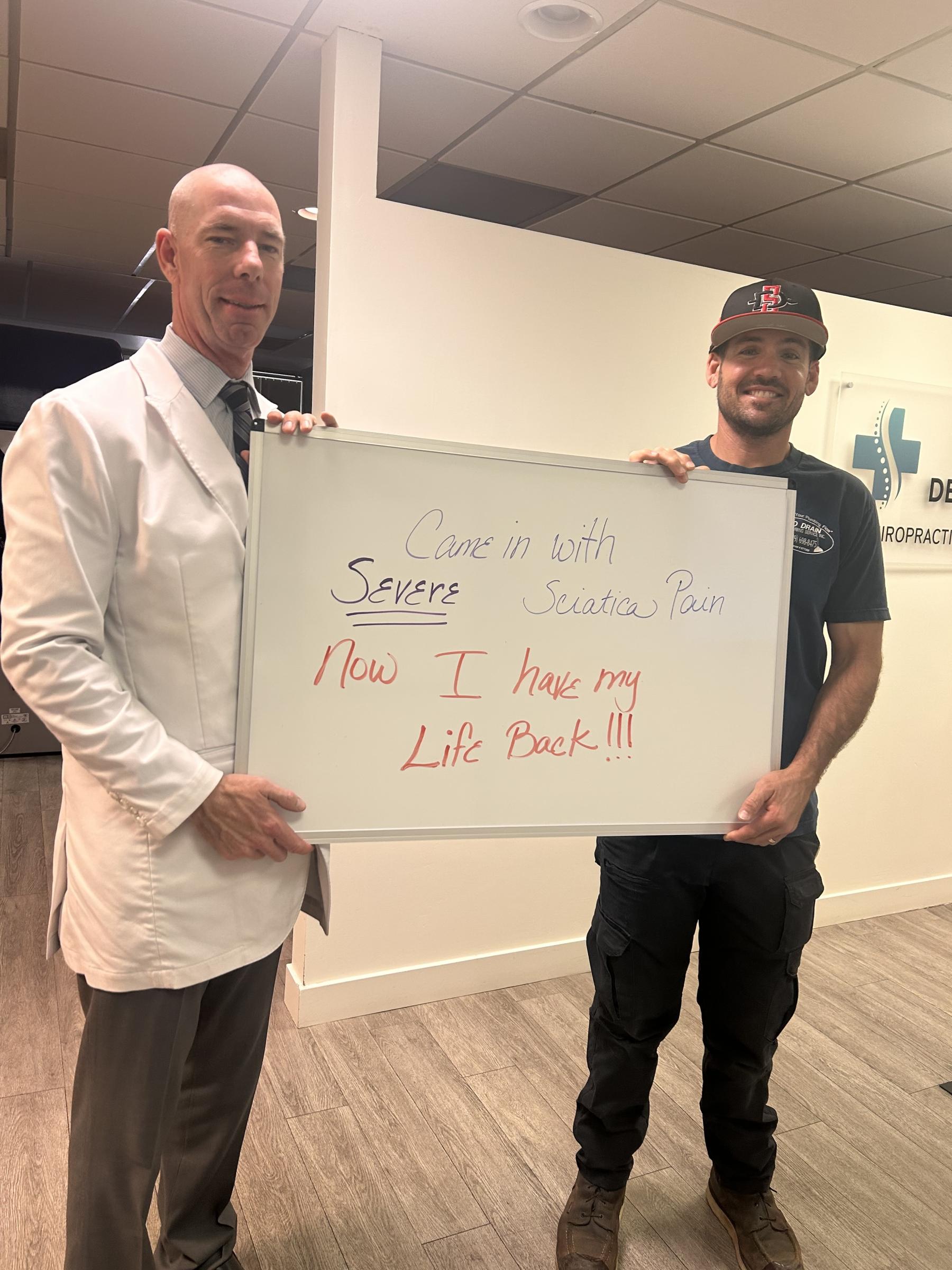
“I have had an outstanding experience with Dr. Boelk and his staff at The Spinal Decompression & Chiropractic Center of San Diego.
They follow a very structured treatment protocol and utilize the best spinal decompression equipment available. I've been treated elsewhere using lower-quality decompression systems and never experienced meaningful improvement.
Dr. Boelk is attentive, professional, and genuinely cares about every patient. You can see it in the way he interacts with everyone who walks through the door.
After about 12 treatments, my sciatica was gone and I was nearly back to normal. Honestly, I wasn't sure I would ever heal. What surprised me most was that after my very first treatment, I experienced significant relief and was able to sleep mostly pain-free for the first time in months.
The improvement has allowed me to get back to hiking, traveling, and enjoying life again.
This treatment was one of the best investments I've ever made.
Thank you, Dr. Boelk and your entire team.”
— Michael Langsdale, San Diego, CA
Michael’s experience is his own, and results will differ between patients. His story illustrates the improvement that may be possible when sciatica is caused by a condition that responds to a properly structured decompression program.
Find Out Whether Your Sciatica Is Treatable
If sciatica is limiting your sleep, work, walking, exercise, or travel, call 619-298-0800 to schedule a complimentary no-charge consultation with Dr. Cassidy Boelk, DC.
Bring your MRI or other recent imaging if available. Dr. Boelk will review your condition, answer your questions, and tell you directly whether you appear to be a candidate for non-surgical spinal decompression.
Call 619-298-0800 or text 619-884-8298 to schedule your consultation.
Spanish-speaking assistance is available, and calls are answered 24 hours a day.
What Is Sciatica?
Sciatica is a term used to describe symptoms affecting the sciatic nerve. It is not the underlying diagnosis.
The sciatic nerve is formed by nerve roots originating in the lower spine. When one of these nerves becomes compressed or inflamed, symptoms can travel through the buttock and into the leg.
Possible causes include:
-
A bulging lumbar disc
-
A herniated or extruded disc
-
Degenerative disc changes
-
Loss of disc height
-
Inflammation surrounding the nerve
-
Foraminal narrowing
-
Spinal instability
-
A condition involving the hip, muscles, or peripheral nerves
Because several conditions can produce similar symptoms, the location of the pain alone is not enough to determine the proper treatment.
Why Sitting Often Makes Sciatica Worse
Many people with disc-related sciatica feel worse while sitting. Sitting can increase pressure within the lumbar discs, particularly when the body is slouched or bent forward.
Long periods at a desk, driving, flying, or working from a couch may aggravate an already irritated disc and nerve.
Some patients notice that they feel relatively comfortable while walking but develop increasing pain when they sit. Others struggle when moving from sitting to standing or when getting out of a car.
These patterns provide useful information, but they still need to be compared with the examination and imaging before a diagnosis or treatment plan is established.
How Non-Surgical Spinal Decompression May Help
When a spinal disc is damaged or compressed, it may begin to bulge or herniate toward a nearby nerve. This can create a combination of mechanical pressure and inflammation.
Non-surgical spinal decompression uses controlled pulling and releasing cycles to gently reduce pressure at a targeted lumbar level. The goal is to improve the environment surrounding the damaged disc and irritated nerve.
For a properly selected patient, treatment may help:
-
Reduce pressure affecting the spinal nerve
-
Decrease pain traveling into the buttock or leg
-
Improve disc hydration and nutrient movement
-
Reduce protective muscle tightness
-
Improve comfort while sitting, standing, and walking
-
Help the patient progress into an appropriate rehabilitation program
Spinal decompression is not simply a stronger version of traction. Proper treatment requires accurate targeting, appropriate settings, careful monitoring, and adjustments based on the patient’s response.
Why the MRI Report Is Not Enough
An MRI report may list several findings, but not every disc bulge is causing symptoms.
Dr. Boelk personally reviews the available images and compares them with:
-
The location and pattern of the patient’s pain
-
Numbness, tingling, or weakness
-
Orthopedic and neurological examination findings
-
Previous treatment and surgical history
-
Spinal alignment while standing
-
Possible instability
-
Activities and positions that aggravate or relieve symptoms
When necessary, weight-bearing and flexion-extension X-rays may be used to evaluate spinal alignment and movement.
The goal is to determine whether the disc findings match the patient’s symptoms and whether decompression is both appropriate and safe.
Not Everyone With Sciatica Is a Candidate
⭐⭐⭐⭐⭐
“Very nice Dr. and Honest! I would definitely recommend anyone who hasn't had metal put in their back in a surgery to go to him and give his program a shot. I believe it would definitely help. Just not in my personal case. As I have a lot of hardware in my back. But I'm glad I took the time to meet with him. It was very informative all around.”
— Toni W., Lake Elsinore, CA
Dr. Boelk determined that Toni was not an appropriate candidate because of the amount of hardware in her spine. She was not encouraged to begin treatment simply because she was experiencing back problems.
Other reasons a patient may not qualify can include:
-
Spinal instability
-
Surgical hardware at the treatment level
-
A recent or unhealed fracture
-
Pregnancy when lumbar decompression is being considered
-
Certain advanced spinal conditions
-
Symptoms requiring urgent medical or surgical evaluation
The purpose of the consultation is to determine whether treatment makes sense before the patient invests time and money into a program.
What Should You Avoid During a Sciatica Flare-Up?
When the sciatic nerve is irritated, repeatedly provoking it can make symptoms more difficult to calm down.
Until the cause is properly evaluated:
-
Avoid aggressive hamstring stretching if it increases leg pain
-
Limit prolonged sitting when possible
-
Change positions throughout the day
-
Avoid repeated bending and twisting
-
Take short walks if walking does not worsen symptoms
-
Stop exercises that increase numbness, tingling, or weakness
-
Avoid lifting while bent forward or rotated
The best exercise for sciatica depends on the diagnosis. A movement that helps one patient may aggravate another.
When Sciatica Needs Immediate Medical Attention
Seek immediate medical attention if symptoms include:
-
New loss of bladder or bowel control
-
Numbness in the groin or saddle region
-
Rapidly progressing leg weakness
-
Severe pain following significant trauma
-
Fever or unexplained illness with severe back pain
These symptoms should not be treated as routine sciatica.
Why Patients Seek Out Dr. Cassidy Boelk, DC
Patients from La Jolla and throughout San Diego County seek out Dr. Boelk because his practice is focused on spinal decompression, disc injuries, sciatica, and difficult neck and back conditions.
His credentials and experience include:
-
Certified Spinal Decompression Doctor
-
Certified Pain-Free Performance Specialist
-
More than 21 years of clinical experience
-
Over 100,000 spinal decompression treatments performed
-
Founder of the Non-Surgical Spinal Decompression Training Academy
-
Trains other doctors in spinal decompression protocols and techniques
-
Founding Member of the American Spinal Decompression Society
-
Member of the International Disc Education Association
-
California-licensed doctor with X-ray radiography certification
-
Seven DRX9000 spinal decompression systems
-
Extensive personal experience rehabilitating serious spinal and disc injuries
After dealing with significant injuries to his own spine, Dr. Boelk spent thousands of hours studying spinal rehabilitation, core stability, and ways to remain active without unnecessary surgery.
Patients travel to his San Diego office from throughout California, other states, Mexico, Canada, Spain, and the United Kingdom.
Do Not Let Sciatica Keep Shrinking Your Life
Sciatica can gradually change what a person is willing or able to do. Exercise stops. Travel becomes difficult. Sitting through dinner or a movie becomes uncomfortable. Sleep is interrupted, and each day begins to revolve around avoiding another flare-up.
If this is happening to you, it is time to find out what is actually causing the problem.
A consultation does not commit you to treatment. It gives you an opportunity to have your condition reviewed by a doctor who has focused on spinal decompression and disc injuries for more than two decades.
Call Today to Find Out if You Are a Candidate
The Spinal Decompression & Chiropractic Center of San Diego
5095 Murphy Canyon Road, Suite 300
San Diego, CA 92123
Call: 619-298-0800
Text: 619-884-8298
Visit: www.SanDiegoBackCare.com
Spanish-speaking assistance is available. Calls are answered 24 hours a day.
Call 619-298-0800 today to schedule your complimentary no-charge consultation. Find out whether your sciatica is coming from a treatable disc problem and whether non-surgical spinal decompression is the right next step.