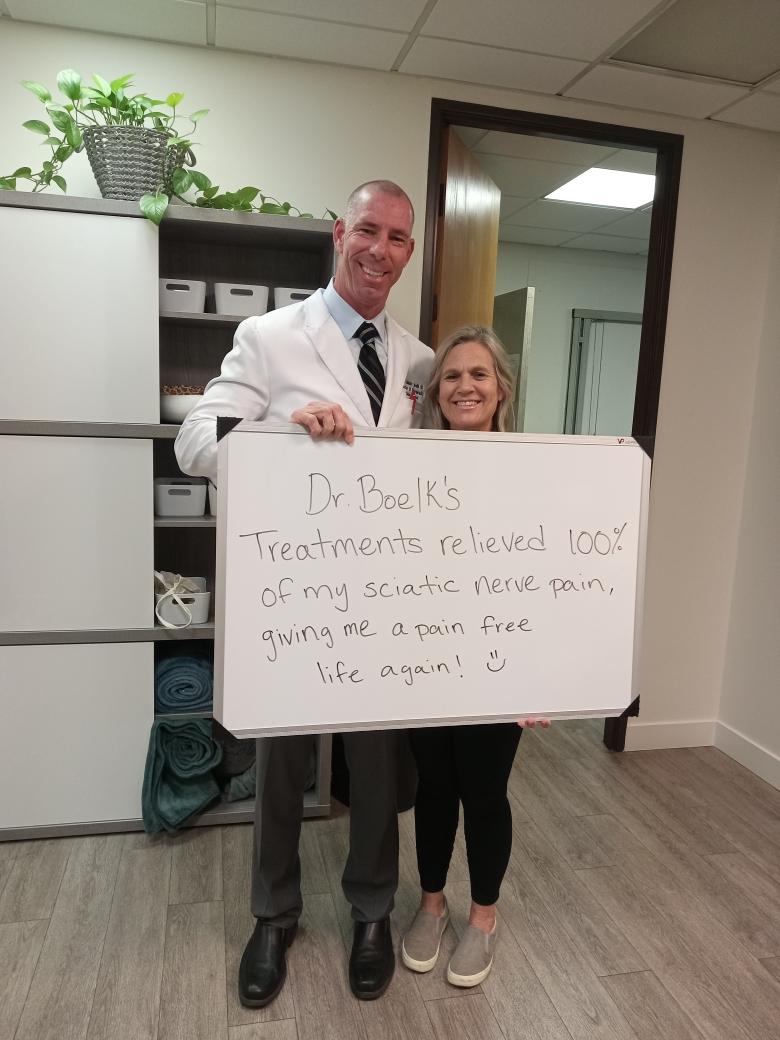
Can Sciatica Cause Permanent Nerve Damage? – San Diego, CA
What Patients Throughout San Diego Should Know Before Ignoring Leg Pain, Numbness, or Weakness
If you've been living with sciatica for weeks or months, you've probably asked yourself a question that worries almost everyone at some point:
"Am I causing permanent nerve damage by waiting?"
Maybe the pain starts in your lower back and shoots into your buttock, down your leg, or all the way into your foot. Perhaps you've noticed numbness in your toes, tingling that won't go away, or your leg simply doesn't feel as strong as it used to.
For many people, that's when the fear sets in.
They're no longer asking, "How do I get rid of my sciatica?"
They're asking, "Am I doing permanent damage to my nerve?"
Every week, patients from throughout San Diego come to The Spinal Decompression & Chiropractic Center of San Diego with those exact concerns. Some have already tried physical therapy, medications, chiropractic care, spinal injections, massage therapy, or months of stretching and home exercises. Others have already been told surgery may be their next option.
The good news is that most cases of sciatica do not result in permanent nerve damage.
However, there are situations where prolonged pressure on a spinal nerve deserves prompt evaluation because the longer significant nerve compression continues, the greater the potential risk of lasting neurological problems.
Understanding the difference is one of the most important steps in deciding what to do next.
Real Patient Story: "More Than Two Years Later, I'm Still Living Without Surgery"
Before discussing when sciatica can become more serious, it's worth sharing Kevin's story because it's one that many patients immediately relate to.
"I had excruciating lower back pain that felt like my lower back was made of glass about to shatter. The pain radiated down my right leg with numbness, burning into my foot, and weakness that caused me to limp. Even sleeping was difficult, and I honestly thought surgery was my only option.
After researching spinal decompression, I scheduled an evaluation with Dr. Boelk. By the day after my first treatment, my pain had already improved dramatically. About halfway through my treatment plan, the tightness and pain started melting away, and my leg symptoms completely resolved.
It's now been more than two years, and I'm living a normal, active life with more than 90% relief and zero surgery. If you're dealing with lower back pain, sciatica, or an L4-L5 herniated disc, I highly recommend The Spinal Decompression & Chiropractic Center of San Diego."
— Kevin Michael
Every patient is different, and no treatment can guarantee the same outcome. Kevin's experience does illustrate an important point, however.
Severe sciatica does not automatically mean permanent nerve damage.
It also doesn't automatically mean surgery is inevitable.
What Is Sciatica?
Many people think sciatica is a diagnosis.
It isn't.
Sciatica is a term used to describe pain and neurological symptoms caused by irritation or compression of one or more of the spinal nerves that eventually form the sciatic nerve.
Depending on which nerve is affected, symptoms may include:
-
Pain traveling into the buttock
-
Pain down the back or side of the leg
-
Burning pain
-
Numbness
-
Tingling
-
Muscle weakness
-
Foot pain
-
Difficulty standing or walking
For many patients, the leg pain is actually much worse than the back pain itself.
What Causes Sciatica?
Sciatica isn't a condition by itself. It's usually the result of another spinal problem irritating a nerve.
Some of the more common causes include:
-
Herniated discs
-
Bulging discs
-
Degenerative disc disease
-
Lumbar spinal stenosis
-
Foraminal stenosis
-
Spondylolisthesis
Each of these conditions can place pressure on a spinal nerve, leading to pain, numbness, tingling, or weakness that travels into the leg.
That's one reason it's so important to identify the underlying cause rather than simply treating the symptoms.
Does Sciatica Always Cause Permanent Nerve Damage?
Fortunately, no.
In most cases, sciatica represents an irritated or compressed nerve—not permanent damage.
As inflammation decreases and pressure on the nerve improves, symptoms often begin to improve as well. Many patients recover with appropriate conservative treatment and never experience lasting neurological problems.
The important question isn't simply whether you have sciatica.
The more important question is whether the nerve is beginning to lose function.
How Do You Know If the Nerve May Be Losing Function?
This is where a thorough examination becomes extremely important.
Certain symptoms deserve prompt medical evaluation because they may indicate that the nerve is under increasing pressure.
These include:
-
Progressive muscle weakness
-
Difficulty lifting your foot (foot drop)
-
Increasing numbness
-
Loss of reflexes
-
Difficulty walking normally
-
Loss of bowel or bladder control
-
Numbness in the groin or saddle region
These symptoms don't automatically mean permanent nerve damage has occurred.
However, they should never be ignored because they may indicate that the nerve requires prompt evaluation and treatment.
The good news is that recognizing these warning signs early gives patients the best opportunity to understand what's causing their symptoms and determine which treatment options may be most appropriate.
Can Permanent Nerve Damage Be Prevented?
In many cases, yes.
One of the reasons it's important not to ignore worsening sciatica is that early evaluation may help identify whether the nerve is simply irritated or whether it's beginning to lose function.
The longer a nerve remains significantly compressed, the greater the potential risk of long-term neurological problems. That doesn't mean every patient who waits will develop permanent nerve damage, but it does mean persistent symptoms deserve an appropriate evaluation rather than simply hoping they'll go away.
The goal isn't to create unnecessary fear.
The goal is to identify the cause of your sciatica, determine how serious it is, and develop a treatment plan that's appropriate for your specific condition.
Does Sciatica Always Require Surgery?
Fortunately, no.
Many patients with sciatica improve without surgery.
Others may require surgery because of significant neurological deficits, progressive muscle weakness, or persistent symptoms that haven't responded to appropriate conservative treatment.
Every patient is different.
That's why treatment recommendations should never be based on symptoms alone—or an MRI alone. Your symptoms, physical examination, neurological findings, imaging studies, and overall health all need to be considered before deciding which treatment is most appropriate.
Real Patient Story: "I Was Told Neck Surgery Was My Only Option"
Although Jerry's symptoms involved his neck rather than his lower back, his story highlights why understanding all of your treatment options can be so important.
"I went to Dr. Boelk to treat a pinched nerve in my neck that was causing my fingers to go numb and I was losing strength in one of my arms. I had already tried several different treatments and was told by specialists that the only solution was to remove two vertebrae from my neck and fuse that portion of my cervical spine.
After a thorough consultation, I decided to move forward with spinal decompression. For me, it took about 12 treatments over one month, and I was back to doing all of the active things I enjoy—with no pain, no numbness, and no invasive surgery.
The entire staff was incredibly friendly, the office was clean and relaxing, and I would highly recommend anyone dealing with spine issues or nerve pain to at least schedule a consultation."
— Jerry Devon
Every patient's diagnosis is unique, and results vary from person to person. Jerry's experience serves as an important reminder that before deciding on surgery, it's often worthwhile to fully understand your diagnosis and all appropriate treatment options.
We Don't Believe Every Patient Is a Candidate
One of the things that makes our office different is that we don't believe spinal decompression is right for everyone.
For more than 22 years, Dr. Cassidy James Boelk, DC has evaluated patients with herniated discs, sciatica, spinal stenosis, degenerative disc disease, pinched nerves, and chronic neck and back pain.
Some have been excellent candidates for non-surgical spinal decompression.
Others have not.
If another conservative treatment is more appropriate, you'll be told.
If surgery offers the best opportunity for recovery, you'll be told that too.
The goal has never been to recommend treatment for everyone.
The goal is to recommend the treatment that's most appropriate for your condition.
Why Patients Throughout San Diego Seek Out Dr. Cassidy James Boelk, DC
Patients from throughout San Diego and Southern California choose our office because of our experience, honest recommendations, and specialized focus on non-surgical spinal decompression.
Why patients seek out Dr. Cassidy James Boelk, DC:
-
✔ Certified Spinal Decompression Doctor
-
✔ Certified Pain-Free Performance Specialist
-
✔ California X-Ray Radiology Licensed Doctor
-
✔ Founder, Non-Surgical Spinal Decompression Training Academy
-
✔ Founding Member, American Spinal Decompression Society
-
✔ More than 22 years of clinical experience
-
✔ More than 100,000 spinal decompression treatments performed
-
✔ Seven DRX9000 Spinal Decompression Systems
-
✔ Largest provider of non-surgical spinal decompression in California
-
✔ Patients travel from throughout California, across the United States, and internationally for care
A Personal Message From Dr. Cassidy James Boelk, DC
One of the questions I hear most often is, "Have I waited too long?"
For many people, the answer is no.
But it's also not a question that should be answered with a guess.
The most important step is determining why you're experiencing sciatica, whether the affected nerve is simply irritated or beginning to lose function, and which treatment approach is most appropriate for your condition.
My goal has never been to convince someone to undergo spinal decompression.
My goal is to provide an honest evaluation, answer your questions, and help you understand your options. If I believe you're a good candidate for treatment, I'll explain why. If I don't, I'll tell you that too.
I believe that's what every patient deserves.
Find Out If You're a Candidate
Not everyone with sciatica is a candidate for non-surgical spinal decompression.
Likewise, not everyone with sciatica requires surgery.
The purpose of your evaluation is to determine which treatment is most appropriate for your condition.
During your evaluation, we'll:
-
Review your symptoms and medical history
-
Perform a comprehensive orthopedic and neurological examination
-
Review your MRI and any X-rays you've already had (if available)
-
Determine whether you're a candidate for non-surgical spinal decompression
-
Explain all appropriate treatment options
-
Answer your questions so you can make an informed decision
If you're not a candidate...
We'll tell you.
If another treatment is more appropriate, we'll explain why.
If we believe you should consult with a spine surgeon or another specialist, we'll recommend that as well.
Our goal is simple:
To help you make the right treatment decision—not simply recommend treatment.
The Spinal Decompression & Chiropractic Center of San Diego
Dr. Cassidy James Boelk, DC
5095 Murphy Canyon Road, Suite 300
San Diego, CA 92123
📞 (619) 298-0800
Why patients choose our office:
-
✔ Complimentary No-Charge Consultation
-
✔ Live 24/7 phone answering
-
✔ Spanish-speaking team members available
-
✔ Convenient central San Diego location
-
✔ Honest, individualized recommendations
-
✔ No sales pressure
-
✔ Every patient is thoroughly evaluated to determine if they're truly a candidate for care
If you've been struggling with sciatica, leg pain, numbness, tingling, or weakness, we'd be honored to help you better understand your condition and determine whether non-surgical spinal decompression may be right for you.