Best Chiropractor for Spinal Decompression in La Mesa, CA: How to Choose an Experienced Doctor
Living with a herniated disc, sciatica, degenerative disc disease, or chronic neck and back pain can affect nearly every part of your daily routine.
For residents of La Mesa, California, that might mean difficulty sitting through a workday, driving comfortably, walking around the neighborhood, exercising, playing golf, or simply getting a good night's sleep.
When conventional treatments haven't provided the improvement you hoped for, it's natural to begin researching other options.
One common search is: Who is the best chiropractor for spinal decompression in La Mesa, CA?
The answer involves more than choosing the nearest chiropractic office.
Patients should consider the doctor's experience with disc-related conditions, the equipment used, the quality of the diagnostic evaluation, and whether the provider can recognize when spinal decompression may not be appropriate.
For La Mesa residents exploring specialized care, The Spinal Decompression & Chiropractic Center of San Diego offers non-surgical spinal decompression at its Kearny Mesa facility.
The center is directed by Dr. Cassidy James Boelk, DC, a Certified Spinal Decompression Doctor and Certified Pain-Free Performance Specialist with more than 22 years of clinical experience.
Dr. Boelk, DC, has overseen more than 100,000 spinal decompression treatment sessions and founded the Spinal Decompression Training Academy, where he teaches other doctors about decompression protocols and patient selection.
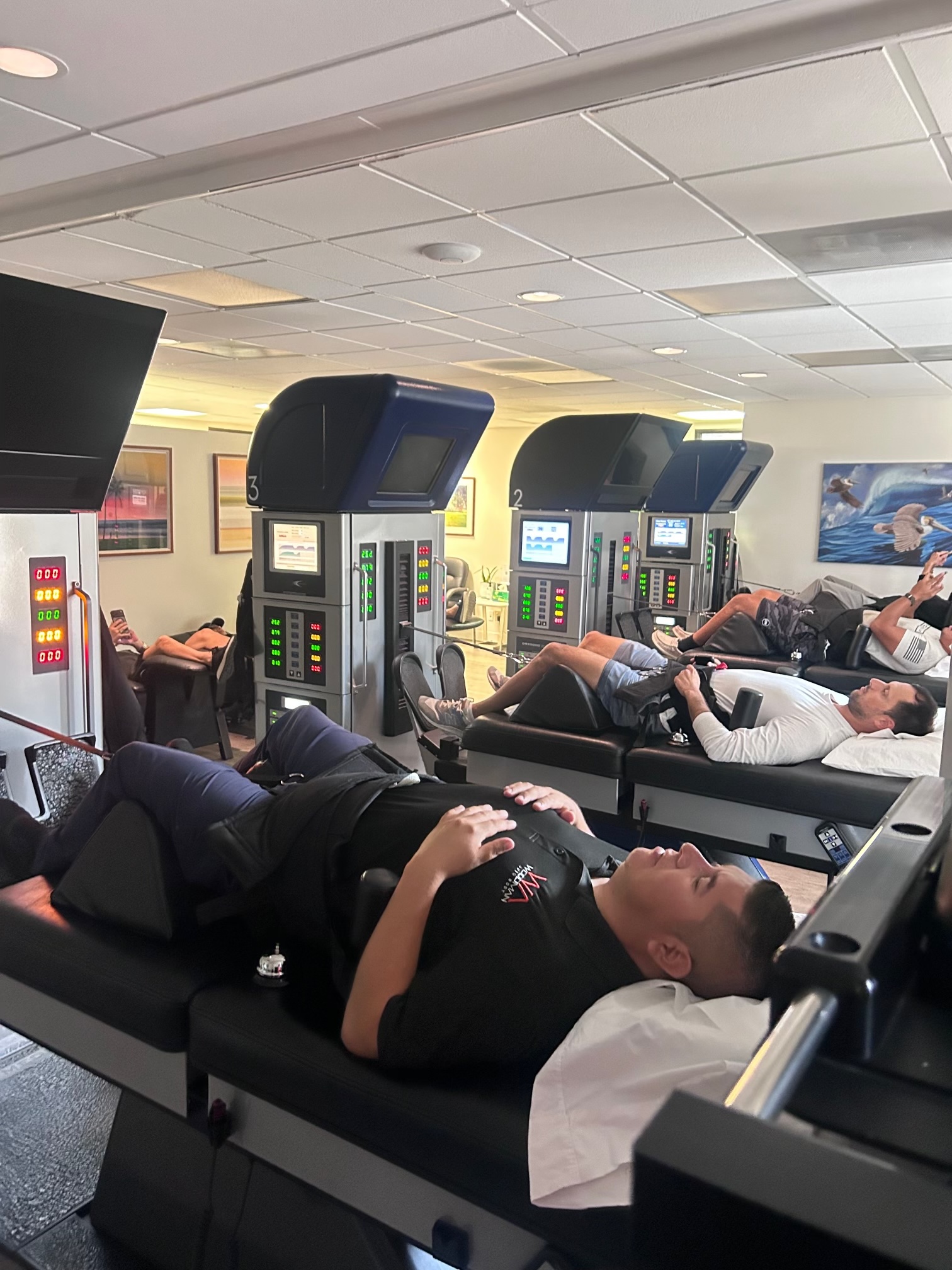
His practice features seven spinal decompression systems, including four lumbar DRX9000 units and three cervical decompression units.
For individuals searching for experienced spinal decompression care in La Mesa, these are important qualifications to consider.
No-Charge Spinal Decompression Consultations for La Mesa Residents
The Spinal Decompression & Chiropractic Center of San Diego offers a limited number of no-charge, no-obligation consultations for patients who want to learn whether non-surgical spinal decompression may be appropriate.
During a consultation, patients can discuss their symptoms, previous treatments, available MRI findings, and potential next steps.
Patients may also learn about the DRX9000 system and how mechanical spinal decompression differs from traditional chiropractic adjustments.
The consultation is provided at no charge. Any recommended examination, imaging, or treatment is discussed separately.
Call 619-298-0800 to schedule a consultation.
Website: www.SanDiegoBackCare.com
Why Patients With Herniated Discs Often Look Beyond Traditional Chiropractic Care
Traditional chiropractic care can be helpful for certain musculoskeletal conditions.
However, not all spinal problems involve the same tissues or respond to the same treatments.
A patient with muscular lower back pain may require a different approach from someone experiencing radiating leg pain associated with a lumbar disc herniation.
Similarly, a patient with cervical radiculopathy may have symptoms involving nerve irritation rather than localized joint discomfort alone.
This is why an accurate diagnosis matters.
Patients who have tried adjustments, physical therapy, medications, or injections may begin exploring spinal decompression because they want to understand whether another conservative treatment could be appropriate.
Spinal decompression is not automatically the next step for everyone.
A qualified doctor should review the patient's condition before making that recommendation.
Five Signs You're Working With an Experienced Spinal Decompression Chiropractor
1. The Doctor Understands Disc-Related Spinal Conditions
An experienced provider should be familiar with conditions such as:
-
L4-L5 disc herniations
-
L5-S1 disc herniations
-
Cervical disc herniations
-
Sciatica
-
Degenerative disc disease
-
Lumbar and cervical radiculopathy
-
Disc protrusions and extrusions
-
Certain cases of foraminal narrowing
-
Persistent disc-related neck and lower back pain
Understanding these conditions involves recognizing symptom patterns, neurological findings, and possible contraindications.
2. The Doctor Reviews Your History and Imaging
An MRI showing a herniated disc does not automatically establish that the disc is responsible for every symptom.
Some disc abnormalities are present in people without pain.
An experienced doctor should consider the patient's symptoms, examination findings, and available imaging together.
3. The Doctor Uses Appropriate Equipment
Different spinal traction systems offer different features and treatment settings.
The DRX9000 is a motorized traction system designed to apply controlled pulling forces through programmed treatment cycles.
Patients should ask how the equipment is used and how treatment settings are individualized.
4. The Doctor Explains Realistic Expectations
Patients should be cautious of claims that spinal decompression is guaranteed to reverse a herniated disc or prevent surgery.
Research findings are mixed, and individual outcomes vary.
5. The Doctor Knows When Not to Recommend Treatment
A provider's willingness to recommend another specialist when necessary is an important indicator of responsible clinical care.
Not every patient is an appropriate candidate for spinal decompression.
Patient Experience: Finding Relief After Persistent Lower Back Pain
Patients frequently begin researching specialized spinal care after experiencing symptoms that interfere with their everyday activities.
Ming T. described his experience after struggling with severe lower back pain and episodes of his back locking up.
Patient Testimonial – Ming T., San Diego, CA
“I came in with extreme back pain, resulting in days were it was difficult to get out of bed. There were moments where I would be walking and then my back would lock up. I thought it was something I have dealt with in the past but this last the entire month of July. I finally dedicated myself to finding the long term solution.
I came to Dr. Boelk unsure about the process, but after he identified exactly what my ailment was, I felt confident that this was the long term solution I was looking for.
I instantly felt better and Dr. Boelk kept encouraging me to trust the process and understand it will take time to feel 100%. I am now pain free and honestly feel stronger, even a little taller. I highly recommend you visit Dr. Boelk.”
Individual patient experiences vary and do not guarantee similar results.
What Is Non-Surgical Spinal Decompression?
Non-surgical spinal decompression is a form of mechanical traction that applies controlled pulling forces to selected areas of the spine.
The treatment is designed to temporarily alter mechanical loading across spinal structures.
Motorized systems may deliver programmed cycles of traction and relaxation.
Some patients experience symptom improvement during conservative care that includes traction.
However, current research does not establish that spinal decompression reliably reverses disc herniations or eliminates the need for surgery.
The decision to recommend traction should be based on the patient's diagnosis, clinical findings, and individual circumstances.
Why Does the DRX9000 Matter?
The DRX9000 is a specialized motorized spinal traction system.
During treatment, the patient lies on a table while the system applies controlled traction forces according to programmed settings.
The doctor may adjust treatment parameters based on the patient's condition, tolerance, and response.
The Spinal Decompression & Chiropractic Center of San Diego has seven spinal decompression systems:
-
Four lumbar DRX9000 units
-
Three cervical spinal decompression units
The center also provides individualized treatment planning and rehabilitation services.
Although the DRX9000 is designed for controlled traction, available evidence does not establish that it is universally superior to other traction systems.
The doctor's clinical judgment, experience, and patient-selection process remain essential.
Can Spinal Decompression Help an L4-L5 or L5-S1 Herniated Disc?
L4-L5 and L5-S1 are common locations for lumbar disc herniations.
When disc material extends beyond its normal boundaries, it may irritate or compress nearby spinal nerves.
Symptoms may include lower back pain, buttock pain, radiating leg pain, numbness, tingling, or weakness.
A posterolateral L4-L5 disc herniation may affect the L5 nerve root.
A posterolateral L5-S1 disc herniation may affect the S1 nerve root.
However, the location of symptoms and examination findings must be considered alongside imaging.
For selected patients, mechanical traction may be considered as part of a conservative treatment program.
Some research suggests short-term improvements in symptoms or function for certain patients with lumbar radiculopathy.
Other research has found limited or inconsistent benefits.
A herniated disc diagnosis alone does not establish that spinal decompression is appropriate.
What About Sciatica?
Sciatica commonly describes pain that travels from the lower back into the buttock and down one leg.
Symptoms may include burning, shooting pain, numbness, tingling, or weakness.
A lumbar disc herniation is one possible cause, but similar symptoms may occur with spinal stenosis or other conditions.
Patients with sciatica should receive an appropriate evaluation to determine the likely source of their symptoms.
For selected patients with disc-related sciatica, mechanical traction may be considered as part of conservative treatment.
However, not every case of sciatica responds to traction, and some patients require other forms of care.
Can Spinal Decompression Help With Degenerative Disc Disease?
Degenerative disc disease describes age-related or other degenerative changes involving the spinal discs.
These changes may include reduced disc hydration, decreased disc height, or alterations in surrounding spinal structures.
Not everyone with degenerative disc changes experiences pain.
When symptoms are present, treatment should be based on the patient's clinical findings rather than imaging alone.
For selected patients, conservative management may involve exercise, physical therapy, activity modification, or other appropriate treatments.
Mechanical traction may be considered in certain cases, but it has not been established as a method for restoring degenerated discs to their original condition.
Patient Experience: Degenerative Lower Back Problems
Dee M., who traveled from Arizona, described her experience with degenerative lower back problems and spinal decompression.
Patient Testimonial – Dee M., Peoria, AZ
“Dr Boelk is highly knowledgeable and has made a difference in my life.
I have a degenerative bone issue in my lower back. Spinal decompression is the only way that gives me relief all the way to my feet. I highly recommend
the Spinal Decompression center.”
Patients respond differently to treatment, and this experience does not predict outcomes for others.
How Is Spinal Decompression Different From Chiropractic Adjustments?
Traditional chiropractic adjustments and spinal decompression are different procedures.
A chiropractic adjustment generally involves applying a controlled manual or instrument-assisted force to a spinal or other joint.
Spinal decompression uses mechanical traction to apply controlled pulling forces to selected regions of the spine.
Chiropractic adjustments may be appropriate for certain joint-related or mechanical pain conditions.
Spinal decompression may be considered for selected patients with disc-related symptoms.
Neither treatment is automatically superior for every patient.
Some individuals may benefit from exercise, rehabilitation, or other conservative treatments without requiring decompression.
The most appropriate approach depends on the patient's diagnosis and clinical findings.
Meet Dr. Cassidy James Boelk, DC
Dr. Boelk's interest in spinal rehabilitation developed partly through his personal experiences with spinal injuries.
At age 16, he sustained a fracture involving his lower back.
Later, he experienced lumbar disc herniations and sciatica.
These experiences helped shape his interest in conservative spinal care and rehabilitation.
Throughout his professional career, Dr. Boelk, DC, has focused extensively on evaluating disc-related spinal conditions and providing non-surgical spinal decompression for appropriate patients.
He has overseen more than 100,000 spinal decompression treatment sessions and founded the Spinal Decompression Training Academy to educate other doctors about treatment protocols and patient selection.
Professional Credentials and Experience
-
Board-Certified Doctor of Chiropractic
-
Certified Spinal Decompression Doctor
-
Certified Pain-Free Performance Specialist
-
Founder of the Spinal Decompression Training Academy
-
Founding Member of the American Spinal Decompression Society
-
Member of the International Disc Education Association
-
California X-ray Radiology Licensed Doctor
-
More than 22 years of clinical experience
-
Experience overseeing more than 100,000 spinal decompression treatment sessions
-
Extensive experience with lumbar and cervical spinal decompression systems
-
Instructor for doctors learning non-surgical spinal decompression protocols
-
Specialized interest in disc-related conditions, spinal rehabilitation, and stabilization
-
Personal experience recovering from spinal injuries and sciatica
Dr. Boelk, DC, also maintains an active lifestyle that includes strength training, surfing, and recreational sports.
His approach emphasizes improving function and helping patients return to meaningful activities whenever possible.
How Does Dr. Boelk Evaluate Patients Before Recommending Spinal Decompression?
Before recommending treatment, Dr. Boelk, DC, considers the patient's symptoms, medical history, previous treatments, and available imaging.
When clinically appropriate, evaluation may include:
-
A detailed review of symptoms
-
A neurological examination
-
Assessment of spinal movement and function
-
Review of MRI findings
-
Standing weight-bearing spinal X-rays
-
Flexion and extension X-rays to assess possible instability
-
Discussion of previous treatment responses
-
Evaluation of possible contraindications
Not every patient requires the same imaging studies.
MRI recommendations are individualized according to the patient's symptoms and clinical findings.
The objective is to determine whether spinal decompression is appropriate before recommending a treatment program.
What Should La Mesa Patients Bring to Their Consultation?
Patients who have already undergone imaging or previous treatment may find it helpful to gather their medical information before the consultation.
Useful materials may include:
-
Previous lumbar or cervical MRI reports
-
MRI images, when available
-
Prior X-ray reports
-
A list of treatments already attempted
-
Current medications
-
Information about previous spinal surgery
-
A brief history of symptoms and their progression
-
Questions about treatment options and expected costs
Having this information available can help the doctor better understand the patient's history.
Patients without imaging can still contact the office to discuss their symptoms and possible next steps.
How Many Spinal Decompression Sessions Are Typically Recommended?
Treatment recommendations vary depending on the patient's diagnosis, symptoms, and response.
At The Spinal Decompression & Chiropractic Center of San Diego, many treatment programs involve approximately 12 to 24 sessions, commonly scheduled three times per week.
A typical DRX9000 treatment session lasts approximately 20 to 25 minutes.
Patients may also receive recommendations for spinal stabilization and rehabilitation exercises.
Progress is reassessed periodically to determine whether meaningful improvement is occurring.
Treatment should be modified or reconsidered when the patient's response does not support continuing the same approach.
Why Rehabilitation Matters
For many patients, improving strength, mobility, and movement tolerance is an important part of recovery.
Rehabilitation may include exercises designed to improve spinal stability, hip strength, posture, and overall movement capacity.
Depending on the patient's condition, these may include modified curl-ups, bird dogs, side planks, glute strengthening, walking, and progressive resistance exercises.
Exercises should be individualized.
Some patients with disc-related symptoms may be sensitive to repeated bending, while others may experience discomfort with extension.
The objective is to improve function without unnecessarily aggravating symptoms.
Not Everyone Is a Candidate for Spinal Decompression
A responsible spinal decompression provider should recognize when treatment is inappropriate or when further medical evaluation is needed.
Potential contraindications or reasons for additional assessment include:
-
Acute spinal fractures
-
Significant spinal instability
-
Progressive neurological weakness
-
Certain postoperative conditions involving spinal hardware
-
Severe osteoporosis
-
Spinal tumors or infections
-
Certain cases of significant spondylolisthesis
-
Pregnancy when considering lumbar decompression
-
Other conditions requiring specialist evaluation
New bowel or bladder dysfunction, saddle anesthesia, or rapidly progressive neurological weakness requires emergency medical evaluation.
Dr. Boelk, DC, emphasizes patient selection and may recommend another specialist when appropriate.
Patient Testimonial – Jeff J., Tucson, AZ
“I found this terrific practice on social media. I followed up and did my own research so I decided to pay them a visit. The place is clean, well organized and run by a very efficient receptionist. I met with the doctor and after a honest and forthright conversation, we both determined that surgery was my only option to correct my back issues. I will return as a customer when the time is right.”
This patient's experience highlights the importance of honest recommendations, including when spinal decompression is not the appropriate option.
Is It Worth Traveling From La Mesa to Kearny Mesa for Spinal Decompression?
Patients seeking specialized spinal care often compare providers beyond their immediate neighborhood.
For La Mesa residents, important considerations include the doctor's experience, treatment equipment, diagnostic approach, scheduling, and the number of appointments that may be recommended.
The Spinal Decompression & Chiropractic Center of San Diego is located at 5095 Murphy Canyon Road, Suite 300, in Kearny Mesa.
La Mesa residents can travel toward Kearny Mesa using major San Diego roadways, including Interstate 8 and Interstate 15, depending on their starting point.
Because many spinal decompression programs involve multiple appointments, patients should consider travel convenience before beginning treatment.
The office can discuss consultation availability and scheduling options.
Serving La Mesa and Surrounding Communities
The center welcomes patients from La Mesa and nearby communities, including:
-
La Mesa Village
-
Grossmont
-
Lake Murray
-
Mount Helix
-
Rolando
-
San Carlos
-
Del Cerro
-
Allied Gardens
-
College Area
-
Spring Valley
-
Fletcher Hills
-
El Cajon
The practice is physically located in Kearny Mesa, not La Mesa.
It also welcomes inquiries from patients traveling from other parts of California, other states, and international locations, including Mexico, Canada, Spain, and the United Kingdom.
Frequently Asked Questions About Spinal Decompression in La Mesa, CA
Is spinal decompression the same as a chiropractic adjustment?
No. Spinal decompression uses mechanical traction, while chiropractic adjustments involve controlled forces applied to joints.
Can spinal decompression help a herniated disc?
Some patients with disc-related symptoms may experience improvement with traction-based conservative care. Results vary, and spinal decompression has not been established as a reliable way to reverse herniations.
Does everyone need an MRI?
No. MRI recommendations depend on symptoms, examination findings, and the clinical circumstances.
How long does a DRX9000 session last?
At Dr. Boelk's practice, a typical treatment session lasts approximately 20 to 25 minutes.
How many treatments will I need?
Many programs involve approximately 12 to 24 sessions, but recommendations depend on the individual patient's condition and response.
Can spinal decompression help me avoid surgery?
Some patients improve with conservative treatment and may not require surgery. However, spinal decompression cannot be guaranteed to prevent surgery, and some conditions require surgical evaluation.
Where is the spinal decompression center located?
The Spinal Decompression & Chiropractic Center of San Diego is located at 5095 Murphy Canyon Road, Suite 300, San Diego, CA 92123, in Kearny Mesa.
Schedule a No-Charge Spinal Decompression Consultation for La Mesa Residents
If you're researching the best chiropractor for spinal decompression in La Mesa, the most important step is finding a provider who understands your condition and can help determine whether the treatment may be appropriate.
Dr. Cassidy James Boelk, DC, offers limited no-charge consultations at The Spinal Decompression & Chiropractic Center of San Diego.
With more than 22 years of clinical experience, involvement in spinal decompression education, and seven dedicated decompression systems, the center provides a specialized setting for patients exploring conservative spinal care.
During the consultation, patients can discuss their symptoms, review previous treatments, and learn about the DRX9000 system.
The consultation is provided at no charge and carries no obligation to begin treatment. Any recommended examination, imaging, or treatment is discussed separately.
Call 619-298-0800 to schedule your consultation.
The Spinal Decompression & Chiropractic Center of San Diego
Dr. Cassidy James Boelk, DC
Certified Spinal Decompression Doctor
Certified Pain-Free Performance Specialist
Founder, Spinal Decompression Training Academy
Office Address:
5095 Murphy Canyon Road, Suite 300
San Diego, CA 92123
Phone: 619-298-0800
Website: www.SanDiegoBackCare.com
Email: frontdesk@sandiegobackcare.com
24/7 telephone answering service available. Hablamos Español.
Located in Kearny Mesa, serving La Mesa and communities throughout San Diego County.
Contact the office to learn whether a no-charge spinal decompression consultation with Dr. Boelk, DC, may be appropriate for your condition.